Planting and maintaining street trees is not only good for the environment; it’s a sound economic investment that benefits society in multiple ways over their full lifecycle.
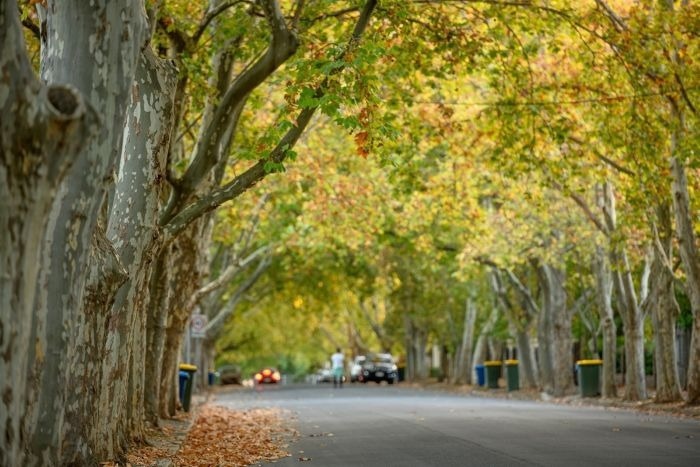 Street trees in Unley are linked to higher property values. Image Credit: City of Unley
That’s the finding from a new South Australian study funded by Adelaide University and supported by Salisbury and Unley Councils.
The study, published in the journal Urban Forestry & Urban Greening, shows that street trees generate substantial returns through improved public health, reduced heat impacts, cleaner air, lower energy costs and increased property values.
These outcomes deliver up to $1.50 in benefits for every dollar spent, depending on location and planting scenario.
Researchers from Adelaide University and Flinders University examined two contrasting metropolitan Adelaide councils – Salisbury and Unley – and found that proactive, sustained planting programs generated positive economic returns over a 30-year period.
The study is one of the most comprehensive of its kind attempted in Australia, using a context-sensitive framework to quantify the economic value of street trees.
Drawing on local council datasets, the framework captures lifecycle costs alongside a broad and locally validated set of benefits.
The study found that realistic urban greening programs generated benefit-cost ratios of $1.26 in Salisbury and $1.36 in Unley, indicating that on average, expected benefits exceeded costs under existing investment scenarios. Under more ambitious planting programs, estimated returns increased further to around $1.47 per dollar invested.
In contrast, scenarios involving minimal tree replacement and declining canopy cover resulted in significant economic losses.
Lead author Dr John Kandulu from Flinders University said the findings show that “the key policy question is not whether to invest in urban greening, but how and where investment delivers the greatest and most equitable returns.”
The research highlights how the distribution of benefits varies across communities.
In lower-income and more heat-vulnerable areas such as Salisbury, the largest gains came from reducing heat-related illness and associated healthcare costs. These health benefits accounted for around 60% of the total value generated by new street trees.
In higher-income areas such as Unley, increased property values represented the largest share of benefits.
"This demonstrates that urban greening is also an equity issue," Dr Kandulu said.
"Communities with less tree cover and greater exposure to extreme heat stand to gain the most from targeted planting programs. Targeted investment in heat-vulnerable areas can improve health outcomes and climate resilience while addressing disparities in access to green space."
The research team worked closely with local government planners, arborists and asset managers to develop realistic future planting scenarios and incorporate local data into the analysis.
Unlike many tools that rely on overseas assumptions, this framework applies Australian economic data and locally validated council information to assess benefits including carbon storage, air pollution removal, stormwater management, energy savings and avoided heat-related hospital presentations.
The researchers also used advanced modelling techniques to account for uncertainty and assess the long-term impacts of different planting strategies.
A key finding is that modest increases in tree planting can shift council programs from a net cost to a net benefit under realistic conditions. In Salisbury, planting approximately 600 to 700 additional trees was sufficient to generate positive economic returns, while in Unley fewer than 100 additional trees were needed to reach the same threshold.
The study shows that urban trees can be treated as critical infrastructure for climate adaptation, public health and community wellbeing.
"Street trees are often viewed as a nice-to-have amenity, but our research shows they should be treated as essential public infrastructure," said Adelaide University researcher Professor Veronica Soebarto.
"When a broader set of benefits, such as cooling, health outcomes and stormwater management is systematically accounted for, the economic case becomes very compelling,” Prof Soebarto said.
"As cities become hotter and more densely developed, maintaining and expanding urban canopy will play an increasingly important role in supporting health and liveability.”
According to project lead, Adelaide University Associate Professor Carmel Williams, sustained investment in urban forests can provide “a practical and cost-effective way for councils to support climate adaptation while delivering long-term community benefits”.
‘Advancing context-sensitive valuation of street tree benefits in contrasting urban socioeconomic settings’ is published in Urban Forestry & Urban Greening. DOI: 10.1016/j.ufug.2026.129516