Proton Exchange Membrane (PEM) electrolyzers offer a high-performance means of producing hydrogen via electrolysis. They use a solid polymer electrolyte (proton exchange membrane) to split water (H2O) into hydrogen (H2) and oxygen (O2) using electricity.
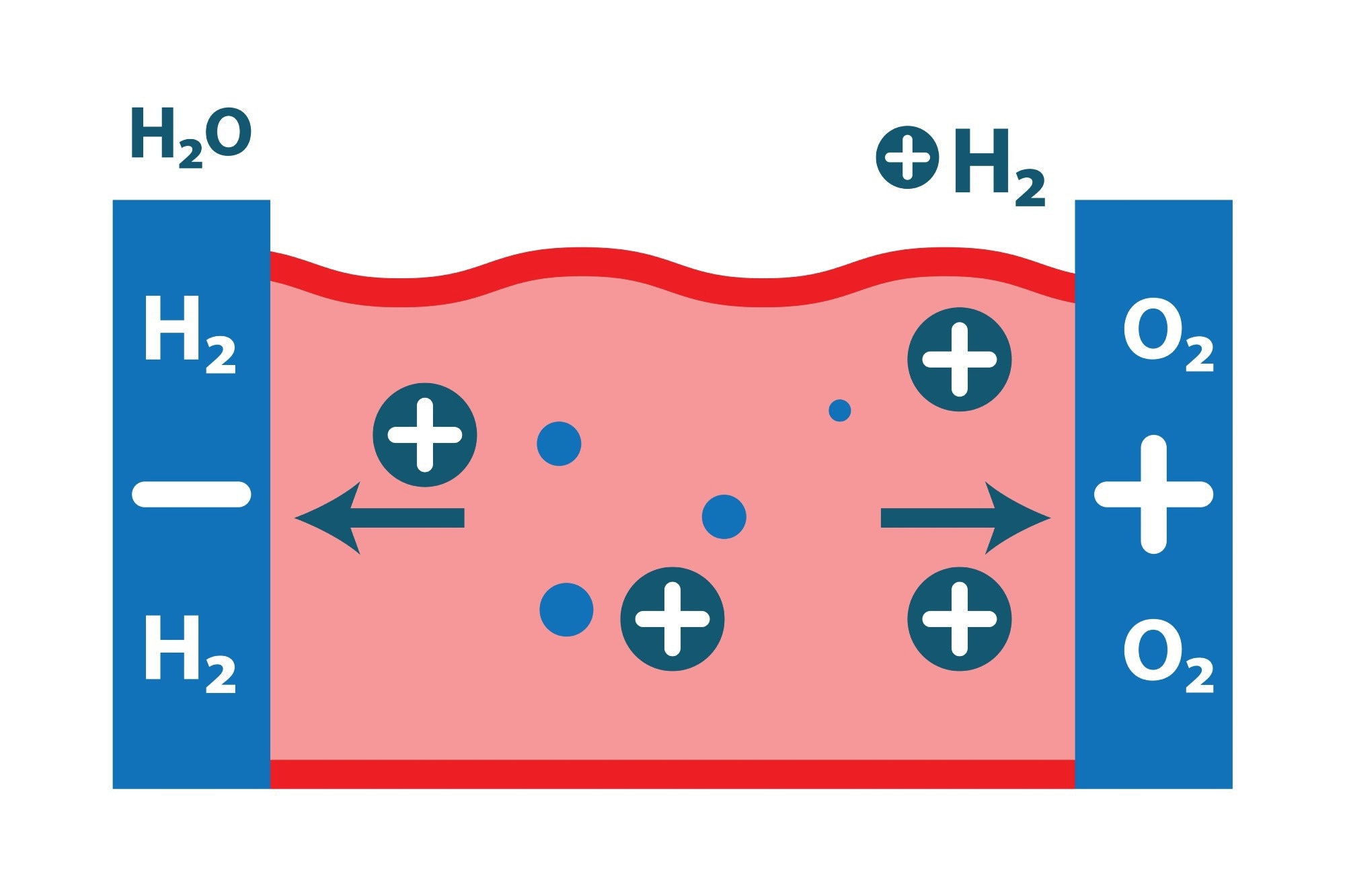 Image Credit: RadiantForms/Shutterstock.com
This membrane enables the separation of hydrogen with high purity by only allowing positively charged hydrogen ions (protons) to pass through, while blocking gases and electrons.
Understanding PEM Electrolyzers
The underlying concept of PEM electrolyzers is decades old, but modern advancements have improved their efficiency.
These systems use a solid polymer membrane to split water into hydrogen and oxygen, preventing contamination from electrolytes and generating hydrogen gas that requires minimal post-processing prior to use in chemical production, fuel cells, and sensitive industrial processes.
How PEM Electrolysis Works
PEM stacks operate at moderate temperatures, typically in the 50–80 °C range. The system feeds water into the anode side, where it is split into protons, electrons, and oxygen.
Electrons travel through an external circuit, while the membrane conducts protons to the cathode. Hydrogen gas is formed at the cathode as protons and electrons recombine. This configuration generates high-purity hydrogen at pressures that reduce or eliminate the need for mechanical compression.
Catalysts for these electrolyzers include platinum group metals (typically iridium (Ir) and platinum (Pt)).
Advantages of PEM Electrolyzers
Rapid Response and Flexibility
PEM electrolyzers can start and stop within just seconds or minutes. This makes them ideally suited for use in renewable energy sources like solar and wind, which see common power supply fluctuations. This capability also means there is no need to wait for warm-up cycles or full-load conditions.
Compact and Scalable Design
PEM electrolyzers are lighter and more compact than alkaline and SOEC systems, making them simple to install, even in tight spaces. Output can be scaled from a few kilowatts to multi-megawatt deployments by stacking units.
High Energy Efficiency
PEM electrolyzers are extremely efficient, reducing overall energy costs by allowing the system to produce more hydrogen from the same amount of electricity.
High-Purity Hydrogen Output
PEM systems produce highly pure hydrogen, eliminating the need for most post-processing, which is typically required with biomass-based or alkaline methods.
Challenges of PEM Technology
PEM electrolyzers have a proven history in commercial and laboratory settings, but a number of challenges limit their adoption in large-scale hydrogen production. It is important that engineers and project developers carefully consider these factors when choosing PEM technology for new installations.
Catalyst Dependence
PEM stacks necessitate the use of expensive platinum group metals (PGMs), most notably platinum and iridium, to catalyze the electrochemical reactions. These metals are rare and subject to volatile supply chains, making the material cost of PGMs a barrier to scaling production capacity as project sizes increase.
Stack Costs
The thin polymer membrane employed in PEM systems must maintain chemical stability while withstanding high pressure differentials and current densities.
This necessitates strict quality control and advanced manufacturing, both of which increase the cost per kilowatt of installed capacity. Stack cost remains the largest contributor to overall system expense for many industrial customers.
Durability Under Variable Loads
PEM units are able to respond quickly to changes in power input, but this flexibility stresses the membrane and catalyst layer. Frequent cycling speeds up degradation, which in turn reduces the stack lifetime.
This durability issue must be considered when using renewable energy sources, because it can lead to additional replacement costs.
Complex Water Management
PEM systems necessitate a consistent supply and precise water composition. It is important that the membrane remains hydrated to ensure efficient proton conduction, but excess water can flood the electrodes and reduce performance. This balance requires controls and auxiliary components that add both cost and complexity.
Power to Hydrogen’s work began by acknowledging the proven performance of PEM technology, then surpassed its constraints by developing a hybrid AEM electrolyzer system.
The company’s approach addresses the technical and economic barriers that have historically hindered PEM growth by blending the cost and durability benefits of alkaline systems with the performance characteristics of PEM.
PEM Electrolyzer Applications
Grid and Energy Storage
Electric grids must increasingly balance supply and demand, particularly as renewable sources like solar and wind fluctuate throughout the day.
PEM electrolyzers offer a stable solution, converting excess electricity into hydrogen for storage and later use. This hydrogen storage can be held on-site for later conversion back into electricity via fuel cells, injected into natural gas pipelines via power-to-gas systems, or deployed as a flexible energy source to help stabilize the grid when demand spikes.
Transportation Fuel Supply
PEM technology enables reliable on-site hydrogen production as the hydrogen fueling station network expands. This allows hydrogen for trucks, buses, and other passenger vehicles to be generated in a cost-effective way, even in remote locations.
Industrial Hydrogen Use
A wide range of industrial processes rely on hydrogen, but the majority of it is still produced from fossil fuels via steam methane reforming. PEM electrolysis enables on-site hydrogen production, replacing carbon-intensive supply chains.
Comparing PEM Electrolysis to Other Technologies
PEM Versus Alkaline Electrolysis
PEM electrolyzers typically offer improved performance compared to alkaline electrolyzers due to their faster response to power changes and higher-purity hydrogen output. Alkaline electrolyzers may cost less upfront, but they generally require more space and have slower reaction times.
PEM Versus Solid Oxide Electrolysis (SOEC)
SOEC operates at very high temperatures, typically 600–1000 °C, making it suitable for industrial applications where heat is abundant. PEM electrolyzers operate at significantly lower temperatures, generally between 50 °C and 80 °C, which means they offer safer, simpler operation across a wider range of applications.
PEM Versus AEM Electrolysis
Power to Hydrogen's AEM electrolysis technology seeks to match PEM’s performance while also delivering measurable improvements in critical engineering categories. These systems offer a range of benefits.
- Lower Material Costs: Eliminating PGMs considerably reduces costs, removes bottlenecks, and enables easier expansion into multi-megawatt projects.
- Improved Safety: Power to Hydrogen's AEM electrolyzers employ dilute electrolytes, simplifying compliance with safety regulations and reducing risks for operators.
- Simplified Water Management: Hybrid membranes reduce system complexity by eliminating the strict water-balance requirements of PEM stacks.
- Improved Durability: Renewable-powered hydrogen plants benefit from a more reliable solution due to extended operational lifetime under variable loads.
- Comparable Efficiency: Power to Hydrogen’s hybrid AEM systems address cost and lifetime challenges while maintaining competitive efficiency levels with PEM units.
For engineers tasked with designing hydrogen production assets, these differences present a clear case for selecting hybrid AEM over conventional PEM. Power to Hydrogen’s system delivers rapid dynamic response, high-purity hydrogen, and pressure flexibility while lowering capital and operational burdens.
Future Outlook for Electrolysis
Analysts project the global deployment of multi-gigawatt electrolyzers by 2030, particularly as fossil-fuel-based hydrogen production is phased out.
Electrolysis is expected to play a pivotal role in:
- Government policies and national hydrogen strategies across the world
- Decarbonizing the mobility sectors and heavy industry
- Export-focused hydrogen markets
Cost Reduction Trends
Advances in material durability, membrane conductivity, and system stability are continually reducing the cost of electrolyzers.
Large-scale manufacturing and government subsidies are helping to close the price gap between electrolyzer systems, with hydrogen incentives and regional credits further shifting project economics.
These specific details of such programs change over time and between countries, so it is important to liaise with an expert like Power to Hydrogen to improve current programs in the region and build a path that fits the timeline in question.

This information has been sourced, reviewed, and adapted from materials provided by Power to Hydrogen.
For more information on this source, please visit Power to Hydrogen.