Researchers in PNAS present an alkaline thermal treatment (ATT) method for converting mixed plastic waste into hydrogen while retaining a significant portion of the waste's carbon.
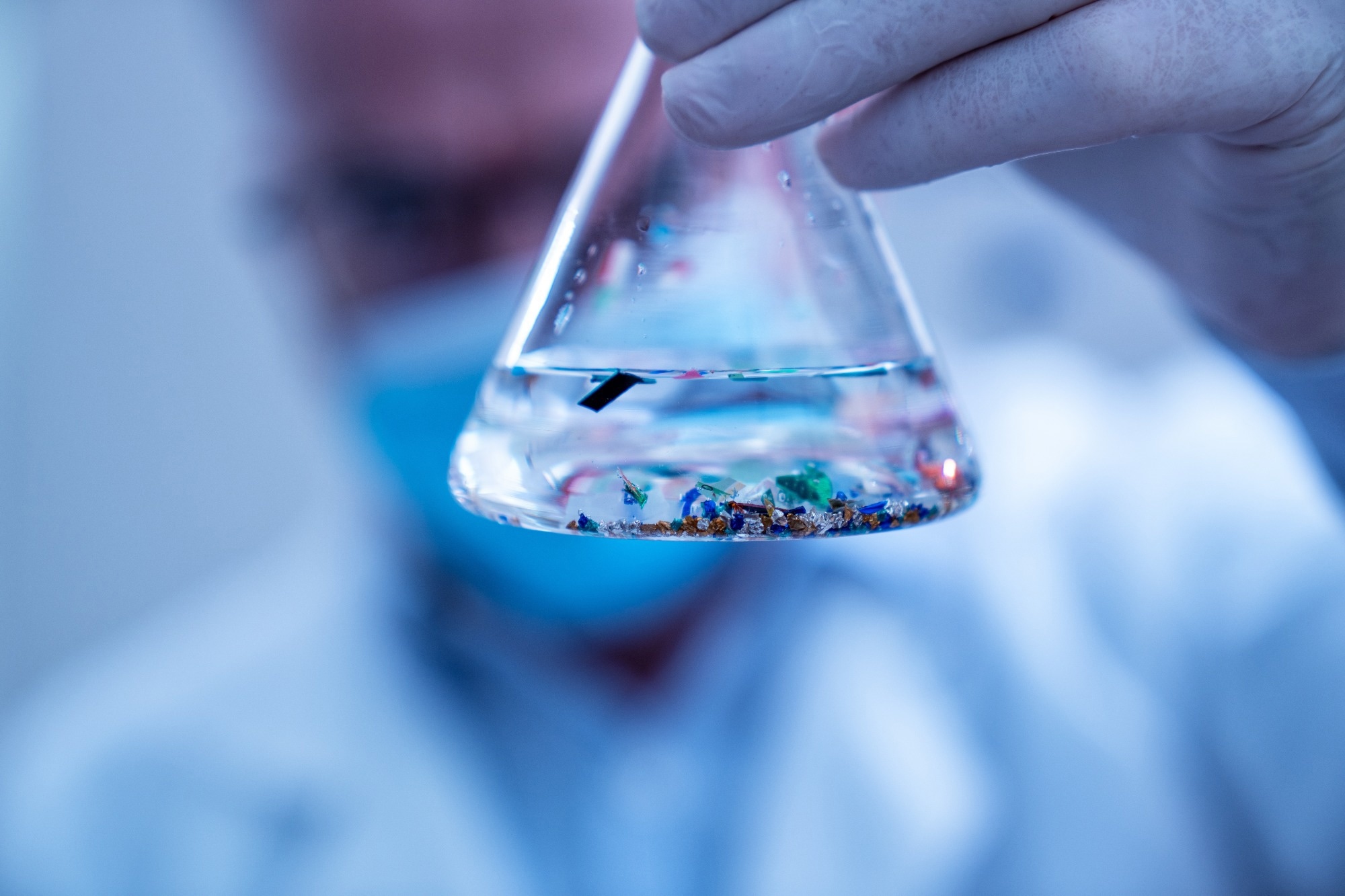
Study: Selective and direct hydrogen generation from mixed plastic waste via alkaline thermal treatment with inherent carbon storage. Image Credit: Floren Horcajo/Shutterstock.com
The researchers tested polyethylene terephthalate (PET), polyethylene (PE), and polypropylene (PP), including mixtures that did not require extensive pre-sorting. The study demonstrates a potential route for combining plastic waste management, hydrogen production, and carbon retention, offering a promising approach for more circular and lower-carbon resource recovery.
Turning Plastic Waste into a Hydrogen Resource
Plastic waste creates challenges for both waste management and emissions reduction. Many plastics resist degradation and enter waste streams as mixtures of different polymers, making conventional recycling dependent on extensive sorting and processing.
Thermochemical methods, such as gasification, can handle mixed plastics more easily, but they typically operate at 800-1000 °C and can generate substantial carbon dioxide (CO2) emissions.
The researchers explored alkaline thermal treatment (ATT) as a lower-temperature alternative that can process plastic feedstocks, produce hydrogen, and retain carbon in stable compounds.
This study addresses a key challenge in plastic-to-hydrogen conversion.
Existing methods can produce hydrogen from plastic waste, but many rely on high temperatures, extensive processing, or generate carbon-containing gases. The researchers therefore examined whether ATT could reduce these limitations while processing mixed plastic waste without extensive pre-sorting.
Want to save this article for later? Click here.
Optimizing Alkaline Thermal Treatment for Plastic Conversion
The study examined three kinds of polymers, PET, PE, and PP, because their chemical structures display different levels of reactivity.
PET contains oxygen-containing functional groups that make it more responsive to alkaline treatment.
PE and PP mainly consist of carbon–hydrogen and carbon–carbon bonds, which makes them more resistant to ATT. The researchers therefore added a thermal oxidation step for PE and PP to introduce oxygen-containing groups and improve their reactivity.
The researchers compared conventional steam gasification with ATT using PET, PE, and PP. They conducted the experiments in a tubular furnace connected to a gas chromatograph for real-time monitoring of hydrogen and other gaseous products. The team mixed the plastic samples with sodium hydroxide (NaOH) and exposed them to steam as the reactor temperature increased from 100 to 700 °C.
For PET, the team tested different NaOH-to-plastic ratios to determine how alkaline loading affected hydrogen production and carbon-containing byproducts. They also thermally oxidized PE and PP at 150–350 °C. Fourier-transform infrared spectroscopy (FT-IR) and elemental analysis tracked the formation of oxygen-containing groups after oxidation.
Density functional theory (DFT) calculations explained the molecular mechanisms behind ATT. The calculations compared the reactivity of PET, PE, and PP and examined how oxygen-containing groups influence reactions with hydroxide ions. The researchers also analyzed carbon distribution after treatment and conducted a life cycle assessment (LCA) to compare greenhouse gas emissions from ATT and steam gasification.
Efficient Hydrogen Production from Plastic Waste
ATT shifted hydrogen production from PET toward substantially lower temperatures. Conventional steam gasification produced hydrogen near 700 °C, with a yield of 26.9 mmol/g PET. ATT began producing hydrogen at around 300-400 °C. At a NaOH-to-PET mass ratio of 1:1, the process achieved a maximum PET hydrogen yield of 43.7 mmol/g PET.
Higher NaOH loading shifted the reaction toward lower temperatures and reduced carbon-containing gases. However, excessive NaOH also reduced the total hydrogen yield because some hydrogen remained in intermediate products instead of forming gaseous H2. These results show that the conditions for maximizing hydrogen yield differ from those for maximizing hydrogen selectivity.
PE and PP initially showed lower reactivity because their hydrocarbon backbones lack oxygen-containing functional groups. FT-IR analysis detected carbonyl, hydroxyl, and ether groups after oxidation. These groups created reactive sites that could interact with hydroxide ions during ATT. From DFT analysis, it was known that PET ester groups can undergo favorable hydroxide attack, whereas unmodified PE and PP lack comparable reactive sites. Oxidation introduces aldehyde, ketone, carboxylic acid, and ester groups that interact preferably with hydroxide ions.
Carbon analysis showed that approximately 32–44% of the carbon entered the inorganic carbon fraction, mainly as Na2CO3. The researchers also tested a 1:1:1 mixture of PET, PE, and PP to represent mixed plastic waste. The mixture produced distinct hydrogen-generation peaks associated with the individual polymers. This finding suggests that ATT can process mixed feedstocks without extensive polymer separation.
The LCA indicated lower greenhouse gas emissions than steam gasification. ATT produced 10.90 kg CO2-equivalent/kg H2 for PET, 4.83 kg CO2-equivalent/kg H2 for PE, and 8.33 kg CO2-equivalent/kg H2 for PP. PE showed the lowest emissions because of its relatively high hydrogen yield. The researchers linked these reductions mainly to lower direct CO2 emissions and carbon retention through Na2CO3 formation.
Integrating Plastic Waste Conversion with Hydrogen Production
The study demonstrates that ATT can convert several common plastics into hydrogen at lower temperatures than conventional gasification. Combining NaOH treatment with thermal oxidation improves the reactivity of resistant plastics such as PE and PP.
Carbon management adds another potential benefit. Much of the carbon released during plastic conversion forms Na2CO3 rather than atmospheric CO2. The team suggests that NaOH could potentially be regenerated from Na2CO3 using calcium hydroxide, with the carbon ultimately fixed as calcium carbonate. This pathway could link hydrogen production with longer-term carbon retention.
However, the technology remains at the research and process-development stage. Future studies should focus on NaOH recovery, energy consumption, oxidation pretreatment, and reaction optimization, alongside economic and environmental assessments at larger scales. The researchers also identify opportunities to use unwanted gaseous products as process fuel and improve heat integration.
The study presents ATT as a promising approach for converting plastic waste into hydrogen while retaining a significant portion of its carbon. Its combination of mixed-plastic processing, lower-temperature operation, high hydrogen selectivity, and carbon retention could support more circular plastic waste management and lower-carbon hydrogen production.
Journal Reference
Park, J., Kim, H., et al. (2026). Selective and direct hydrogen generation from mixed plastic waste via alkaline thermal treatment with inherent carbon storage. Proceedings of the National Academy of Sciences of the United States of America, 123(28), e2537552123. DOI: 10.1073/pnas.2537552123. https://www.pnas.org/doi/10.1073/pnas.2537552123
Disclaimer: The views expressed here are those of the author expressed in their private capacity and do not necessarily represent the views of AZoM.com Limited T/A AZoNetwork the owner and operator of this website. This disclaimer forms part of the Terms and conditions of use of this website.