Multiple transformation drivers are pushing the global energy sector toward a more decarbonized future, including shifting societal expectations, an evolving regulatory landscape needed to meet Paris Agreement goals, and the widespread adoption of local and international decarbonization targets.
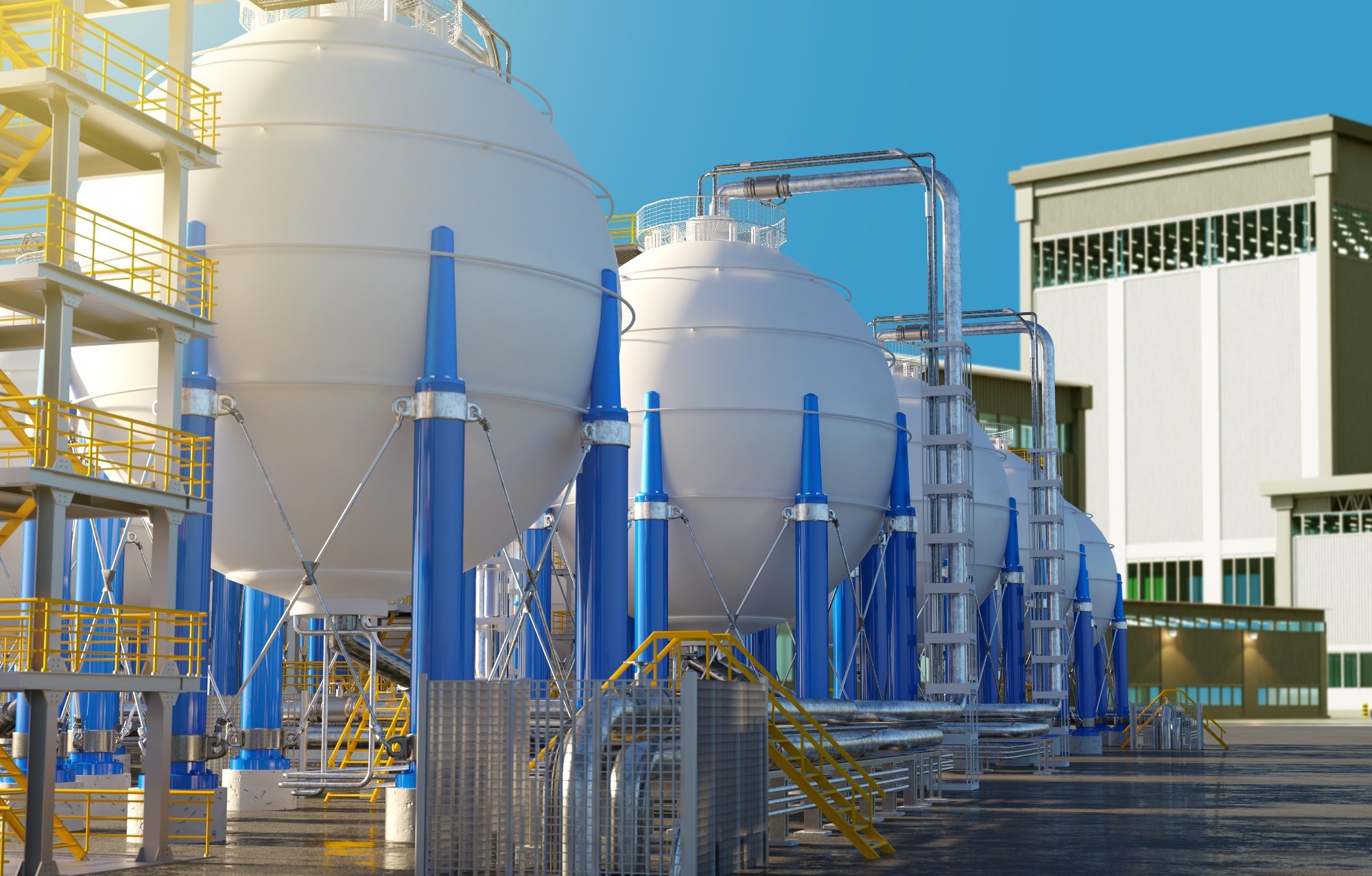
Image Credit: FOTOGRIN/Shutterstock.com
Scope 1 and 2 emissions from oil and gas refineries account for approximately 15 % of total global energy-related greenhouse gas (GHG) emissions.1 The emissions intensity of these activities must drop by 50 % by the end of the decade to accommodate the IEA’s Net Zero Emissions by 2050 Scenario.
The industry already has access to a range of decarbonization steps to reach this number, including addressing methane emissions, the cessation of all non-essential flaring, and the introduction of low-carbon hydrogen into their operations, supported by carbon capture and storage (CCS) technologies.
Traditional refining processes use fossil fuels to produce hydrogen, contributing to greenhouse gas emissions. The integration of blue (and green) hydrogen production enables refineries to significantly reduce their carbon footprint, aligning better with increasingly stringent environmental regulations while helping to meet ambitious decarbonization targets. This approach is also crucial for refineries to maintain their licenses, enabling them to continue operating in a sustainable future.
The Growing Business of Blue Hydrogen
Hydrogen plays a range of key roles in refineries, including the hydrocracking and hydrotreating process. Hydrocracking maximizes the yield of transportation fuels from crude oil by breaking down heavy oil into lighter, more valuable products, such as gasoline, jet fuel, and diesel. Hydrotreating, on the other hand, removes sulfur from crude oil fractions and helps produce cleaner fuels that better meet environmental regulations.
Producing hydrogen via low-carbon methods ensures that the hydrogen used in these processes reduces emissions and meets the requirements of current emission protocols. This approach can also help refineries meet future compliance standards, ensuring continued market access and pre-emptively avoiding potential penalties.
Governments are implementing more incentives, such as tax credits, grants, and subsidies, designed to promote the use of low-carbon and clean energy, including hydrogen. Compliance with these regulations can, therefore, result in financial benefits.
Leveraging Excess Hydrogen as a Revenue Stream
Blue and clean hydrogen demand is expected to skyrocket by 2050, meaning that refineries producing more blue hydrogen than required on-site can take advantage of new business opportunities and potential revenue streams beyond decarbonization benefits for refinery operations.
Almost all hydrogen currently used globally is grey hydrogen, representing an annual consumption of around 90 million tons (Mtpa). The demand for blue and green hydrogen is expected to rise significantly by 2050, with substantial growth anticipated.
This could see blue and green hydrogen comprising 73 % to 100 % of the total hydrogen market, with projected usage between 125 and 585 Mtpa (the latter figure corresponding to the Net Zero scenario).2
New revenue streams and business models are possible via the transition to a surplus hydrogen refinery operation. For example, hydrogen can be employed as a fuel, feedstock, or energy carrier, enabling the straightforward diversification of a refinery’s product portfolio.
Refineries can also capitalize on hydrogen's role in the global transportation, industry, and energy sectors as demand for low-carbon energy sources continues to grow.
Uses of Excess Blue Hydrogen
The geographic advantages of regions such as the Middle East and the US make them well-positioned to produce blue hydrogen, particularly due to their capabilities in low-cost natural gas and carbon capture and underground sequestration (CCUS). In contrast, regions such as Europe and Asia are expected to become major net importers of blue hydrogen as they strive to decarbonize their economies.
Hydrogen can be converted into ammonia via Haber-Bosch synthesis, enabling its efficient transportation. Ammonia benefits from higher energy density, is carbon-free, and can be reconverted to hydrogen at the destination via the industrially proven ammonia cracking process.
It is also possible to centralize ammonia cracking on a mega-scale, with the hydrogen then transported to the end-user via hydrogen pipeline systems, such as those planned in Europe.
Ammonia cracking can also be decentralized, large-scale, and co-located with large hydrogen off-takers. This can be potentially achieved through local hydrogen grids. Ammonia cracking can also be small-scale and decentralized, for example, at hydrogen filling stations.
Hydrogen’s potential to be traded and transported as ammonia enables distribution to new markets, offering refineries a potential opportunity for both decarbonization and new, profitable revenue streams. This flexibility is positioning hydrogen as a central element of the evolving energy landscape.
S&P Global Commodity Insights reports that the global market for ammonia is anticipated to increase three-fold over the coming decades, with almost all of the growth derived from blue ammonia.3
Using Ammonia as a Maritime Fuel
The decarbonization of industries such as maritime shipping represents another potential growth market for ammonia. This sector alone is responsible for almost 940 million tons of CO2 emissions per year, accounting for close to 3 % of the world’s energy-related CO2 output. These figures highlight the urgent need for a sustainable fuel alternative in this field.
The maritime industry is currently developing ammonia-powered engines, with a clear plan to begin implementing this technology by 2026. Ammonia has been highlighted as the most viable marine fuel option, both in terms of the transition to more sustainable shipping practices and as a long-term and scalable solution.
As ammonia is extensively transported across the globe via trains, trucks, ships, and pipelines, infrastructure already exists. There are also advantages associated with the availability of existing infrastructure, with 120 ports worldwide fitted with ammonia terminals and many of these ports boasting their own storage facilities.
This established network offers a strong base for ensuring that ammonia fuel is available to ships opting to adopt this.
Opportunities Offered by Methanol
The production of low-carbon methanol represents another opportunity in hydrogen derivatives. Methanol is a multipurpose fuel that can be derived by combining hydrogen with carbon dioxide. It has a wide range of applications, from its role as a standalone fuel to its use in fuel cells and fuel blends.
The methanol market is projected to grow from 99.03 million tons in 2024 to as much as 118.81 million tons by 2029, with a CAGR of over 3.5 %. It is possible to produce methanol from waste materials and natural resources, or through a combination of low-carbon or renewable hydrogen and recycled CO2. This approach yields lower greenhouse gas emissions compared to the production of methanol from fossil fuels.
The Adoption of Low-Carbon Hydrogen
The adoptation of blue hydrogen is a strategic business opportunity and a significant environmental benefit. Integrating blue and green hydrogen refineries’ operations allows them to considerably reduce their carbon emissions to better align with tightening regulations.
The ability to produce excess hydrogen also opens new revenue streams, especially as demand for low-carbon energy sources, including methanol and ammonia, continues to increase globally. This transition is key to both refineries’ decarbonization and their capacity to diversify and thrive in the continually evolving energy sector.
References and Further Reading
- IEA (2023). Emissions from Oil and Gas Operations in Net Zero Transitions – Analysis. (online) IEA. Available at: https://www.iea.org/reports/emissions-from-oil-and-gas-operations-in-net-zero-transitions.
- McKinsey & Company (2024). Global Energy Perspective 2023: Hydrogen outlook. (online) McKinsey & Company. Available at: https://www.mckinsey.com/industries/oil-and-gas/our-insights/global-energy-perspective-2023-hydrogen-outlook.
- News Release Archive. (2023). Ammonia Market to Triple by 2050 with Nearly All Growth Coming from Low-Carbon Supply. (online) Available at: https://press.spglobal.com/2023-07-11-Ammonia-Market-to-Triple-by-2050-with-Nearly-All-Growth-Coming-from-Low-Carbon-Supply.
Acknowledgments
Produced from materials originally authored by Topsoe.

This information has been sourced, reviewed and adapted from materials provided by Topsoe.
For more information on this source, please visit Topsoe.