The global marine environment is currently grappling with a convergence of two escalating environmental crises: the proliferation of microplastic pollution and the rapid expansion of ocean hypoxia. Historically, these challenges have been managed and studied as independent phenomena. However, recent research published in Frontiers in Science and analyzed by experts at Imperial College London reveals that climate change and plastic pollution are "co-crises" that intensify one another through a series of complex feedback loops.1,2 Ocean hypoxia, the depletion of dissolved oxygen, which fundamentally alters how marine organisms encounter, ingest, and absorb microplastics, is central to this interaction.
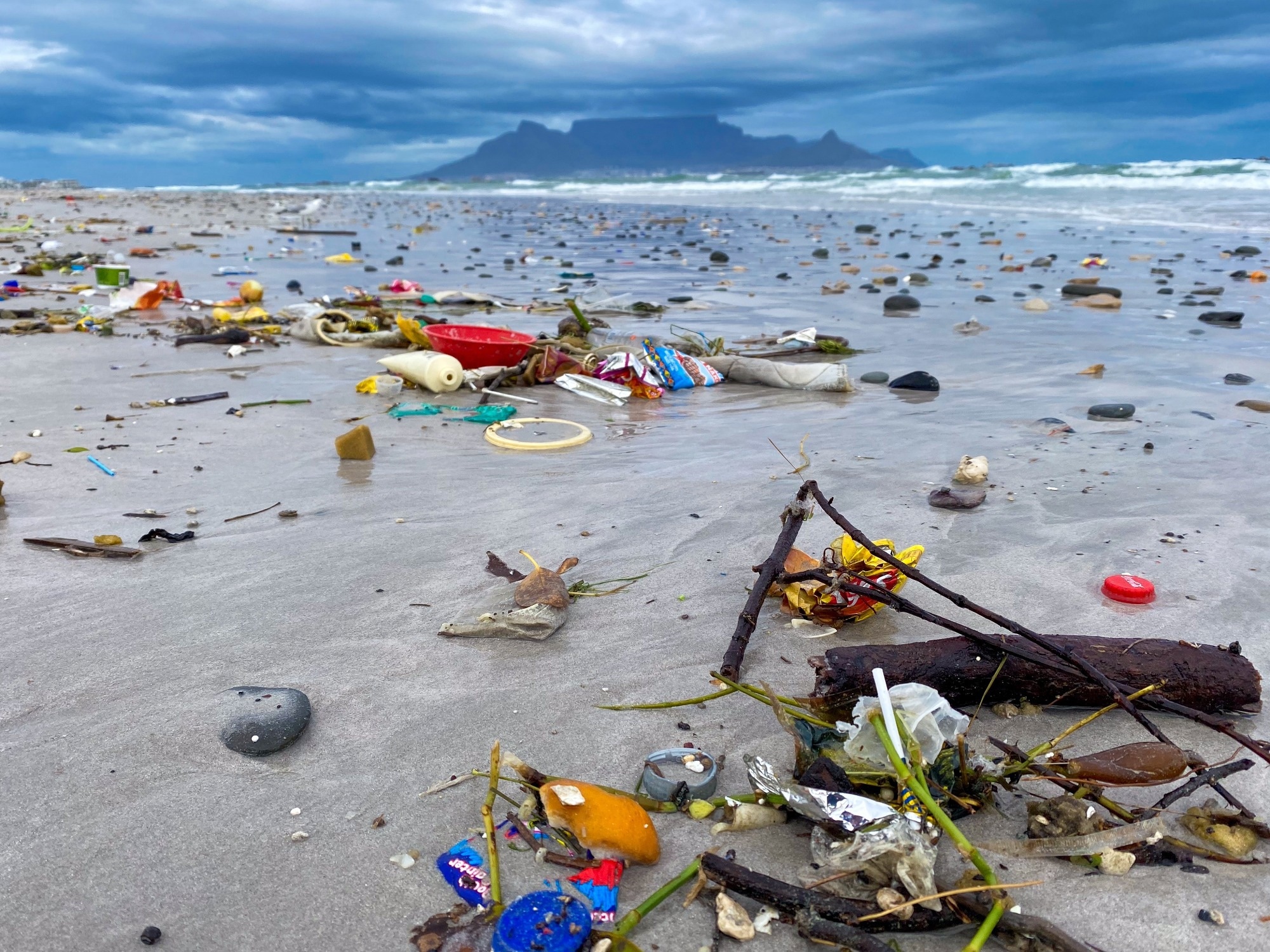
Image Credit: Willem Cronje/Shutterstock.com
The Climate-Plastic Feedback Loop
Ocean hypoxia is primarily driven by rising sea temperatures and nutrient runoff. Warmer water holds less dissolved oxygen, and increased thermal stratification prevents the oxygen-rich surface layers from mixing with deeper waters. At the same time, climate change accelerates the generation of microplastics. Higher temperatures, increased UV radiation, and more frequent extreme weather events speed up the mechanical and chemical breakdown of macroplastics into micro- and nanoplastics.1,3
The interaction between these stressors is bidirectional. While warming creates the hypoxic conditions that influence plastic uptake, the presence of microplastics can further exacerbate climate issues. For example, microplastics have been found to interfere with the "biological pump" - the process by which marine organisms transport carbon from the surface to the deep ocean. When zooplankton and other small organisms ingest plastic, the buoyancy and integrity of their fecal pellets are altered, potentially slowing carbon sequestration and contributing to further global warming.1,3
Physiological Drivers of Increased Ingestion
One of the most significant findings in recent studies is that hypoxic conditions directly increase the volume of microplastics ingested by marine life. This is largely driven by physiological and metabolic stress.
As oxygen levels drop, many marine species must work harder to maintain their metabolic functions. This often results in increased ventilation rates, pumping more water across the gills or through filtration systems to extract scarce oxygen, which inadvertently leads to a higher intake of suspended plastic particles.1
A key case study involves the Atlantic cod (Gadus morhua). Research has demonstrated that increased ocean hypoxia, spurred by warming waters, caused these fish to double their microplastic intake.1,2 This increase was not merely a result of higher plastic concentrations in the water, but a change in the fish’s behavior. The hypoxic stress forced the cod to modify their diet, shifting from traditional prey to benthic invertebrates that contained higher concentrations of microplastics.1
Similarly, temperature-driven metabolic shifts play a crucial role. For ectothermic species, such as the goby, a rise in water temperature increases metabolic demand. One study found that microplastic-induced mortality among gobies quadrupled with a temperature increase of just 5 °C.1,3 This suggests that when thermal stress and hypoxia are present, the toxicological impact of ingested plastic is magnified far beyond what would be expected in stable conditions.
The "Trojan Horse" Effect and Enhanced Absorption
The hazard of microplastics extends beyond physical blockage of the digestive tract. These particles act as "Trojan horses," carrying a suite of hazardous chemicals, including plasticizers, flame retardants, and adsorbed environmental toxins such as PFAS (per- and polyfluoroalkyl substances) and heavy metals.2
In hypoxic environments, the chemical risk to the organism increases. The physiological strain of low oxygen compromises the integrity of cellular membranes and impairs the animal’s metabolic detoxification pathways. This makes it easier for the chemical additives and adsorbed pollutants to leach out of the plastic and be absorbed into the organism’s tissues. For filter-feeding organisms like mussels, exposure to both microplastics and hypoxia has been shown to impair digestion and suppress immune competence, making them more susceptible to the toxins carried by the plastics.1
Food Web Amplification and Apex Predators
As microplastics are ingested at higher rates by primary consumers and small fish under hypoxic stress, the total burden of plastic and associated toxins moves up the food web through trophic transfer. This process poses a significant threat to long-lived apex predators, such as orcas and other cetaceans.
These high-trophic-level species are particularly susceptible because they accumulate exposure over decades. The 2025 review in Frontiers in Science identifies these predators as "canaries in the coal mine," as they face the cumulative impact of climate-driven habitat changes and the bioaccumulation of plastic-associated chemicals.1,2 Because hypoxia and warming increase the ingestion rates at the base of the food web, the "toxic debt" delivered to the top of the food chain is substantially higher than in previous decades.
Ecological and Economic Implications
The synergy between hypoxia and microplastics poses a significant threat to fundamental ecosystem services and global food security. In coastal regions, where "dead zones" are most prevalent, the concentration of microplastics from urban runoff meets a highly stressed biological community. Benthic organisms, which usually play a vital role in nutrient cycling, may see their populations decline due to the combined impact of low oxygen levels and plastic toxicity.
For the aquaculture and fishing industries, these findings are concerning. Species like the Nile tilapia, which are central to global aquaculture, have shown increased ingestion and toxicity from microplastics under elevated temperatures.1 As hypoxic zones continue to expand, the risk of microplastic contamination in commercially harvested seafood increases, presenting a potential challenge for human health and safety.
Addressing the Co-Crises
The research emphasizes that because climate change and plastic pollution are interconnected, the solutions must also be integrated. Addressing only one side of the equation is insufficient. For instance, even if plastic production is capped, the warming climate will continue to break down existing plastic waste into more hazardous micro-scale fragments.2
Professor Frank Kelly and colleagues argue that a systemic shift is required, moving toward a circular economy that prioritizes the "redesign, rethink, and refusal" of plastic materials.1,2 Specifically, researchers call for:
- The elimination of non-essential single-use plastics, which currently account for 35 % of global production.2
- The establishment of binding international standards for plastic design to ensure reusability and recyclability.
- The integration of climate considerations into the UN Global Plastics Treaty to reflect how warming and hypoxia amplify plastic hazards.
Conclusion
Ocean hypoxia is a powerful catalyst that transforms microplastic pollution from a passive environmental nuisance into an acute biological threat.
By altering the feeding behaviors, metabolic rates, and detoxification capabilities of marine organisms, hypoxia enables the ingestion of more plastic and the absorption of more toxins.
As the global ocean continues to warm and lose oxygen, the window for preventing irreversible damage to marine ecosystems is closing. Addressing these twin crises requires a coordinated international effort to stem the flow of plastics at the source while simultaneously tackling the root causes of ocean warming.
Click here to download a free PDF copy of this page
References and Further Reading
- Kelly FJ, Wright SL, Woodward G, Fussell JC. Plastic pollution under the influence of climate change: implications for the abundance, distribution, and hazards in terrestrial and aquatic ecosystems. Front Sci. 2025;3:1636665. https://doi.org/10.3389/fsci.2025.1636665
- Imperial College London. Plastic pollution is worsened by warming climate and must be stemmed, researchers warn. Imperial News. 2025 Nov 27. Available from: https://www.imperial.ac.uk/news/articles/medicine/school-public-health/2025/plastic-pollution-is-worsened-by-warming-climate-and-must-be-stemmed-researchers-warn/
- Frontiers Science News. Plastic pollution is worsened by warming climate and must be stemmed, researchers warn. 2025 Nov 27. Available from: https://www.frontiersin.org/news/2025/11/27/plastic-pollution-worsened-by-warming-climate
Disclaimer: The views expressed here are those of the author expressed in their private capacity and do not necessarily represent the views of AZoM.com Limited T/A AZoNetwork the owner and operator of this website. This disclaimer forms part of the Terms and conditions of use of this website.