In the face of mounting concerns about resource scarcity and the environmental consequences of traditional waste disposal, urban mining has emerged as a promising approach to reclaiming non-renewable resources. By systematically recovering valuable materials from the vast array of discarded products and infrastructure found within cities, urban mining transforms waste streams into secondary resources.
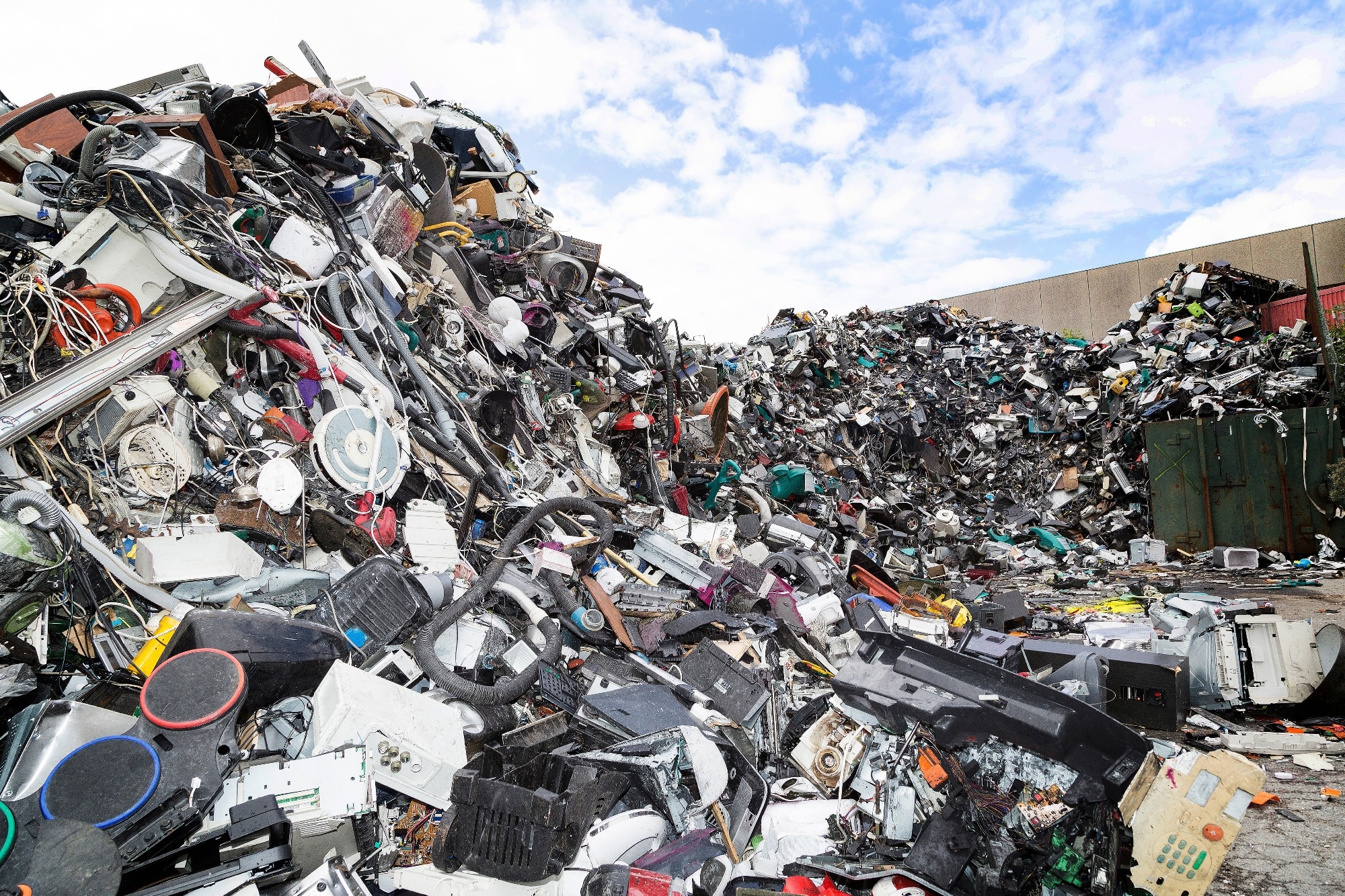
Image Credit: Morten B/Shutterstock.com
Environmental Impact and Value of Electronic Waste
Although electronic waste, commonly known as e-waste, accounts for a relatively small proportion of total waste, its impact on landfills is substantial due to the toxicity of certain elements. In 2015, the European Chemical Society estimated that e-waste was responsible for about 70 % of the toxic pollution in landfills.1 Despite its minor share in overall waste generation, e-waste remains significant. For instance, in 2019 alone, the US produced an estimated 6.92 million tons of e-waste, of which only 15 % was recycled. The value of the recoverable materials in these discarded electronics was estimated at $7.49 billion.2
While reducing e-waste generation is always preferable, some waste is unavoidable in our technology-driven world. Upgrading electronic medical equipment or adopting more advanced industrial electronics often results in greater efficiency and less waste over time. Since it is inevitable that some electronics will reach the end of their useful life, urban mining offers a potential solution for responsibly managing this waste, though the practice comes with its own challenges.
What is Urban Mining?
Urban mining is the process of extracting valuable materials, such as metals, minerals, and other reusable resources, from waste generated in urban environments.3 Instead of relying solely on traditional mining from natural deposits, urban mining targets discarded products such as e-waste, construction debris, and other forms of urban refuse as sources for these materials.
Key materials recovered from construction and demolition waste include wood, paper, cardboard, rubber, and metals. Recycling one million cell phones can recover significant amounts of valuable metals, including 35,000 pounds of copper, 772 pounds of silver, 75 pounds of gold, and 33 pounds of palladium, according to the Environmental Protection Agency.4 E-waste is not limited to cell phones; it also comes from a wide range of consumer and business products, including large and small household appliances, IT and telecommunications equipment, electronic tools, toys, sports equipment, and medical devices. In addition, researchers extracted metals, plastics, and compostable materials from municipal solid waste.
The key steps of urban mining include collecting, sorting, and processing waste to recover components that can be reintroduced into production cycles. This process helps reduce the need for virgin raw materials, minimizes environmental impact, supports the circular economy, and can create economic and social benefits such as job opportunities and improved recycling systems.
Urban Mining Strategies
Urban mining employs strategies such as advanced recycling, efficient collection, and supportive regulations to extract valuable materials from urban waste streams. As cities expand, these methods help turn waste into resources, supporting sustainability and the circular economy.5 The key processes employed to recover valuable metals from urban waste are discussed below:6
Pyrometallurgy
Pyrometallurgy is a traditional process for extracting non-ferrous metals at high temperatures, involving steps like smelting, conversion, and refining. It is well-suited for processing large volumes of complex waste and recovering metals in high concentration, such as copper, gold, zinc, indium, and gallium.
The core technique is smelting, which separates metals by their melting points through either flash or bath smelting methods. However, pyrometallurgy generates slag, soot, and toxic gases, necessitating strict environmental controls and making it energy-intensive and costly, especially for small and medium enterprises.
Hydrometallurgy
Hydrometallurgy involves the extraction of metals from waste using acidic or basic solutions, with key steps including leaching, precipitation, solvent extraction, and electrodeposition.
The main advantages of hydrometallurgy for urban mining of Rare Earth Elements (REEs) are the ability to process low-quality and complex materials, achieve high product purity, reduce gaseous emissions compared to pyrometallurgy, and support recycling and reduced dependence on primary mining. However, challenges include complex collection and sorting logistics, material variability, the need for efficient separation at low concentrations, intensive chemical use, potential secondary waste generation, and high development and implementation costs.
Biometallurgy
Biohydrometallurgy is an eco-friendly and cost-effective approach that uses microorganisms to extract metals from electronic waste and other materials. Its main process, bioleaching, relies on bacteria and fungi to recover metals like copper, gold, and silver.7 Other techniques include bioaccumulation and bioreduction.
The biometallurgy process is sustainable, energy- and chemical-efficient, and can selectively recover metals even at low concentrations. However, it faces challenges such as slow reaction rates, possible toxicity to microorganisms, and scalability issues. Continued research and optimization are needed to fully realize its potential in supporting a circular economy.
Click here to download a free PDF copy of this page
Challenges and Future Outlooks
Urban mining has significant potential for raw material recovery, but current efforts mostly focus on basic recycling of end-of-life products to extract valuable metals like copper, silver, and gold.
Recovery rates for critical raw materials remain below 10 %, constrained by organizational, technological, and economic barriers stemming from the complexity and dispersion of waste streams.3 Improving efficiency means balancing product performance and recyclability, as high-performing products often resist recycling.
Stronger government policies, such as recycling incentives, infrastructure investment, and targeted regulation, are essential to improve urban mining. If the European Union achieves its Green Deal goals, urban mining could underpin a circular, climate-neutral economy.8
References and Further Reading
- Saha L, et al. Electronic waste and their leachates impact on human health and environment: Global ecological threat and management. Environ Technol Innov.2021; 24:102049. https://doi.org/10.1016/j.eti.2021.102049
- 20 Staggering e-waste facts in 2021. Earth911. Available at: https://earth911.com/eco-tech/20-e-waste-facts/
- Ouro-Salim O. Urban mining of e-waste management globally: Literature review. Cleaner Waste Systems.2024; 9:100162. https://doi.org/10.1016/j.clwas.2024.100162
- Electronics Donation and Recycling. Environmental Protection Agency. Available at: https://www.epa.gov/recycle/electronics-donation-and-recycling
- Xavier LH, et al. A comprehensive review of urban mining and the value recovery from e-waste materials. Resour Conserv Recycl.2023; 190:106840. https://doi.org/10.1016/j.resconrec.2022.106840
- Moita Neto JM, et al. Challenges and Opportunities for the Development of Urban Mining in Brazil. Minerals. 2025; 15(6). https://doi.org/10.3390/min15060593
- Magoda K, et al. Biohydrometallurgical Recovery of Metals from Waste Electronic Equipment: Current Status and Proposed Process. Recycling.2022; 7(5). https://doi.org/10.3390/recycling7050067
- Rezaei, M., et al. Advancing the circular economy by driving sustainable urban mining of end-of-life batteries and technological advancements. Energy Storage Materials.2025; 75:104035. https://doi.org/10.1016/j.ensm.2025.104035
Disclaimer: The views expressed here are those of the author expressed in their private capacity and do not necessarily represent the views of AZoM.com Limited T/A AZoNetwork the owner and operator of this website. This disclaimer forms part of the Terms and conditions of use of this website.