Rail electrification in the UK was once viewed as a step toward cleaner transportation, but progress has slowed amid rising costs and shifting priorities. The network now finds itself in a cautious transition, raising practical questions about how a major rail system can decarbonize without compromising reliability or affordability. The answers will define the next phase of low-carbon travel across the UK.
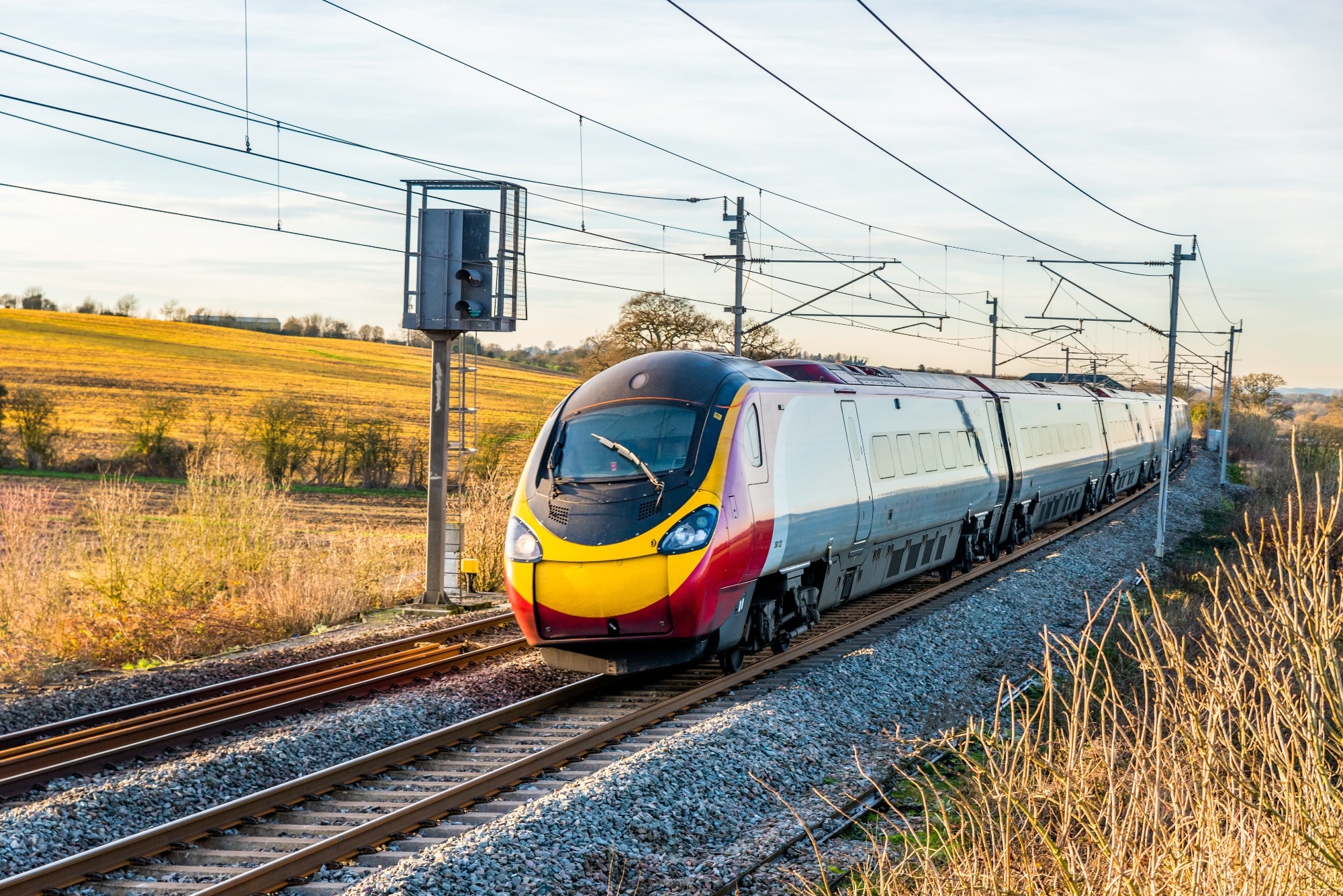
Image Credit: Jevanto Productions/Shutterstock.com
The Stalled Momentum
Over the last decade, expectations for UK rail electrification rose sharply, only to encounter financial and delivery challenges that now constrain new schemes. High-profile projects on the Great Western and Midland Main Line experienced significant cost overruns and delays, eroding confidence in large-scale electrification programs. In response, the government signaled that extensive new electrification is “not affordable right now” and redirected attention to projects such as HS2 and other capital priorities.1,2?
The result is a significantly slower pace of new wired route mileage than initially anticipated by climate and transport strategies. Office of Rail and Road statistics show that only a small addition of electrified track has been delivered in recent years compared with what would be required for a fully decarbonized network by mid-century. This slowdown contrasts with rising expectations on the transport sector to reduce emissions as part of the UK’s net-zero commitment by 2050.?3,4
Why Electrification Matters for Decarbonization
Rail transport currently contributes to a small fraction of the UK's transport emissions. However, decarbonization research shows that adopting cleaner energy sources is essential for achieving further reductions. Life-cycle assessments reveal that a large share of rail-related CO2 comes from infrastructure construction, operation, and maintenance.
Diesel trains produce considerable emissions that can be reduced. Simply focusing on improving efficiency won't meet long-term climate goals without replacing diesel with electric or other low-carbon power alternatives.5
A recent report published in the International Journal of Electrical Power & Energy Systems describes rail as a comparatively efficient mode that can help achieve net-zero emissions if supported by clean energy and modern infrastructure. It also emphasizes the need to consider the long-term costs and benefits of electrification compared to alternatives such as hydrogen and battery trains. In this context, slow progress on electrification represents not only a delivery issue but a wider strategic question about how the UK intends to decarbonize surface transport.?5
Structural and Cost Barriers
A main reason why rail electrification is slowing in the UK is the historically high project costs compared with international benchmarks. Analyses by industry bodies highlight that “stop-start” investment, fragmented planning, and a loss of specialist capability have kept costs high and learning rates low. When projects proceed in short bursts rather than as part of a rolling program, the supply chain struggles to retain skills and optimize methods, which raises the cost of each new phase.?3,6
The UK’s older infrastructure adds to the challenge, as many rail lines run through constrained Victorian infrastructure, such as tunnels, overbridges, and cuttings, that require significant modifications for overhead electrification. This increases complexity and risk, as designs often need to be customized for specific locations instead of using standard solutions, which could help reduce costs.1,6
Click here to download a free PDF copy of this page
Policy Uncertainty and Competing Priorities
Policy uncertainty has further slowed down rail electrification in the UK. Over the last decade, various programs have been announced, paused, altered, or canceled as governments reconsider their budgets and explore alternatives such as bi-mode trains, hydrogen, or batteries. This intermittent pattern affects investor confidence and makes it hard for contractors to plan long-term projects.2,3,6
Moreover, transport investment has had to accommodate large flagship projects and other modal priorities, which limits funding for electrification. Decarbonization strategies also encourage consideration of a wider toolkit that includes demand management, modal shift, and vehicle technology changes. This hasn't led to a complete rejection of electrification but rather a more careful and selective approach to new schemes.1,5,7
Alternatives and the Shape of What Comes Next
Technical and academic work points toward a mixed-technology future that blends further electrification with alternative power sources, especially on lower-density routes. Studies of hydrogen and battery trains find that these technologies can provide meaningful reductions in CO2 for certain corridors, although hydrogen can be expensive and needs new infrastructure. Hybrid electric trains can save fuel and cut emissions on non-electrified sections, but they are not as efficient as continuous electric traction on busy main lines.5
Recent cost analyses of UK routes indicate that full electrification is the most cost-effective long-term solution for heavily used passenger and freight corridors. For less busy routes, targeted electrification combined with battery or hydrogen trains can provide a better balance of costs and emissions. Overall, a gradually expanding electrified network with alternative traction can serve as a complementary solution rather than a full replacement.?4,5
Rebuilding Momentum Through Long-Term Planning
Research on rail infrastructure policy highlights that a clear long-term plan matters as much as individual technology choices. A steady program of electrification, aligned with the replacement of trains and infrastructure upgrades, can reduce costs by maintaining skills, standardizing designs, and coordinating maintenance work. It also creates a framework for assessing when alternatives, such as hydrogen or battery trains, should be used.3
To align rail with broader climate goals, experts suggest that decarbonization plans should consider the overall carbon impact, including infrastructure emissions, rather than just operational CO2. In practice, this means evaluating decisions about electrification and new structures based on long-term carbon and cost criteria, even if some projects require more upfront investment.5
Low-Carbon Travel and Realistic Expectations
The slowdown in UK rail electrification is part of a larger effort to reduce transport emissions through cleaner energy and better system integration. Rail travel has lower emissions per passenger compared to road and air travel, making it important for policies to encourage shifting traffic to rail. However, evidence from life-cycle studies and system-level modeling shows that full electrification or low-carbon alternatives are needed to meet climate goals by mid-century.5,7
The next stage of UK rail decarbonization will likely focus on prioritizing heavily used intercity and freight routes for electrification, using stable programs and better engineering to cut costs. For lower-density routes, options like selective wiring, hydrogen or battery trains, and necessary infrastructure upgrades will be considered based on cost and carbon impact. This balanced approach can reconnect the original rationale for rail electrification with the practical realities of funding, engineering, and long-term climate responsibility.?3,5,6
References and Further Reading
- UK transport secretary says full electrification of railways ‘not affordable right now’. Financial Times. https://www.ft.com/content/5ecda1f8-b624-4e86-bb7b-b571bddb8a19
- UK rail electrification delays ‘will raise overall cost of network’. Financial Times. https://www.ft.com/content/cb8926ae-68ac-11e7-9a66-93fb352ba1fe
- Bright spark: the future of rail electrification. futureRAIL. https://rail.nridigital.com/future_rail_mar24/bright_spark_future_rail_electrification
- Rail infrastructure and assets. Office of Rail and Road. https://dataportal.orr.gov.uk/statistics/infrastructure-and-environment/rail-infrastructure-and-assets/
- Jiang, K. et al. (2024). Cost modelling-based route applicability analysis of United Kingdom passenger railway decarbonization options. International Journal of Electrical Power & Energy Systems, 160, 110094. DOI:10.1016/j.ijepes.2024.110094. https://www.sciencedirect.com/science/article/pii/S0142061524003156
- Why rail electrification is so slow in Britain. (2023). The Economist. https://www.economist.com/britain/2023/11/09/why-rail-electrification-is-so-slow-in-britain
- Staying on track? Railway industry predictions for 2024. (2024). Railway Technology. https://www.railway-technology.com/features/staying-on-track-railway-industry-predictions-for-2024/
Disclaimer: The views expressed here are those of the author expressed in their private capacity and do not necessarily represent the views of AZoM.com Limited T/A AZoNetwork the owner and operator of this website. This disclaimer forms part of the Terms and conditions of use of this website.