The oil industry faces significant pressure to reduce its freshwater consumption, particularly in regions where water scarcity threatens both agricultural productivity and community water supplies. Meanwhile, sugarcane farms generate massive volumes of irrigation runoff that typically flow unused into drainage systems. This article highlights a novel strategy that repurposes agricultural wastewater for oil recovery, significantly reducing the environmental footprint.
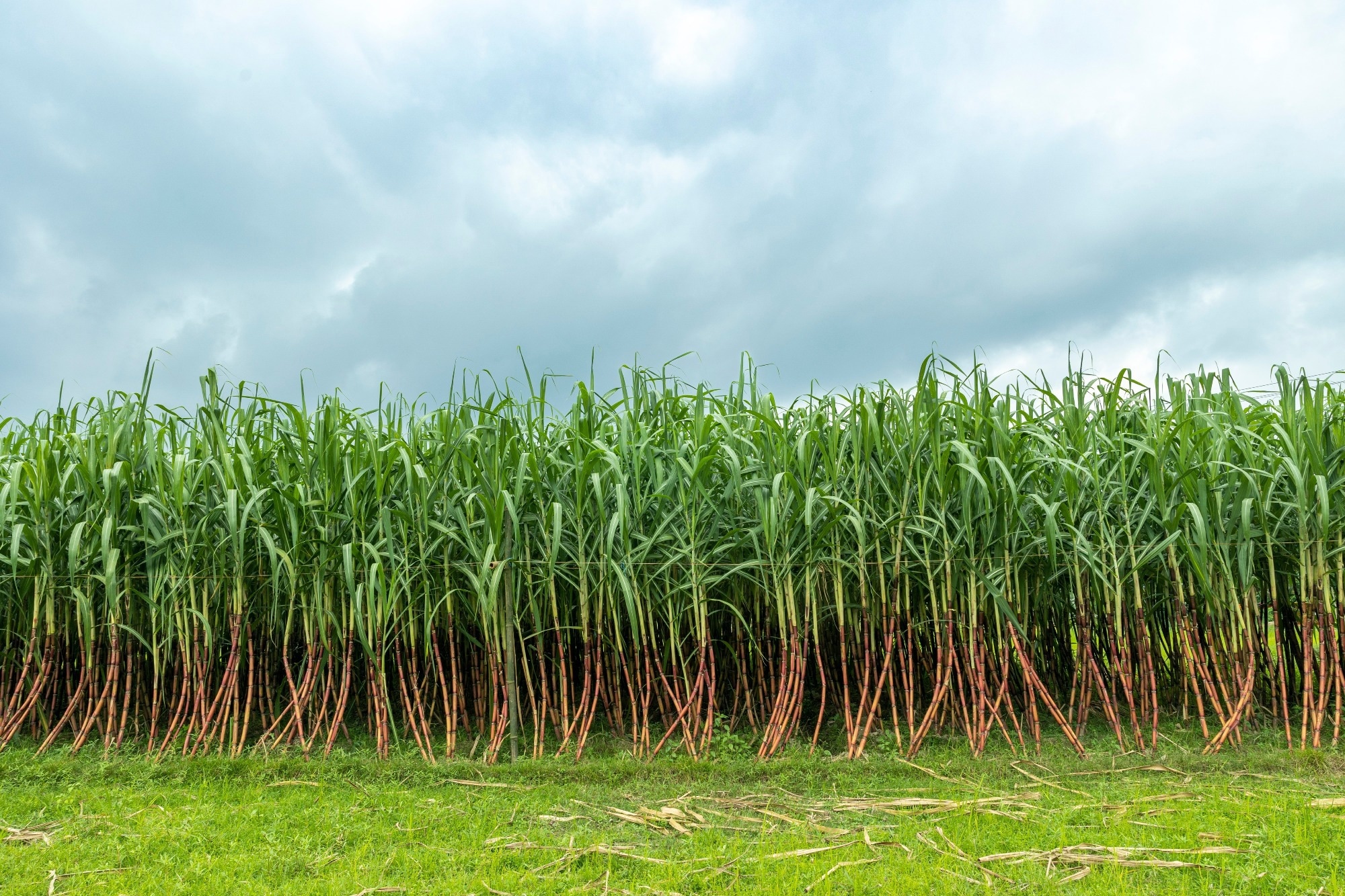
Image Credit: Anamul1981/Shutterstock.com
Why is a High Volume of Water Necessary During Oil Recovery Operations?
Oil production occurs in three stages: primary (natural reservoir energy), secondary (water and gas injection to maintain pressure), and tertiary (enhanced oil recovery, or EOR).1 During primary production, natural reservoir pressure drives oil to the surface, but this typically recovers only 10-25 % of the original oil in place. As reservoir pressure declines, secondary recovery methods become necessary.
Water injection has long been favored for pressure maintenance due to its ease, low cost, and efficiency. Large volumes of water are injected underground to push remaining oil toward production wells, maintaining reservoir pressure and sweeping oil through the rock formation. Secondary recovery can extract additional oil, but even after this stage, a significant amount of the original oil typically remains trapped in the reservoir.2
In the tertiary EOR stage, various fluids, including smart waters such as seawater, low-salinity water, and carbonate water, are injected to alter rock and fluid properties and mobilize the substantial remaining oil.3 Typically, EOR operations can require injecting 2-3 barrels of water for every barrel of oil produced, making water sourcing a critical operational and environmental concern.
Government regulations restrict freshwater use for EOR, and seawater is limited to offshore projects. Population growth and climate change are straining water supplies, driving the search for alternative sources.4
Repurposing Agricultural Wastewater for EOR
Agricultural irrigation wastewater typically harms ecosystems through multiple pathways.5 Nutrient runoff, particularly nitrogen and phosphorus from fertilizers, flows into nearby water bodies where it fuels excessive algal growth. This eutrophication depletes oxygen levels, creating dead zones that suffocate aquatic life. Chemical contaminants, including pesticides, herbicides, and salts, can leach into groundwater supplies and surface waters, threatening both drinking water quality and biodiversity.
In sugarcane-growing regions, millions of gallons of this runoff are generated daily, overwhelming natural drainage systems and degrading downstream environments. Repurposing this wastewater for EOR provides dual benefits. Firstly, it could intercept harmful runoff before it reaches sensitive ecosystems while simultaneously supplying oilfields with a high-volume, low-salinity water source. Similar to seawater or produced water, irrigation runoff requires specific treatment to deploy for EOR operations.
Water chemistry significantly affects EOR performance. Divalent cations, for example, calcium and magnesium, alter how oil interacts with rock surfaces and influence emulsion stability. Monovalent ions such as sodium and potassium control brine strength, affecting interfacial tension and emulsion formation. Anions, including sulfate and chloride, can cause mineral scaling and deposition, reducing EOR efficiency.6
Sugarcane Irrigation Water as a Sustainable Solution for Enhanced Oil Recovery
Scientists have recently collected samples of sugarcane irrigation water to assess their potential for EOR operations.4 Experimental findings revealed that sugarcane irrigation waters have significantly lower total dissolved solids than conventionally used EOR waters, suggesting a reduced risk of solid deposition. Sodium, potassium, magnesium, and sulfate concentrations are relatively low, while bicarbonate levels are comparatively higher than those of low-salinity and smart water.
Emulsion stability tests were conducted using two sugarcane irrigation water samples and five crude oil samples at 80 degrees Celsius. Low variability among replicates indicated reproducible phase separation behavior. Understanding emulsion behavior is critical because it determines whether water will effectively mobilize oil during injection or cause operational problems such as clogging and excessive pressure buildup in the reservoir.
Want to save for later? Click here.
Lower interfacial tension promotes emulsion stability by reducing interfacial energy. Sugarcane runoff water samples exhibited lower interfacial tension with oils, leading to more stable emulsions. Oils with higher asphaltene and resin content form more stable emulsions. This is important for EOR because stable emulsions improve sweep efficiency, helping push more oil through reservoir pores toward production wells, while lower interfacial tension reduces capillary forces that trap oil in rock formations.4
Wettability tests findings revealed that sugarcane irrigation water shifted rock surfaces from oil-wet to neutral-wet over 35 days at 80 degrees Celsius, with contact angles decreasing by 31 to 36 degrees. However, distilled water treatment did not produce any change. This shift is crucial for EOR because neutral-wet or water-wet rocks allow injected water to displace oil more effectively. When rocks are oil-wet, water cannot penetrate the pores and push out trapped oil. The calcium and magnesium ions in sugarcane water drive this beneficial transformation through surface charge reversal, making the water a promising candidate for improving oil recovery rates.4
Conclusions and Future Research Directions
By repurposing irrigation runoff, the oil industry can reduce its freshwater consumption while simultaneously addressing agricultural wastewater pollution, creating a dual environmental benefit. The ability of sugarcane irrigation water to alter rock wettability from oil-wet to neutral-wet conditions, combined with its capacity to reduce interfacial tension, positions it as an effective EOR fluid that could improve recovery rates while lowering operational costs compared to conventional smart water formulations.
More research is required to advance this technology toward field-scale implementation. Future research should focus on core flooding experiments using actual reservoir cores to validate oil recovery efficiency under realistic flow conditions.
Long-term compatibility studies are needed to assess potential scaling, corrosion, and formation damage issues that may arise during prolonged injection operations. Furthermore, investigating the application of this approach in other agricultural regions and with different irrigation water sources could expand its geographic scope and environmental impact.
References and Further Reading
- Shakeel M, et al. Maximizing oil recovery: Innovative chemical EOR solutions for residual oil mobilization in Kazakhstan's waterflooded sandstone oilfield. Heliyon. 2024;10(7), e28915. https://doi.org/10.1016/j.heliyon.2024.e28915
- Malozyomov BV, et al. Overview of Methods for Enhanced Oil Recovery from Conventional and Unconventional Reservoirs. Energies. 2023; 16(13):4907. https://doi.org/10.3390/en16134907
- Quintella CM, et al. Comprehensive Review of Smart Water Enhanced Oil Recovery Based on Patents and Articles. Technologies. 2025; 13(10):457. https://doi.org/10.3390/technologies13100457
- Miraei S, Kalantariasl A. Evaluating sugarcane irrigation water for sustainable enhanced oil recovery and efficient waste management. Sci Rep. 2026; 16(1): 2044. https://doi.org/10.1038/s41598-025-31625-7
- Bashir I, et al. Concerns and Threats of Contamination on Aquatic Ecosystems. Bioremediation and Biotechnology. 2020:1-26. doi: 10.1007/978-3-030-35691-0_1.
- Isah, A., Arif, M., Hassan, A., Mahmoud, M., & Iglauer, S. (2022). Fluid–rock interactions and its implications on EOR: Critical analysis, experimental techniques and knowledge gaps. Energy Rep. 8:6355-6395. https://doi.org/10.1016/j.egyr.2022.04.071
Disclaimer: The views expressed here are those of the author expressed in their private capacity and do not necessarily represent the views of AZoM.com Limited T/A AZoNetwork the owner and operator of this website. This disclaimer forms part of the Terms and conditions of use of this website.