Nitrous oxide (N2O) emissions are often overlooked as a driver of climate change. Yet this greenhouse gas is significantly more effective at trapping heat than carbon dioxide.1 As global agriculture expands to meet rising food demands, the need to reduce N2O emissions without compromising crop yields has become increasingly critical.
This article outlines several management practices farmers can adopt to reduce N2O emissions while supporting both productivity and environmental health.
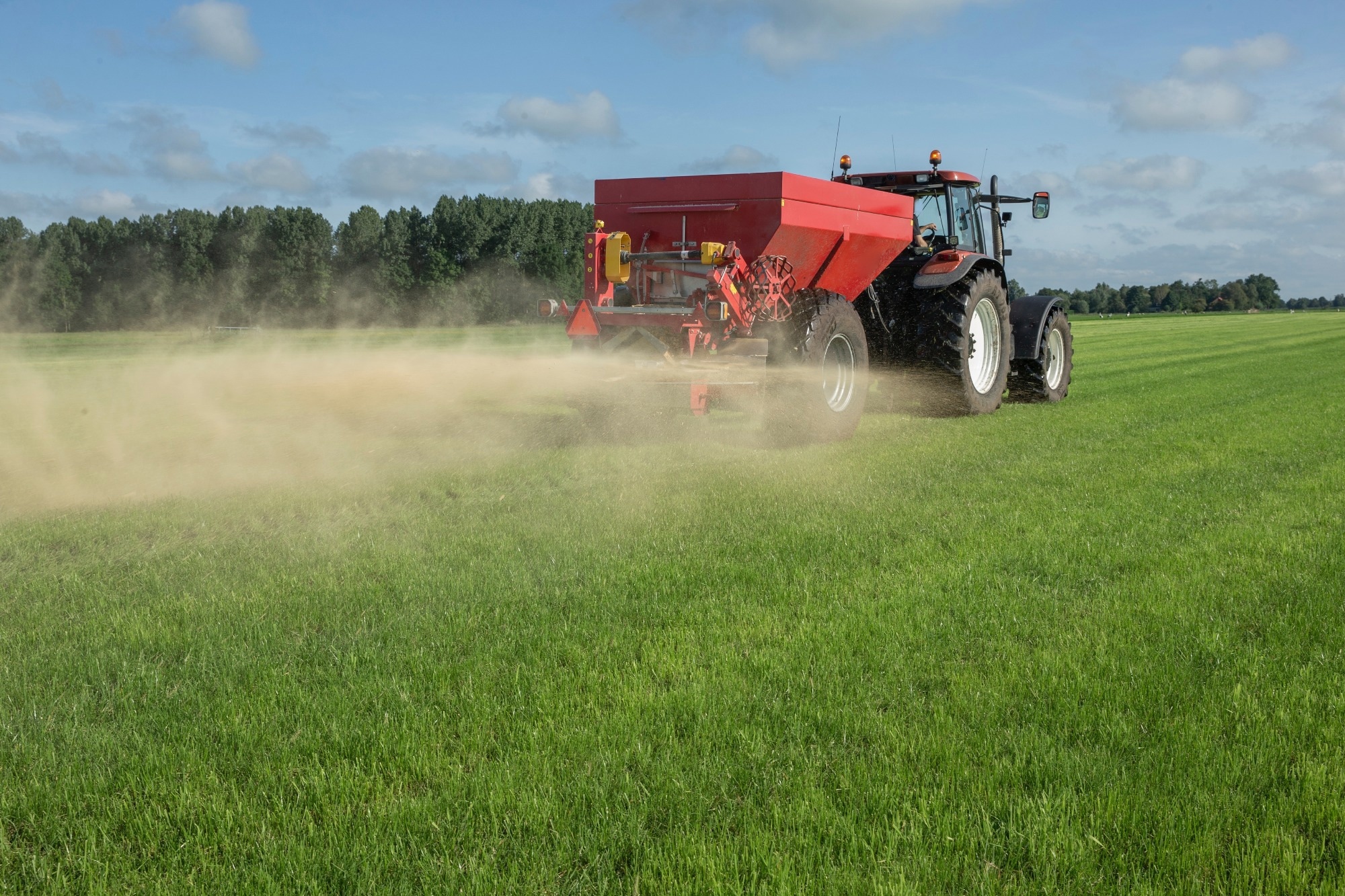
Image Credit: AlbHen/Shutterstock.com
Harmful Effects of N2O Emissions on the Environment
N2O poses a dual threat to the environment.2 As a stratospheric ozone-depleting substance, N2O contributes to the breakdown of the protective ozone layer that shields Earth from harmful ultraviolet radiation. At the same time, it functions as an exceptionally potent greenhouse gas, with a 100-year global warming potential.
Researchers have also found that each N2O molecule traps 273 times more heat in the atmosphere over a century than carbon dioxide.
The concentration of N2O in Earth’s atmosphere has increased dramatically since the pre-industrial era, rising by over 20 % from 270 parts per billion (ppb) in 1750 to 331 ppb in 2018. This steady accumulation reflects the intensification of human activities and represents a concerning trajectory that threatens both climate stability and stratospheric ozone protection.
N2O Emission from Agricultural Practices
Agricultural croplands have emerged as the dominant source of anthropogenic N2O emissions.3 These emissions primarily originate from various agricultural practices, including the application of synthetic and organic fertilizers to enhance crop yields, the use of animal manure as a soil amendment, and the burning of agricultural residues after harvest. Nitrogen compounds in fertilizers undergo microbial transformations in soil, producing N2O as a byproduct.
Multiple microbial pathways govern N2O production in agricultural soils.4 Ammonia-oxidizing bacteria and archaea perform ammonia oxidation, while nitrifier denitrification allows these organisms to produce N2O under oxygen-limited conditions. Many bacteria carry out heterotrophic denitrification, reducing nitrate via enzymatic reactions and releasing N2O as an intermediate product.
Research has shown that nitrification and heterotrophic denitrification are the primary sources of N2O. The availability of substrates, such as ammonium and nitrate, and environmental factors, such as soil moisture, oxygen levels, and pH, strongly influence microbial N2O production.
As the global population continues to expand and dietary preferences shift toward more resource-intensive foods, agricultural production must increase substantially. This agricultural intensification is projected to drive N2O emissions upward by 35 %–60 % between 2005 and 2030, creating a critical environmental dilemma.5
Strategies to Reduce Agricultural N2O Emission
Various strategies have been developed to reduce agricultural N2O emissions, including optimized fertilizer management, irrigation practices, tillage methods, and crop selection. Key N2O emission management approaches that can be implemented by farmers are discussed below:4,6
Irrigation Pattern
Water supply and distribution methods affect soil moisture spatially and temporally, thereby impacting the nitrogen cycle, including nitrification and denitrification. The majority of developed countries worldwide use flood irrigation systems, applying high water volumes that dilute fertilizers, facilitating their easier absorption. However, this approach creates anaerobic conditions conducive to N2O production and nitrate leaching.
Alternate wetting and drying methods save water and potentially reduce greenhouse gas (GHG) emissions, though results vary by soil type. Sprinkler irrigation creates looser surface layers than flood irrigation, reducing leaching and concentrating available nitrogen in the root zone for easier plant uptake, limiting N2O conversion.
Tillage Practices
Tillage practices influence crop productivity and GHG emissions by substantially affecting soil properties. It is not easy to select the most favorable tillage practices that reduce GHG emissions, given conflicting research findings.
Despite contrasting results due to differences in soil characteristics and ambient conditions, reduced and no-tillage generally benefit GHG mitigation, providing favorable conditions for emission containment.
Crop Residue Management
Crop residue provides carbon for microbial growth, stimulating nitrogen assimilation and promoting ammonium competition between heterotrophic microorganisms and autotrophic nitrifiers, leading to N2O production.
In coarse-textured soils with limited organic carbon, residue addition increases N2O emissions, whereas in fine-textured soils, residues with a low carbon-to-nitrogen ratio increase emissions.
Residues from mature crops have higher carbon-to-nitrogen ratios, which immobilize nitrogen and reduce nitrate availability, limiting N2O emissions.
Crop residue management shows no consistent behavior; residue characteristics and ambient conditions must be considered for effective management and reduced emissions.
Fertilizer Management
Applying nitrogen and phosphorus fertilizers at optimal levels increases crop yield while reducing GHG emissions. N2O emissions are influenced by fertilizer type, quantity, and application timing. Maintaining nitrogen doses at the lowest non-limiting levels reduces soil nitrogen availability and N2O emissions.
Nitrous Oxide Emissions: Causes, Impacts, and Climate Solutions
Nitrification Inhibitors
Nitrification inhibitors or slow-release nitrogen fertilizers reduce N2O and methane emissions without compromising yield.
These inhibitors reduce N2O emission directly by inhibiting nitrification and indirectly by reducing nitrate availability for denitrification.
Chemical compounds in inhibitors deactivate ammonia monooxygenase enzymes responsible for the first nitrification step, prolonging ammonium in soils and decreasing substrate availability for denitrifiers.
Research has shown that inhibitors, such as dicyandiamide, hydroquinol, nitropyrimidine, and benzoic acid, significantly reduce nitrous oxide emissions.
Arbuscular Mycorrhizal Fungi
Arbuscular mycorrhizal fungi (AMF) establish symbiotic relationships with most plants and help reduce N2O emissions. These fungi acquire nutrients for plants, preferring ammonium over nitrate.
By competing with other microorganisms for nitrogen, AMF reduce the nitrogen available for N2O production. Studies show that soils with AMF-colonized roots produce significantly less nitrous oxide than soils with roots alone.
AMF reduce emissions by decreasing nitrate leaching, limiting nitrogen availability for nitrification and denitrification, lowering genes responsible for N2O production, and lowering populations of ammonia-oxidizing bacteria. Through these interactions with plants and soil, AMF help control nitrogen levels and reduce nitrous oxide emissions.
Biochar Application
Biochar, a carbon-rich product from the pyrolysis of organic matter, sequesters carbon and improves soil properties by altering physical, chemical, and biochemical processes that influence N2O production. It reduces N2O emission through biotic and abiotic pathways by modifying soil pH, aeration, and water-holding capability, while also directly absorbing nitrous oxide. In the rice field, biochar application reduced N2O and ammonia emissions by 16.10 % and 89.60 %, respectively.
Lime Application
Soil N2O emissions are regulated by pH; emissions decrease linearly with increasing pH, particularly between pH 4 and 7, irrespective of soil type.
Lime application modifies soil pH, regulating organic matter mineralization, nitrification, and denitrification. However, contradictory reports exist regarding the impact of lime on N2O emissions.
Increased carbon and nitrogen mineralization can enhance nitrification and denitrification, potentially increasing emissions. Conversely, other studies show a significant reduction due to increased N2O reductase activity, converting more nitrous oxide to nitrogen gas.
Click here to download a free PDF copy of this page
Conclusion
Farmers have multiple strategies to reduce N2O emissions from agricultural systems, including optimizing nitrogen fertilizer application through precise timing and placement, adopting water-saving irrigation practices, implementing conservation tillage, and utilizing soil amendments such as biochar and lime.
The effectiveness of these strategies varies significantly depending on soil characteristics, climate conditions, and management practices. No single approach provides universal benefits, and successful mitigation requires integrating multiple practices rather than relying on isolated interventions.
References and Further Reading
- Rise in nitrous oxide emissions endangers pathway to 1.5°C, the ozone layer, and human health. United Nations Environmental Program. 2024; Available at: https://www.unep.org/news-and-stories/press-release/rise-nitrous-oxide-emissions-endangers-pathway-15degc-ozone-layer
- Cui X, et al. The global potential for mitigating nitrous oxide emissions from croplands. One Earth. 2024; 7(3): 401-420. https://doi.org/10.1016/j.oneear.2024.01.005
- Wang Q, et al. Data-driven estimates of global nitrous oxide emissions from croplands. Natl Sci Rev. 2020;7(2):441-452. doi: 10.1093/nsr/nwz087.
- Kesamreddy L, et al. Best management practices for reducing nitrous oxide (N2O) emissions in vegetable production systems. J Agric Food Res. 2026; 26, 102703. https://doi.org/10.1016/j.jafr.2026.102703
- Hong C, et al. Interactions Among Food Systems, Climate Change, and Air Pollution: A Review. Engineering. 2025; 44: 215-233. https://doi.org/10.1016/j.eng.2024.12.021
- Hassan MU, et al. Management Strategies to Mitigate N2O Emissions in Agriculture. Life (Basel). 2022;12(3):439. doi: 10.3390/life12030439.
Disclaimer: The views expressed here are those of the author expressed in their private capacity and do not necessarily represent the views of AZoM.com Limited T/A AZoNetwork the owner and operator of this website. This disclaimer forms part of the Terms and conditions of use of this website.