Hydrogen is not found as a free gas in usable quantities, despite being the most abundant element in the universe. It must instead be extracted from compounds, for example, water (H2O) or natural gas (CH4).
Image Credit: Scharfsinn/Shutterstock.com
Hydrogen can be produced via a range of methods, including fossil-fuel-based techniques and electricity-powered electrolysis.
This article outlines the major hydrogen production processes, explains their environmental significance, and showcases how Power to Hydrogen is supporting the field’s evolution with its proprietary hybrid Anion Exchange Membrane (AEM) electrolyzer technology.
The Importance of Hydrogen Production
More energy is required globally, and hydrogen production offers a path towards meeting this need. Global hydrogen production reached 97 million tons in 2023, but less than 1 % of this hydrogen was generated via low-emission technologies.
Extending clean hydrogen capacity is key to achieving global climate goals and reducing global reliance on fossil fuels. Hydrogen produced via renewable electricity offers a range of critical benefits, including:
- Delivering long-duration energy storage able to complement variable solar and wind energy
- Facilitating zero-emission solutions in long-haul and heavy-duty transportation applications
- Decarbonizing hard-to-electrify sectors like steel manufacturing and cement
Governments worldwide are increasingly investing in hydrogen policy frameworks and infrastructure. For example, the United States’ Department of Energy aims to reduce hydrogen costs to $1 per kilogram by 2030, while hydrogen is a cornerstone of the Fit for 55 climate targets in Europe, which are designed to accelerate decarbonization.
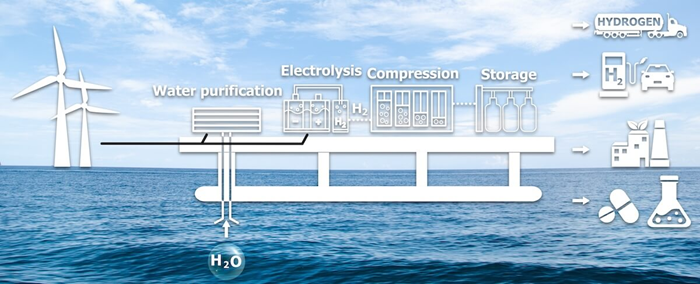
Image Credit: Power to Hydrogen
Understanding Hydrogen Color Codes
Color labels are typically used to categorize hydrogen, indicating its production method and associated emissions.
- Gray Hydrogen: Gray hydrogen is produced via steam methane reforming (SMR) with no carbon dioxide capture. This method is well-established and inexpensive, but it releases roughly 9 kg of carbon dioxide per kilogram of hydrogen produced.
- Blue Hydrogen: Blue hydrogen production also uses SMR but incorporates carbon capture and storage (CCS) to reduce emissions by up to 90%.
- Green Hydrogen: Green hydrogen’s production eliminates carbon emissions by leveraging electricity from wind, solar, or other renewable energy sources to split water into hydrogen and oxygen via electrolysis.
Emerging hydrogen color codes include pink hydrogen, generated via nuclear-powered electrolysis; turquoise hydrogen, produced via methane pyrolysis with solid carbon byproducts; and yellow hydrogen, made from grid electricity of mixed origin.
Understanding this spectrum of hydrogen production allows organizations to better navigate regulatory and policy frameworks in the energy sector. Each type of hydrogen benefits different investment goals and purposes, meaning that organizations must understand these distinctions when setting emissions targets and developing technology roadmaps.
Hydrogen Production Methods
A range of hydrogen production methods exists, each with distinct environmental and technical characteristics. These range from traditional fossil-based techniques to emerging renewable-powered approaches.
Steam Methane Reforming (SMR)
Steam methane reforming remains the most widely used method for producing hydrogen, supplying approximately 76 % of global hydrogen output in 2023. This process sees natural gas (primarily methane) react with high-temperature steam at temperatures between 600 and 1000 °C and pressures exceeding 20 bar.
The resulting chemical reaction produces hydrogen, carbon dioxide, and carbon monoxide.
SMR infrastructure is well established and understood within the engineering community, but its significant carbon emissions mean it is increasingly viewed as a transitional technology that requires carbon capture and storage (CCS). In many cases, it is being replaced altogether by cleaner alternatives such as electrolysis.
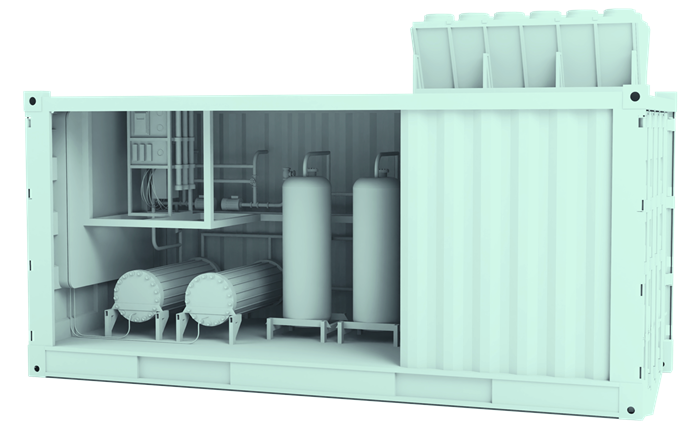
Image Credit: Power to Hydrogen
Electrolysis
Electrolysis is a clean production method that leverages electricity to split water into hydrogen and oxygen. This method produces hydrogen with near-zero emissions when powered by renewable energy sources such as wind or solar. Electrolysis offers a number of key advantages:
- Seamless integration with intermittent renewable power sources
- Scalability and modularity, from kilowatt to multi-megawatt systems
- High-purity hydrogen output appropriate for industry and fuel cells
Four primary types of electrolyzers are used, with each type suited to different operational contexts and use cases.
- Anion Exchange Membrane (AEM): AEM electrolyzers combine features of both alkaline and PEM systems. These systems tolerate variable energy inputs, use non-precious metals, and are cost-effective. Power to Hydrogen specializes in the development and supply of high-performance AEM electrolyzers suitable for scalable, distributed hydrogen production.
- Proton Exchange Membrane (PEM): PEM electrolyzers offer rapid response times and employ a solid polymer membrane, but they rely on expensive catalysts like iridium (Ir) and platinum (Pt).
- Alkaline Water Electrolyzer: These electrolyzers employ a liquid alkaline solution (typically potassium hydroxide (KOH)) with a diaphragm barrier, a well-established, cost-effective technology. These systems are less compatible with fluctuating and intermittent power from renewable energy sources, however.
- Solid Oxide Electrolyzer (SOEC): They operate at high temperatures (600 °C to 1000 °C), potentially improving efficiency by leveraging waste heat from industrial processes.
Electrolyzers underpin the current hydrogen transition, with ongoing research and development efforts aimed at improving durability, efficiency, and cost-effectiveness across all electrolyzer types.
Electrolyzers’ efficiency is affected by a range of factors, including catalyst loading, membrane conductivity, and thermal management. Innovations in stack design, including integrated heat exchangers and pressure balancing, further improve performance.
The integration of electrolysis with renewable energy sources enables grid stabilization through load balancing and demand response mechanisms.
Biomass Gasification
Biomass gasification converts organic matter, such as agricultural residue, wood chips, or municipal waste, into synthesis gas (syngas). Syngas is a mixture of carbon monoxide, carbon dioxide, and hydrogen.
Partial oxidation breaks down the feedstock in a controlled 800 to 1000 °C environment before the syngas is purified using methods such as pressure swing adsorption or membrane separation to extract hydrogen.
This method offers a low-carbon hydrogen pathway when hydrogen is sourced from sustainably managed biomass or waste, provided that land use, lifecycle emissions, and water consumption are carefully managed.
Biomass gasification is still in its early stages and is not currently considered ready for commercialization.
Methane Pyrolysis
Methane pyrolysis works by splitting natural gas into hydrogen and solid carbon in the absence of oxygen. This process operates at temperatures exceeding 1200 °C and can avoid carbon dioxide emissions while producing a marketable carbon byproduct if managed correctly.
The primary technical challenges associated with methane pyrolysis include managing the collection and reuse of solid carbon and achieving high thermal efficiency. Methane pyrolysis could serve as an additional low-emission alternative to SMR if it is successfully commercialized at scale.
Emerging and Alternative Hydrogen Production Methods
A number of other hydrogen production techniques are being developed and refined in terms of their sustainability, scalability, and suitability for niche applications.
- Photoelectrochemical (PEC) water splitting combines solar absorption and electrolysis in a single device to split water using sunlight.
- Thermochemical cycles leverage high-temperature chemical reactions (typically powered by concentrated solar energy) to break down water molecules.
- Biomass-derived liquid reforming converts bio-oil or bioethanol into hydrogen-rich gases.
- Solar Thermochemical Hydrogen (STCH) makes use of mirrors to focus sunlight onto a reactor to drive high-temperature water-splitting reactions.
- Photobiological processes employ cyanobacteria or algae able to naturally produce hydrogen in certain conditions.
- Microbial fermentation uses bacteria to digest organic material in oxygen-free environments to generate hydrogen and organic by-products.
These methods are currently at different stages of development, but each offers promise for reduced emissions, costs, or material use. Pilot deployments and continued investment will determine their role in the hydrogen economy of the future.
Selecting the Right Hydrogen Production Technology
Several factors must be considered when selecting the optimal hydrogen production method, including emissions targets, local resources, cost, and intended use. It is important that projects align long-term strategic goals with technical feasibility.
Capital and Operating Costs
Initial investment and ongoing operating expenses differ considerably depending on the method selected. For example, electrolysis requires significant electrical input but benefits from continually lowering renewable energy prices.
Organizations are advised to compare the levelized cost of hydrogen (LCOH) projections for each method, using local fuel and power rates, to determine which path offers the best return over the system’s lifetime.
Carbon Emissions
A lifecycle carbon intensity of below 2 kg of carbon dioxide per kilogram of hydrogen is generally required to meet environmental and corporate net-zero targets.
Electrolysis powered by wind or solar generally meets this threshold, but fossil-based methods like SMR may qualify only if used in conjunction with highly effective carbon capture systems.
Scale and Timeline
Large industrial operations may require hundreds of tons of hydrogen per day, while remote facilities could require just a few kilograms. Commercialized technologies like AEM electrolysis, PEM electrolysis, and SMR offer the scalability and modularity required to accommodate varying demand profiles.
Future Expansion Plans
Organizations planning to scale up are advised to consider emerging methods and modular technologies with the potential to offer long-term efficiency or cost benefits. Pilot programs may offer lower future costs but greater technical risk, whereas proven platforms support immediate deployment.
Infrastructure and Location
Access to infrastructure such as high-voltage transmission lines, carbon dioxide pipelines, and renewable energy sources affects technology selection. On-site AEM electrolysis and other distributed hydrogen systems are ideally suited to use in remote or infrastructure-limited locations.
If underground storage or carbon dioxide pipelines are available nearby, it may be cost-effective to add carbon capture to an SMR plant.
End Use Requirements
Different applications require different levels of hydrogen purity, volume, and pressure. For example, fuel cell vehicles require ultra-pure hydrogen at high pressures (350 to 700 bar), while industrial processes typically operate at lower thresholds.
Considering end-use constraints helps optimize production design, and planning a system to allow for capacity expansions is also beneficial. Modular electrolyzer stacks allow the incremental addition of more units, facilitating growth without the need for a full system overhaul.
Local Regulatory Environment
Emissions regulations, permits, and financial incentives differ between regions, with some jurisdictions offering fast-track approvals or tax credits for hydrogen projects. It is important to thoroughly review the regulatory landscape to avoid additional costs or delays.

This information has been sourced, reviewed, and adapted from materials provided by Power to Hydrogen.
For more information on this source, please visit Power to Hydrogen.