The New Energy Challenge
Energy Demand Is Reshaping Corporate Strategy
Adding Storage to the Equation
A Hybrid Future
References and Further Reading

In this Perspectives article, Rob Stait, Managing Director, BtM, at Alight, describes how behind-the-meter (BtM) energy systems and battery energy storage systems (BESS) are critical tools to meet increasing electricity demand worldwide. He highlights how grid constraints, increasing energy costs, and the expansion of AI, data centers, and electrification are driving businesses to adopt localized power generation and energy storage. As a result, distributed renewable energy and hybrid energy systems are playing an increasingly important role in enhancing resilience, strengthening energy security, and supporting the transition to a low-carbon energy future.
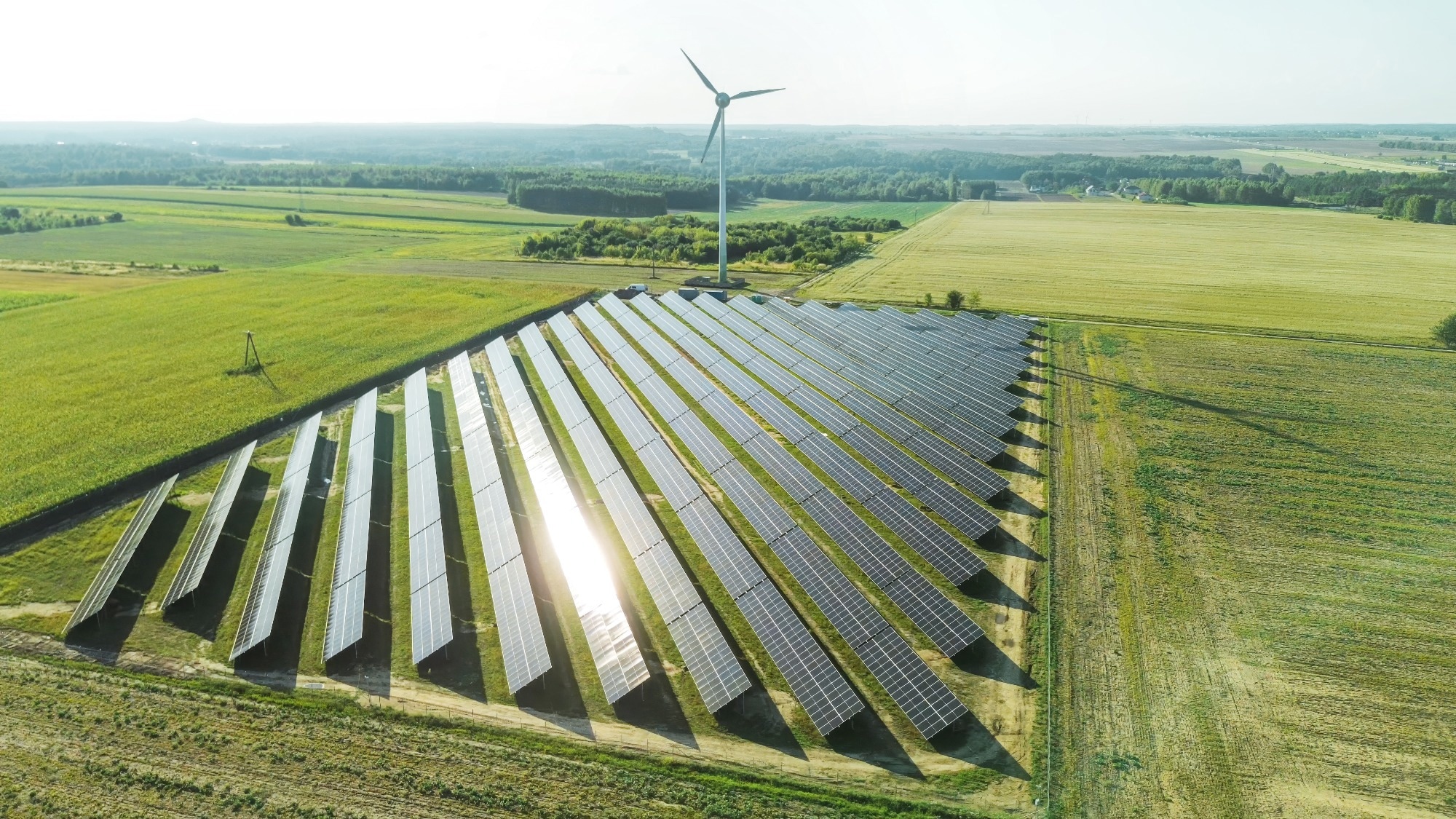
Image Credit: alexgo.photography/Shutterstock.com
The New Energy Challenge
The energy transition is in a new phase. Though centralized infrastructure and utility-scale generation aided the early scale-up of renewable power and clean energy, today's challenge is delivering reliable, affordable, and resilient power fast enough to meet the insatiable demand.
Grid delays, rising energy costs, and resilience have become mission-critical considerations for commercial customers. As a result, organizations are increasingly turning to direct and dedicated generation and storage solutions, known as behind-the-meter (BtM) solutions, which have emerged as practical responses to the structural challenges facing the energy sector today.
BtM and battery energy storage systems (BESS) are two parts of the energy market's multifaceted response to major demand and pressures; together, they are elements of a much larger solution for stable and secure energy provision in a rapidly changing world.
Saving this for later? Download a PDF here.
As AI usage continues to increase, the electricity needed to power its infrastructure is placing pressure on already overburdened energy grids. Beyond AI and data centers, electrification across more traditional industries and transport continues at a rapid pace, compounding pressure and pushing grids to the brink of crisis.
Without addressing supply bottlenecks, it is estimated that around "20% of planned data center projects could be at risk of delays."1 High energy and generation equipment demand is not solely driven by data centers but also by other industries, including major power users such as manufacturing, retail, and utilities.
Renewables are emerging as the fastest-growing source of electricity, meeting “nearly 50% of the growth in data center electricity demand.”1 As grid connections are now regularly delayed and infrastructure continues to operate under great strain, it is harder for businesses to align their operational goals with grid timelines. Solutions such as BtM and BESS are accelerating as corporates recognize the need to source reliable, independent power to sustain operational success.
Energy Demand Is Reshaping Corporate Strategy
The conversation around the energy transition is shifting from environmental concerns to an operational and economic focus for corporate success. Global electricity demand is projected to boom from now until 2027, a surge which “corresponds to adding more than the equivalent of Japan to the world’s electricity consumption each year.”1 Against that backdrop, access to reliable power has become a competitive asset rather than a sustainability add-on.
The urgent strategic necessity of clean power is clear as technology giants such as “Meta, Amazon, Google, and Microsoft accounted for about half the 56 gigawatts of clean power purchase deals signed in 2025.”2 This reflects the broader race among energy-intensive businesses to lock in consistent electricity supply and price certainty.
For major corporations, energy sourcing is increasingly determining investment decisions, data center siting, expansion, and long-term competitiveness.
Traditional centralized power systems require structural reform to meet the surge in demand. Companies are increasingly opting for BtM due to its quicker rollout and the ability to be located on or near an existing site with minimal permitting obstacles.
Businesses cannot afford to wait for systemic changes. Therefore, corporations have taken the initiative to embrace hybrid and diversified energy strategies. Moreover, on-site or near-site solar and private-wire models reduce exposure to connection congestion, wholesale volatility, and transmission charges.
Thanks to continued investment, spending on low-emission power has nearly doubled over the past five years. The scope for the future of renewable energy is undeniable, with an uptick in solar investment for both “utility-scale and rooftop” applications.1 It was even reported to be the “largest single item in our inventory of the world’s investment spending.”1
Such investment reinforces BtM applications as a critical component of the broader supply chain transition toward decentralized infrastructure through energy localization. Balanced with the grid, alternative distributed energy generation reduces pressure on overstretched power systems whilst advancing the deployment of renewables.
Adding Storage to the Equation
When considering energy resilience, corporations will achieve their strongest position by securing both energy supply and storage. Storage capabilities transform intermittent generation into a state of operational resilience.
BESS stores electricity when supply is abundant and discharges it when demand is at its highest, enabling load shifting, peak shaving, and backup power whilst optimizing on-site consumption.
Recent geopolitical tensions have sent shock waves through the energy market and have been a catalyst for action to ensure continuity, predictability, and operational protection. 2025 marked “the EU’s 12th consecutive record year for battery storage deployment,” which indicates the evident trend in battery deployment growth and storage scale-up.3
Setups that incorporate storage capabilities help companies meet decarbonization goals and build total energy resilience.
A Hybrid Future
Ultimately, the future energy system will be neither fully centralized nor fully decentralized. Hybridity stands to create a system capable of powering today’s world, such as how BtM and storage will power data centers and the current digital infrastructure buildout.
Such a system will comprise national grids, utility-scale renewables, local generation, storage assets, flexible demand capabilities, and direct energy arrangements. Those businesses embracing distributed solar are not abandoning the grid; rather, they are acting as trailblazers, building resilience around it.
About the Writer

Rob Stait is Managing Director, BtM, at Alight. Stait joined Alight in 2025 from VivaCity, a mobility and infrastructure company, where he was Chief Revenue Officer. He has significant experience in the infrastructure space, having served as Chief Commercial Officer at AppyWay and held leadership positions at both Glyde and Capita. Stait has also worked in utilities and energy, holding senior roles at Echo Managed Services and ENSEK.
Stait leads Alight’s Europe-wide BtM work from the London office. He works closely with clients to deliver operational excellence, emissions reductions, and savings on power needs.
About Alight
Alight is a Sweden-founded solar developer and independent power producer, with parks and assets in the UK, France, Spain, Poland, Denmark, Finland, and Sweden.
Alight counts the likes of Toyota, H&M, and Lear Corporation as customers. It is majority-owned by CVC DIF, with an expansive pipeline of live and planned parks and on-site projects across Europe.
References and Further Reading
- IEA, (2025). World Energy Investment 2025 10th Edition. IEA. https://www.iea.org/reports/world-energy-investment-2025.
- Gombar, V. (2026). Clean Power Is Up and Will Get a War Boost: Three Things to Know. BloombergNEF. Available at: https://about.bnef.com/insights/clean-energy/clean-power-is-up-and-will-get-a-war-boost-three-things-to-know/.
- (2026). New report: EU installs 27.1 GWh of new batteries in 2025 as utility-scale storage drives record growth. SolarPower Europe. Available at: https://www.solarpowereurope.org/press-releases/new-report-eu-installs-27-1-g-wh-of-new-batteries-in-2025-as-utility-scale-storage-drives-record-growth.
- Dupond, S., and Arruebo, A. (2026) Auctions and corporate ppas, Auctions and Corporate PPAs: European Market Review 2025. [Online] Solar Power Europe. Available at: https://www.solarpowereurope.org/insights/thematic-reports/auctions-and-corporate-pp-as-european-market-review-2025 (Accessed on 14 May 2026).
- Mathis, W. (2025). UK Solar Farms Produce Record Amount of Power as Capacity Grows. [Online] Bloomberg. Available at: https://www.bloomberg.com/news/articles/2025-04-01/uk-solar-farms-produce-record-amount-of-power-as-capacity-grows (Accessed on 14 May 2026).