New spatial analysis shows how optimized straw-derived biochar can dramatically reduce N2O emissions from Chinese agricultural soils.
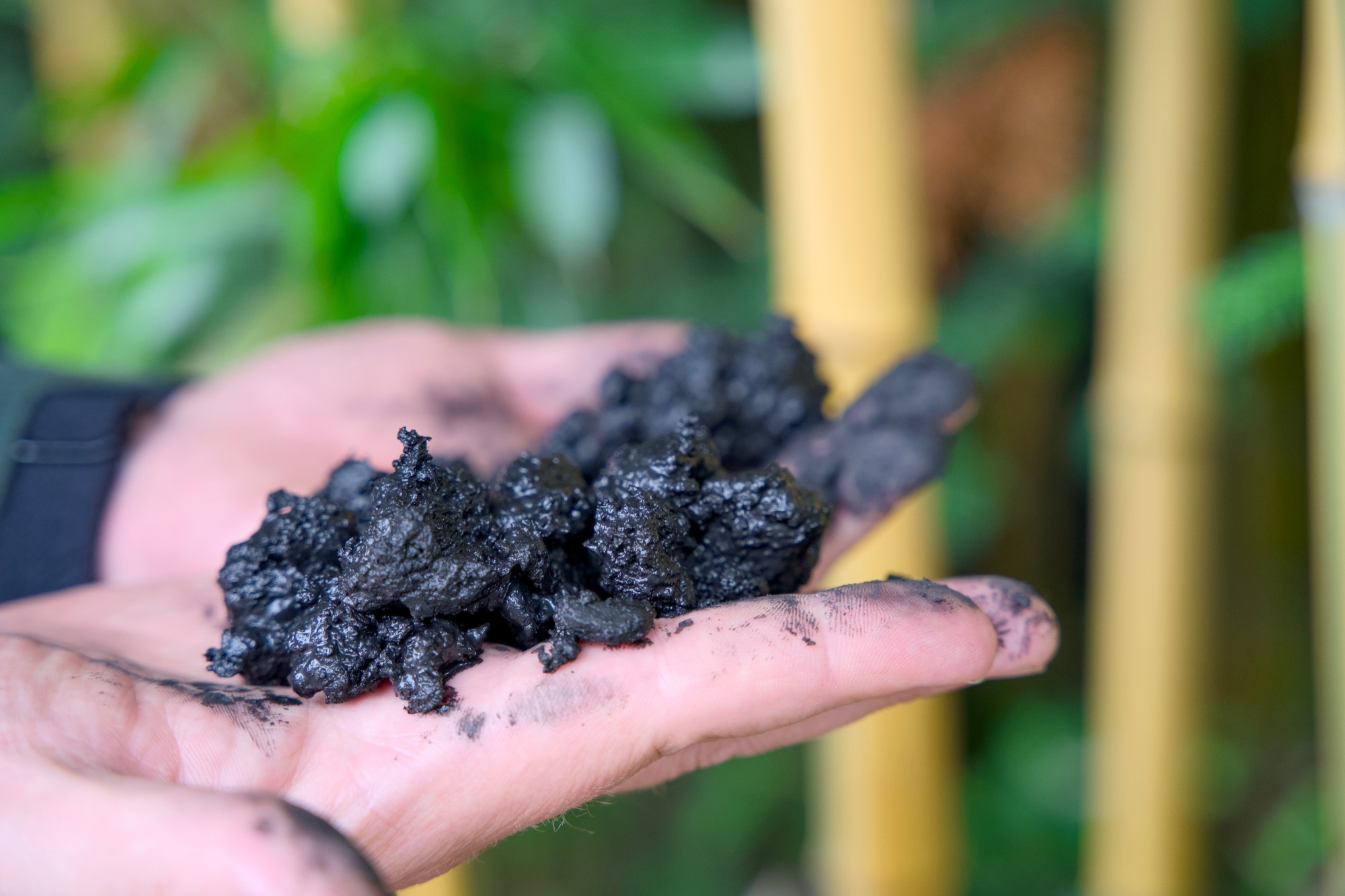
Image Credit: Rene Notenbomer/Shutterstock.com
Biochar’s Role in Agricultural Soils
Agricultural soils are a substantial source of nitrous oxide (N2O) emissions. Applying biochar to these soils is a beneficial strategy that simultaneously enhances stable organic carbon (C) sequestration and reduces greenhouse gas (GHG) output, particularly N2O. However, existing biochar application methods frequently fail to consider local conditions regarding optimal application rates and specific biochar properties, thereby restricting the full potential for N2O mitigation.
The findings indicate that implementing optimal strategies could prevent roughly 50 % and 36 % of total national cropland N2O emissions under ideal and realistic conditions, respectively. The optimal application rates and biochar characteristics required for maximal N2O reduction vary significantly across regions and depend on the biochar feedstock.
Critical determinants for the optimal application rate include the rate of nitrogen (N) fertilizer use and soil organic carbon (SOC) content, while water input (precipitation and irrigation) is the main factor influencing the optimal biochar properties.
The Study
This study compiled a dataset on the effects of straw-derived biochar on N2O emissions from Chinese agricultural soils using literature searches across Web of Science, Google Scholar, and China Knowledge Resource Integrated (CNKI) databases.
The search utilized keywords such as "Biochar," "Nitrous oxide," " N2O," "GHGs," "straw," and "soil" for articles published between January 2010 and December 2023.
The criteria for selecting articles included having control treatments with at least three replications being conducted on Chinese agricultural soils, utilizing crop residue (rice, wheat, or maize straw) as feedstock, and clearly reporting the location, time, and basic properties of the soil and biochar.
Seventy-one articles were chosen, providing 392 observational data points on N2O emissions. When necessary, variables were missing (e.g., soil properties, climate, or management data); they were supplemented using external datasets, including the Harmonized World Soil Database 2.0 for soil properties, the China Meteorological Forcing Dataset for climate conditions, and specific datasets for N fertilizer application and irrigation water use.
Machine learning algorithms and meta-analysis were then employed to understand the mechanisms by which environmental conditions and biochar properties affect N2O mitigation potential. Finally, a spatially explicit optimization was performed under both ideal and realistic conditions to formulate locally appropriate biochar application strategies that maximize N2O mitigation.
Click here to download a free PDF copy of this page
Results and Discussion
The meta-analysis revealed that the N2O mitigation ratio associated with biochar application initially increases and then decreases as N fertilizer application rates rise. At low N fertilizer levels, mitigation effects are limited because N2O emissions are predominantly due to nitrification, where biochar's effectiveness is less pronounced compared to denitrification. Conversely, very high N application leads to elevated nitrate concentrations that exceed biochar’s adsorption capacity and inhibit N2O reductase activity, increasing emissions.
Regarding application rate, the mitigation potential first increases and then declines as the rate rises, with high variability observed at rates exceeding 40 t ha−1. Biochar properties are also critical: N2O emissions decreased by over 30% when biochar pH exceeded 10, likely due to a "liming effect" that raises soil pH and facilitates the complete conversion of N2O to N2 during denitrification.
Biochar with a high C/N ratio (e.g., C content >500 g kg−1 and N content >10 g kg−1) is highly effective, as it provides ample C for microbial activity but limits N availability for nitrification and denitrification, constraining N2O production.
Biochar was significantly effective in soils with high SOC (above 15 g kg−1) and high bulk density (greater than 1.80 g cm−3), primarily by enhancing N2O reductase activity in high SOC soils and increasing soil porosity in dense soils, which fosters a more aerobic environment and inhibits denitrification.
Spatially, the maximum N2O mitigation ratio difference between optimal and worst-case scenarios reached 73.89 %, 59.78 %, and 64.90 % for rice-, wheat-, and maize-straw-derived biochar, respectively.
Central and East China, especially Jiangsu and Henan provinces, showed the largest disparities, highlighting the regional importance of optimal strategies.
Under ideal conditions, applying optimal strategies for rice, wheat, and maize biochar could prevent 35 %, 19 %, and 20 % of nationwide N2O emissions, respectively, totaling 49.8 % when the best option is chosen for each region.
Under the more constrained realistic condition, which incorporates straw resource availability, the total accumulated N2O emission reduction over 30 years was estimated to be 5.46 Tg N.
Conclusion
Applying straw-derived biochar using regionally optimal strategies offers significant potential for reducing N2O emissions from croplands in China, demonstrating that nearly half of the emissions could be avoided under ideal conditions. The study successfully identified key drivers - N fertilizer application, SOC content, and water input - that dictate the optimal biochar application rate and properties for different regions and feedstocks.
Journal Reference
Wang Q., Yao D., et al. (2026). Maximizing nitrous oxide mitigation potential of straw-derived biochar in China with optimal application strategies. Biochar, 8(1), 1–14. DOI: 10.1007/s42773-025-00544-1, https://link.springer.com/article/10.1007/s42773-025-00544-1