A recent study conducted by Edinburgh Business School at Heriot-Watt University revealed that although hydrogen production, storage, and fuel cell technologies are progressing swiftly, the development of hydrogen distribution infrastructure is lagging at half the pace, leading to a significant bottleneck that could endanger billions in clean energy funding. The study was published in the journal Sustainable Futures.
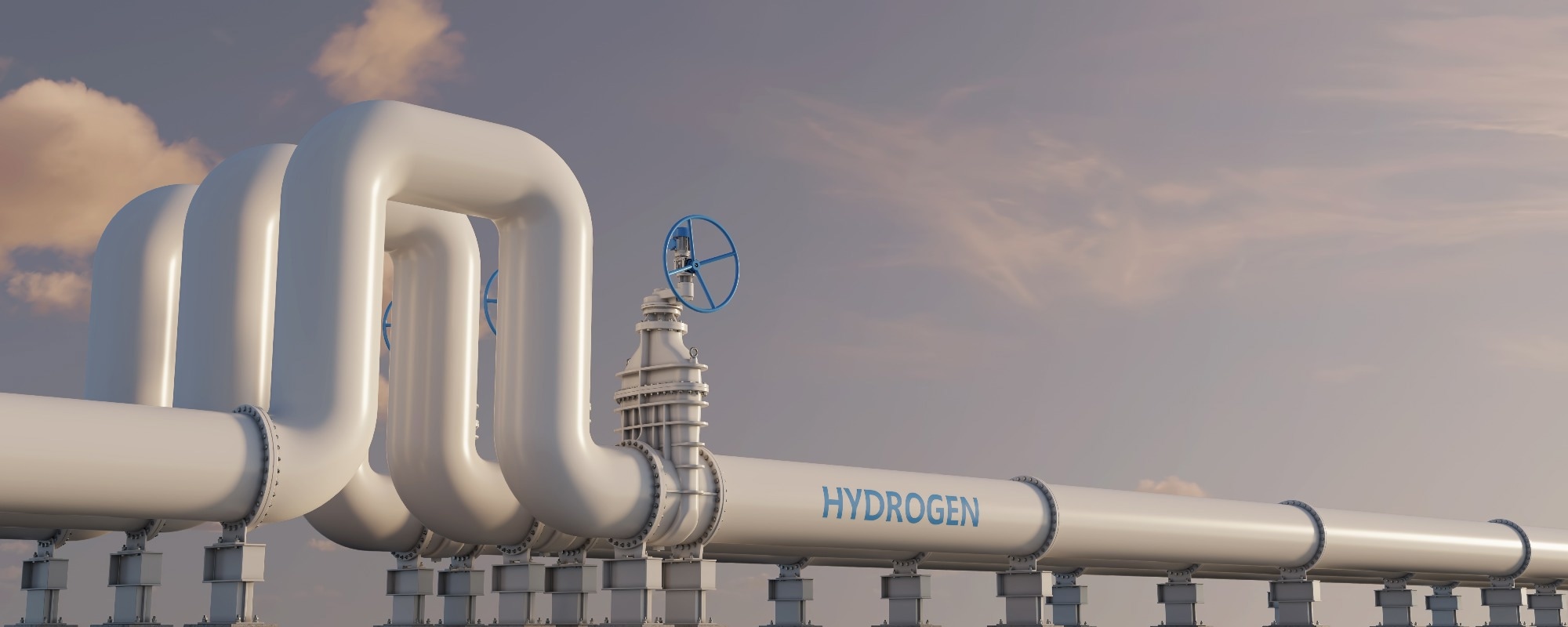
Image Credit: Orange Dragon Studio/Shutterstock.com
The study represents a significant milestone in acknowledging that, although advancements in other hydrogen technologies continue and costs decrease, distribution costs may constitute a substantial portion of hydrogen system budgets, thereby significantly restricting overall efficiency and the expansion of the hydrogen industry.
The research team examined 777,000 patents and 1.3 million citations spanning 182 years on the development of hydrogen technology, uncovering distinct variations in progress across the system.
Distribution will become the dominant cost in any hydrogen system. Even as we get better at producing and using hydrogen, getting it where it is needed stays expensive. The problem is structural. Distribution requires massive pipeline networks and liquefaction plants that need billions in capital investment. Safety regulations and permitting processes are complex, so progress is slow.
Dr. David Dekker, Research Fellow and Study Lead Author, Edinburgh Business School, Heriot-Watt University
“Most distribution infrastructure sits with a handful of major companies. They tend to share less knowledge than innovators in other hydrogen fields. In capital-intensive sectors where competitive advantage matters, companies are far less likely to publish innovations openly. This slows progress across the entire sector,” said Dr. David Dekker.
We cannot have a hydrogen economy without the infrastructure to move it around. Right now, that is the fundamental missing piece. The Paris Agreement, adopted in 2015, requires rapid scaling of clean energy technologies, but infrastructure bottlenecks could undermine major investment programs. The question now is whether policymakers and industry will act before distribution costs make hydrogen uncompetitive.
Dimitris Christopoulos, Professor and Director, Research, Edinburgh Business School, Heriot-Watt University
Dimitris Christopoulos, also associated with the School of Social Sciences, co-authored the study.
The results indicate the areas of greatest vulnerability within the hydrogen system, highlighting that the infrastructure, such as pipes, terminals, and liquefaction plants, essential for the safe and cost-effective transportation of hydrogen, is falling behind.
This is significant because distribution is the connective tissue of the entire hydrogen system. In its absence, production is limited to locations near manufacturing facilities, which prevents the broader economy from utilizing hydrogen and hinders the realization of its climate advantages.
As the BBC recently reported on Germany’s green hydrogen industry, hydrogen faces a classic chicken and egg problem. Industry will not commit at scale without pipelines, terminals, and reliable delivery, but those networks will not be built at scale without firm industrial demand.
Mercedes Maroto-Valer, Professor and Study Lead, UK Industrial Decarbonisation Research and Innovation Centre (IDRIC)
“What this new Heriot-Watt research adds is hard evidence that distribution innovation moves much more slowly than the rest of the hydrogen system. Without targeted action to de-risk infrastructure, distribution costs and uncertainty will continue to hold the market back,” said Mercedes Maroto-Valer.
Targeted policies, incentives aimed at enhancing knowledge sharing, the establishment of open technical standards, and publicly funded demonstration projects would collectively mitigate risks for the industry and accelerate the advancement of feasible distribution solutions.
This initiative received support from the UKRI ISCF Industrial Challenge via the UK Industrial Decarbonisation Research and Innovation Centre (IDRIC).
Journal Reference:
Dekker, D., et al. (2025) Dynamics of knowledge production: A relational-event analysis of patent citation hazards in hydrogen technologies. Sustainable Futures. DOI: 10.1016/j.sftr.2025.101460. https://www.sciencedirect.com/science/article/pii/S2666188825010214