Researchers have unlocked the energy-positive potential of hydrothermal liquefaction (HTL) to convert marine plastic waste into bio-crude without intensive pretreatment. The research, published in Scientific Reports, could shape future strategies to tackle ocean waste while advancing clean energy goals.
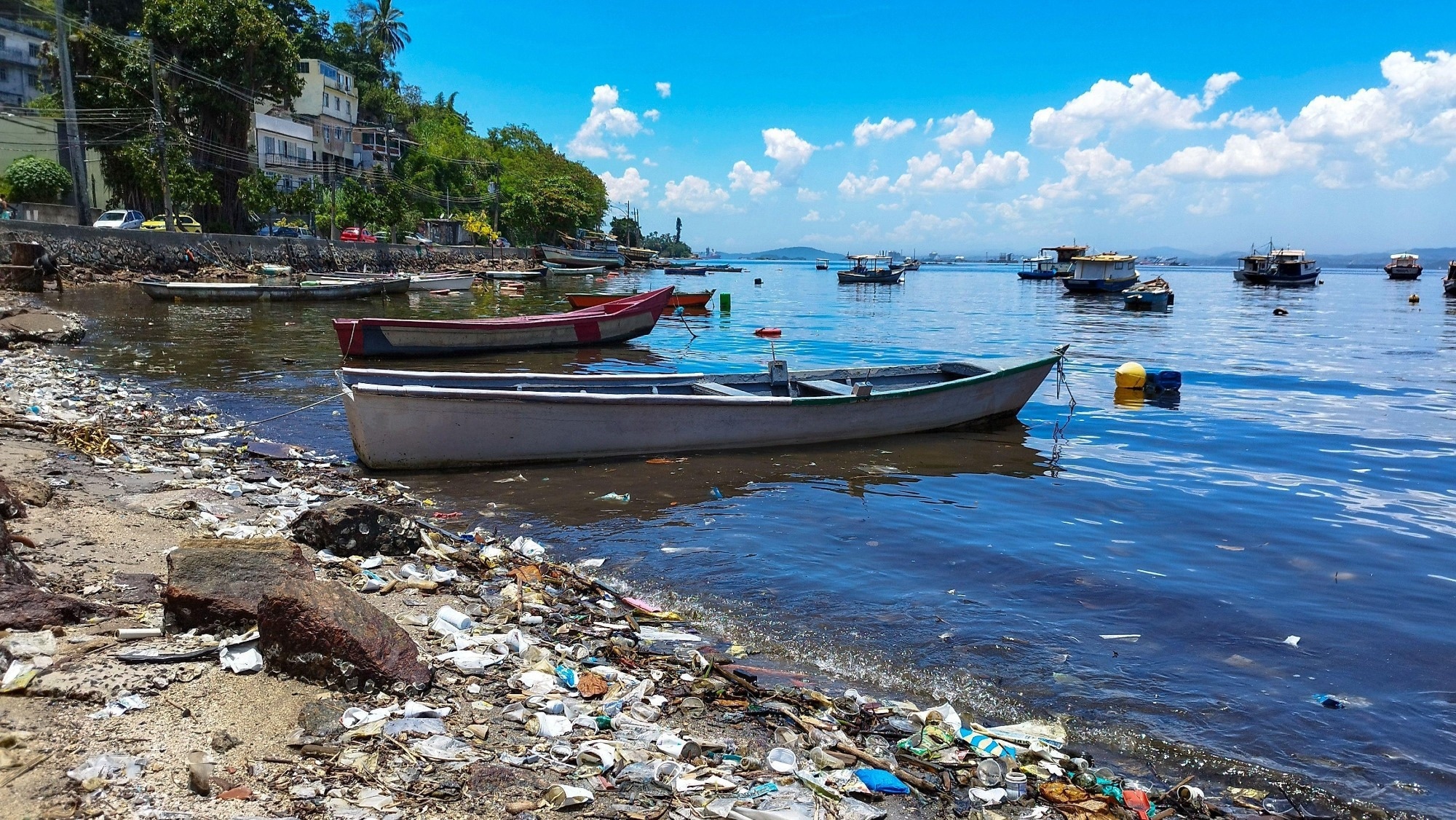
Study: Sustainable valorization of marine plastic residues via hydrothermal liquefaction for clean energy recovery. Image Credit: Wagner_Rocha/Shutterstock.com
What Are Marine Pollutant Residues and Why Are They a Problem?
Marine pollutant residues are a messy mix of plastics, textiles, paper, and organic debris commonly collected along coastlines. This type of waste is difficult to recycle due to its heterogeneity and contamination.
Unlike conventional recycling methods that often require extensive sorting or pre-treatment, HTL offers a more direct approach. It thermally breaks down complex waste in water at high pressure and temperature, producing bio-crude, gases, solids, and an aqueous phase.
The new study investigates whether HTL can handle real-world MPR without pre-cleaning - an important step toward scalable, sustainable coastal waste management.
Enhancing HTL with Diatomaceous Earth and Aqueous Recirculation
To improve the efficiency and output of the HTL process, the researchers tested two key strategies:
- Using Diatomaceous Earth (DE) as a catalyst
- Recirculating the Aqueous Phase (AQ) from previous runs
The goal was to assess how these factors influence product yield, composition, and overall energy efficiency. A detailed Net Energy Ratio (NER) analysis was also conducted to evaluate how recirculating heated water (AQ phase) can reduce external energy input - a crucial factor for sustainable scale-up.
A Closer Look at the Experiment
The research team collected MPR from the Adyar Riverbank in Chennai, India, an estuarine zone known for high plastic pollution. After air-drying and homogenizing the samples, they conducted HTL experiments in a high-pressure reactor, adjusting temperatures between 300 °C and 400 °C and residence times from 40 to 120 minutes.
Key variables included:
- DE catalyst loading: 2.5 to 12.5 wt.%
- AQ recirculation ratios: 2 to 10 ml/g
After each run, the products were separated and analyzed using techniques such as CHNS elemental analysis, GC–MS, FTIR, and TGA to evaluate their chemical composition, molecular structure, and thermal properties.
Want to save for later? Click here.
Key Findings: Higher Yields and Better Bio Crude with DE + AQ
The optimal conditions - 380°C, 80 minutes, 10 wt.% DE and 6 ml/g AQ recirculation - produced the highest bio-crude yield of 51.6 %.
Highlights include:
- DE alone boosted yield by ~10%, reaching 46.78 %
- DE + AQ together significantly improved both yield and quality
- Hydrocarbon content increased to 58.92 %, with a notable drop in unwanted oxygenates and fatty acids
- Bio crude quality improved, showing a high Higher Heating Value (HHV), a high H/C ratio, and a low O/C ratio (down to 13.06%)
Spectral analysis confirmed reduced oxygen-containing groups, indicating effective deoxygenation and selective polymer cracking.
Energy Efficiency: Can HTL Be Net-Positive?
Yes - when thermal energy from the recirculated aqueous phase is used strategically, the system achieves a Net Energy Ratio greater than 1, meaning it can produce more energy than it consumes. This opens the door for energy-positive waste-to-fuel systems in coastal zones.
What This Means for Sustainable Waste Management
The study provides strong experimental support for using HTL to convert hard-to-recycle marine waste into valuable fuel without sorting or cleaning.
When paired with catalytic enhancements and heat integration, the process becomes not only feasible but also potentially energy-positive.
However, the researchers caution that scaling up this process will require additional work, especially in assessing economic feasibility and conducting full life-cycle analyses.
Journal Reference
Vaishnavi M., Raja S., et al. (2026). Sustainable valorization of marine plastic residues via hydrothermal liquefaction for clean energy recovery. Scientific Reports. DOI: 10.1038/s41598-025-32471-3, https://www.nature.com/articles/s41598-025-32471-3