Fast-tracking clean refrigerants and smarter cooling tech in China could slash emissions, ease grid pressure, and improve air quality - new research shows just how much is at stake.
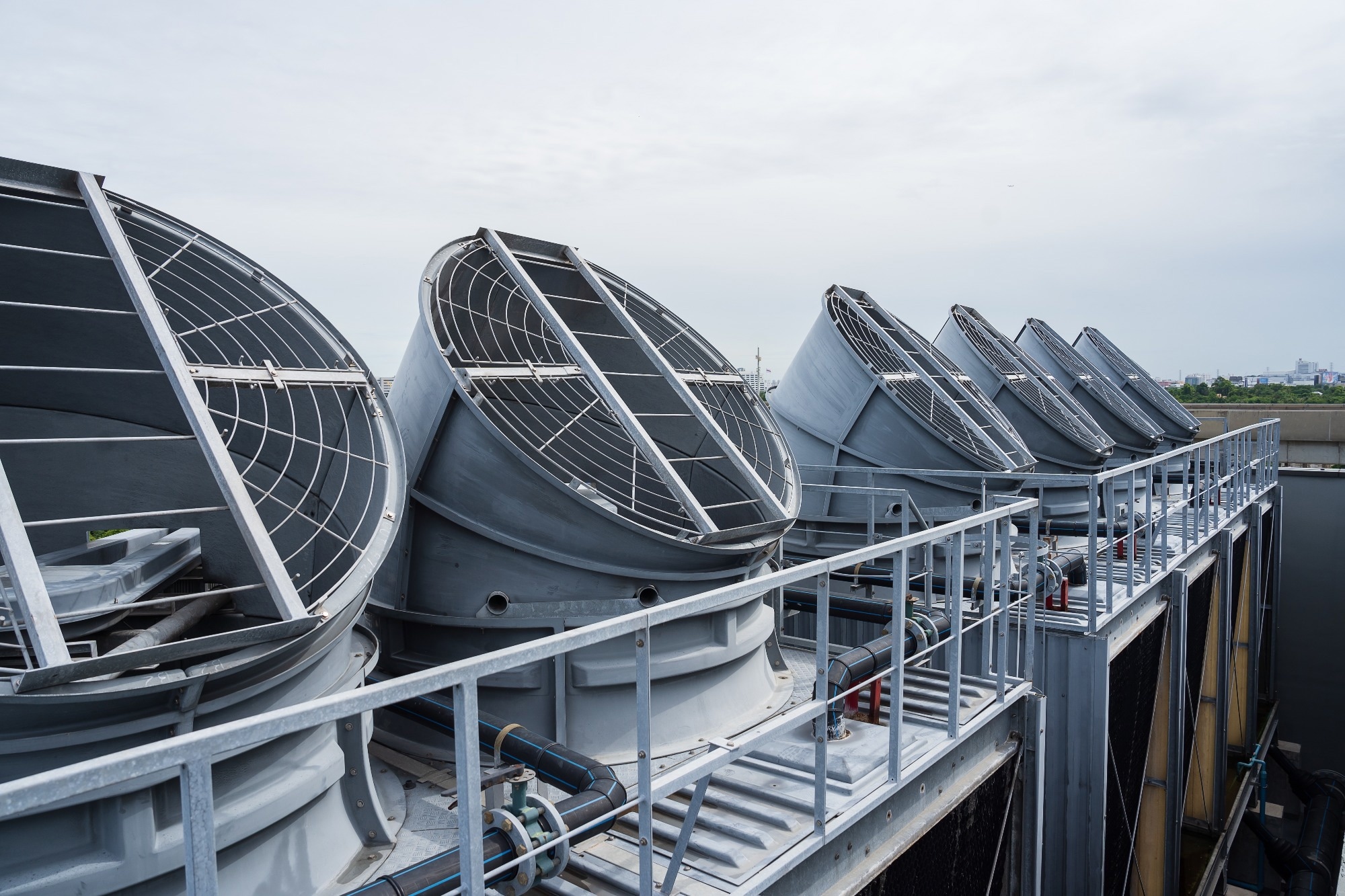
Study: Cooling China without warming the planet: climate and co-benefits of HFC phase-down. Image Credit: Amorn Suriyan/Shutterstock.com
A new study in npj Climate and Atmospheric Science reveals that accelerating the switch to low-Global Warming Potential (GWP) refrigerants and boosting energy efficiency in China’s booming cooling sector could deliver major climate and air quality gains.
Why Cooling is a Growing Climate Challenge
As China’s demand for cooling continues to rise, so do its greenhouse gas (GHG) emissions and electricity use - posing a serious challenge to both national and global climate targets.
In 2022, the global refrigeration, air conditioning, and heat pump (RACHP) sector was responsible for around 13 % of all GHG emissions. Of that, nearly 30 % came from high-GWP refrigerants such as hydrofluorocarbons (HFCs).
But that’s only part of the story. The energy these systems consume is equally significant, with cooling now accounting for roughly 20 % of the world’s total electricity demand. Left unchecked, continued growth in the sector could consume a large share of the world’s remaining carbon budget, making it much harder to meet the Paris Agreement’s temperature targets.
While the Kigali Amendment (KA) to the Montreal Protocol aims to limit the climate impact of HFCs, its current targets fall short of fully aligning with the long-term goals of the Paris Agreement. The need for faster, more ambitious action is becoming clearer.
What This Study Looked At
The researchers used a detailed, bottom-up, scenario-based model to analyze emissions across four key subsectors in China’s cooling industry:
- Room Air Conditioning (RAC)
- Mobile Air Conditioning (MAC)
- Commercial Air Conditioning (CAC)
- Cold-Chain Refrigeration (CCR)
The model tracks both direct emissions from refrigerant leakage and indirect emissions from electricity use. To forecast future demand, the study incorporated drivers like population growth, urbanization, rising incomes, warming temperatures, commercial expansion, and the growth of cold-chain logistics.
Three policy pathways from 2022 to 2060 were compared:
- Business-as-Usual (BAU)
- Kigali with enhanced energy efficiency (KAE)
- Accelerated transition to low-GWP refrigerants and improved efficiency (ATE)
The ATE scenario stands out for its ambitious push - tightening energy performance standards while speeding up adoption of low-GWP refrigerants. This allows the study to quantify not only the climate benefits of refrigerant shifts but also the gains from energy efficiency.
The researchers then extended their findings to estimate each scenario's impact on global average surface temperature.
What the Results Show
Under the BAU pathway, HFC use and emissions continue rising, peaking around 2030. But both the KAE and ATE scenarios show major mitigation potential. The ATE pathway, in particular, is projected to slash cumulative HFC use by Gt CO2-equivalent between 2022 and 2060 compared to BAU. Approximately 70 % of that reduction would come from Kigali compliance, with the rest achieved through accelerated technology rollout.
Perhaps more striking are the electricity savings:
- 30 % (19.6 PWh) under ATE
- 20 % (12.8 PWh) under KAE
To put that in perspective, 19.6 PWh is nearly twice China’s total electricity consumption in 2024. These savings ease pressure on the grid and cut emissions from power generation - especially important while fossil fuels still dominate the energy mix.
Beyond reducing GHGs, the ATE pathway also delivers major air quality benefits:
- 4.1 Gt CO2 in avoided indirect emissions
- 1.8 Gt of sulfur dioxide
- 3.7 Gt of nitrogen oxides
- 0.3 Gt of fine particulate matter
These co-benefits are most pronounced in the near term (2025–2040), when coal and other fossil fuels still play a large role in powering the grid. Altogether, the ATE pathway could help lower global average temperatures by up to °C by 2060.
Click here to download a free PDF copy of this page
What It All Means
This study makes it clear: pairing energy efficiency improvements with Kigali-compliant refrigerant transitions unlocks significantly greater climate benefits.
For China, this strategy not only advances decarbonization but also brings meaningful gains in air quality, public health, and energy security.
The findings point to a clear path forward:
- Strengthen energy performance standards for cooling equipment
- Promote early adoption of low-GWP refrigerants
- Coordinate policy efforts to ensure both goals are achieved together
By doing so, China can play a pivotal role in reducing global emissions, easing electricity demand, and creating healthier urban environments.
Journal Reference
Jiang P., Purohit P. et al. (2026) Cooling China without warming the planet: climate and co-benefits of HFC phase-down. npj Climate and Atmospheric Science 9, 18. DOI: 10.1038/s41612-025-01289-, https://www.nature.com/articles/s41612-025-01289-1