Research conducted by Newcastle University indicates that significant stakeholders in the airport sector possess favorable views toward hydrogen-powered ground support equipment (GSE). This underscores the environmental, operational, and health advantages they offer, such as zero direct emissions at the point of use, reduced odors, and lower noise levels, positioning them as a viable solution for facilitating airport decarbonization. The study was published in the Journal of the Air Transport Research Society.
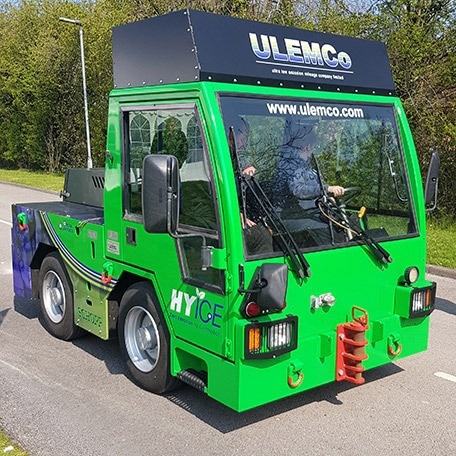 A hydrogen-fueled aircraft tow vehicle. Image Credit: ULEMCo
The study compiled insights from airport operators, automobile manufacturers, hydrogen suppliers, and infrastructure providers. These essential stakeholders in the airport industry conveyed their perspectives and operational requirements concerning hydrogen-powered GSE.
Overall, airport partners expressed strong support for hydrogen-powered ground support equipment (GSE), viewing it as a clean and viable alternative to diesel. The key advantages noted included zero exhaust emissions at the point of use, quieter operation, quicker refueling than with battery-powered vehicles, and the ability to operate for extended periods without recharging.
The research also identified obstacles to the adoption of hydrogen-powered equipment, including high costs, insufficient refueling infrastructure, uncertainty regarding safety regulations, and a limited public understanding of hydrogen technology.
Stakeholders emphasized that training is a vital component for success. They underscored the need for both specialized training for hydrogen-powered vehicles and broader awareness of hydrogen safety to foster confidence among airport personnel and ensure safe operations.
Building Confidence in Hydrogen Technology
Hydrogen-powered ground support equipment is not just a future concept – stakeholders see it as a realistic option for airport decarbonization, particularly when supported by the targeted financial incentives and transitional technologies such as hydrogen internal combustion engine vehicles.
Dr. Yanghanzi Zhang, Study Author and Research Associate, Future Mobility Group, School of Engineering, Newcastle University
“Our research shows that building confidence in hydrogen technology requires more than engineering solutions alone – it also relies on training, clear communication, improved public understanding, and investment in supporting infrastructure,” said Dr. Shuo Li, Study Author and Senior Research Associate, Intelligent Transport Systems, School of Engineering, Newcastle University.
I was delighted to lead this research as this is the first time anyone has attempted to quantify the views of a range of partners who would invest in, use, and operate such hydrogen-powered vehicles and equipment in an airport setting. I hope it encourages others to consider this option for future decarbonization as the UK has a leading role in some of these technologies.
Phil Blythe CBE, Study Author and Professor, Intelligent Transport Systems, Newcastle University
Liverpool-based ULEMCo headed the engineering project.
“This research reinforces what we’ve seen first-hand through projects like ZEHyDA: hydrogen-powered ground vehicles are not a distant aspiration, they are a practical, deployable solution for airports today. By delivering zero exhaust emissions, rapid refueling, and the duty cycles airports need, hydrogen can play a critical role in cutting carbon while maintaining operational performance,” added Amanda Lyne, Managing Director, ULEMCo.
Amanda Lyne notes, “What’s now essential is continued collaboration across industry, regulators, and operators to scale infrastructure, build skills, and give operators the confidence to adopt these technologies at pace.”
The study received funding from the Innovate UK ZEHyDA and ZEHyDA-2 projects. It demonstrates that implementing hydrogen-powered ground support equipment (GSE) offers a strategic approach to enhancing sustainable air transportation.
In light of its successful implementation, the authors advocate collaboration among policymakers, airports, manufacturers, end users, and academic institutions to deepen understanding of hydrogen-related risks and inform safety standards.
Furthermore, the experts emphasize the need for specific financial incentives, increased investment in vehicle production and infrastructure, and the establishment of clear and consistent safety guidelines.
Journal Reference:
Zhang, Y., et al. (2026) Accelerating airport decarbonisation: Qualitative investigation of stakeholders’ perceptions and requirements towards hydrogen-powered ground support equipment. Journal of the Air Transport Research Society. DOI: 10.1016/j.jatrs.2025.100097. https://www.sciencedirect.com/science/article/pii/S2941198X25000417?via%3Dihub