A new study in Nature Climate Change finds that large-scale carbon dioxide removal (CDR) needed to meet 1.5 °C climate targets could overlap with up to 13 % of the world’s most biodiverse areas.
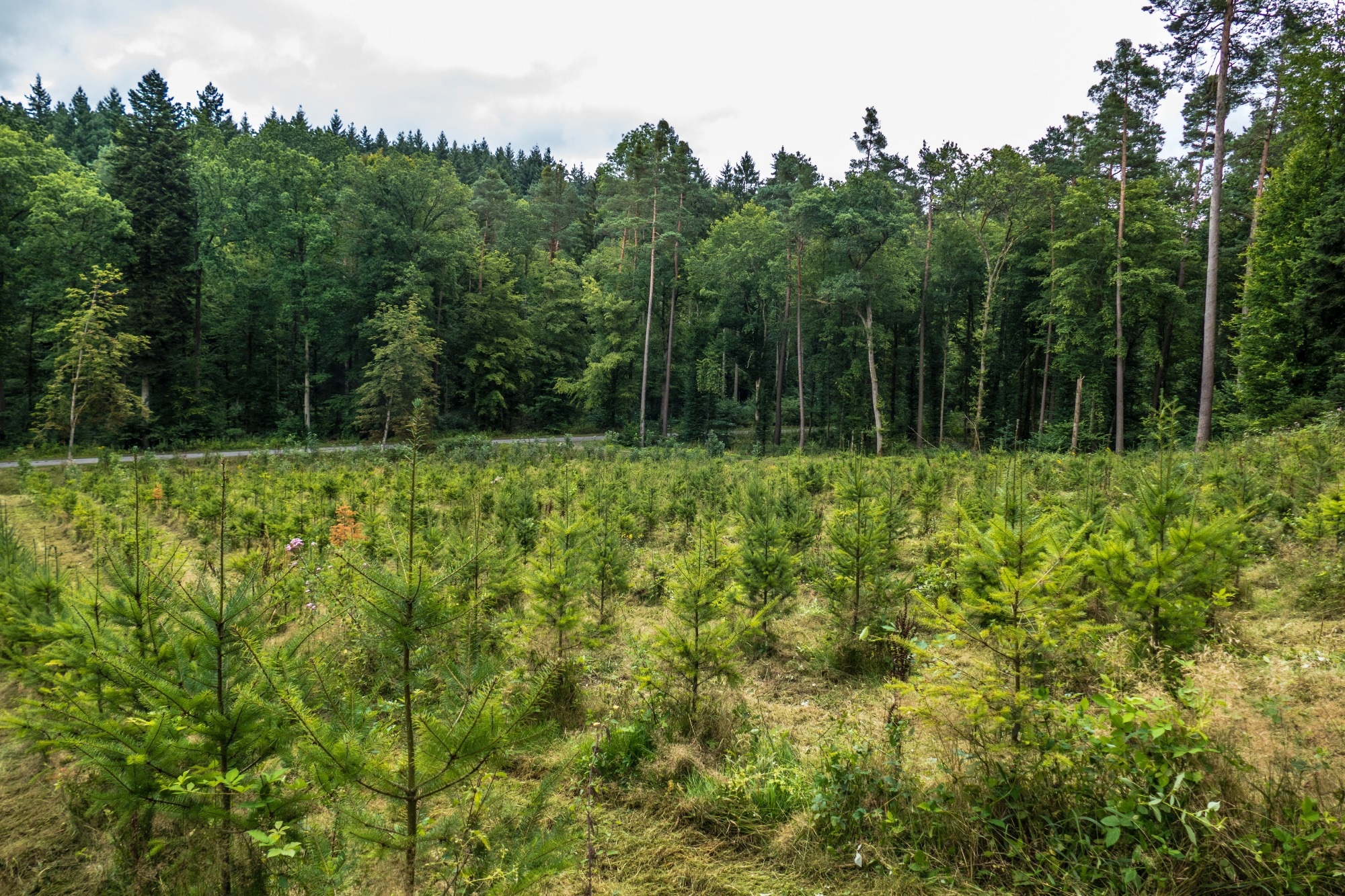
Image Credit: Dietrich Leppert/Shutterstock.com
Why Carbon Removal Strategies May Clash with Global Biodiversity Goals
Integrated Assessment Models (IAMs) play a central role in shaping climate policy, helping governments weigh the outcomes of different mitigation pathways. Many scenarios aligned with ambitious temperature goals depend heavily on land-based carbon dioxide removal - particularly forestation and bioenergy with carbon capture and storage (BECCS).
But there’s a complication: these land-use shifts may directly compete with areas earmarked for biodiversity protection.
International agreements such as the UN’s 2030 Agenda for Sustainable Development and the Kunming-Montreal Global Biodiversity Framework aim to halt biodiversity loss this decade. The Kunming-Montreal agreement seeks to bring the loss of high-biodiversity areas close to zero by 2030. Understanding whether planned CDR deployment overlaps with these sensitive regions is therefore essential.
The study focuses on land-use implications tied to forestation (including afforestation, reforestation, and restoration) and BECCS under deep mitigation pathways derived from the original Shared Socioeconomic Pathways (SSPs).
Modeling the Future: How 1.5 °C and 2 °C Pathways Use Land for CDR
Researchers examined five major Integrated Assessment Models - AIM, GCAM, GLOBIOM, IMAGE, and REMIND-MAgPIE - analyzing two key scenarios:
- SSP2-19, aligned with limiting warming to 1.5 °C
- SSP2-26, aligned with limiting warming to 2 °C
The models project both the scale and geographic distribution of land allocated to forestation and bioenergy crops used for BECCS.
To measure biodiversity risk, the researchers defined three categories of high ecological importance:
- Current biodiversity hotspots
- Climate refugia resilient to 1.8 °C of warming
- Areas that are both biodiversity hotspots and climate-resilient refugia
They then assessed how much modeled CDR land overlaps with these areas in 2030, 2050, and 2100.
To better understand conservation constraints, the team also ran an exclusion exercise - removing biodiversity-priority areas entirely from potential CDR land allocation. Additionally, they mapped regions where at least two of the five models assigned 10 % or more of a grid cell to forestation or BECCS.
Want to save for later? Click here.
Up to 13 % of Biodiversity Priority Areas Could Be Used for Carbon Removal
The results point to a significant tension between climate mitigation and biodiversity conservation.
In scenarios consistent with limiting warming to 1.5 °C, up to 13 % of globally important biodiversity areas are allocated to land-intensive CDR. The geographic distribution is uneven, with low- and middle-income countries - classified as non-Annex I under the UNFCCC - bearing a disproportionate share.
Under 1.5 °C pathways:
- Up to 11 % of remaining climate refugia could overlap with forestation land
- Around 4 % could overlap with BECCS bioenergy cropland
- Even at a moderate annual removal rate of 6 gigatonnes of CO2, substantial shares of warming-resilient refugia are targeted in certain countries.
The trade-offs become even clearer when conservation rules are strictly enforced. If current biodiversity hotspots are excluded from CDR allocation in the 2 °C scenario (SSP2-26), more than 50 % - based on the median estimate - of land designated for forestation and BECCS would be unavailable by 2050. This constraint remains broadly consistent across 2030, 2050, and 2100.
Even when excluding only those areas that qualify as both biodiversity hotspots and climate-resilient refugia, the available land for CDR shrinks significantly.
Carbon Removal Isn’t Inherently Harmful If Done Carefully
Despite these potential conflicts, the study also highlights an important nuance: CDR can offer biodiversity benefits by limiting long-term warming.
In the modeled scenarios, forestation and BECCS reduce warming-driven loss of climate refugia by up to 25 %. In other words, carbon removal helps preserve biodiversity indirectly by stabilizing the climate.
Moreover, the way CDR is implemented matters. Forest restoration and reforestation efforts that focus on degraded ecosystems and use diverse, locally adapted species can strengthen habitats, support biodiversity, and store more carbon than monoculture plantation forests.
The problem, the researchers suggest, is not carbon removal itself - but where and how it is deployed.
What This Means for Climate Policy and Global Equity
Limiting global warming below 1.5 °C requires large-scale, land-intensive CO2 removal. According to the study, this could overlap with up to 13 % of high-biodiversity areas worldwide. The burden falls disproportionately on lower-income countries.
If international biodiversity targets are strictly enforced - such as fully excluding current biodiversity hotspots - more than half of the land allocated for forestation and BECCS in modeled scenarios could become unavailable.
That doesn’t necessarily make climate targets unattainable. Models could shift toward less cost-effective land, alternative mitigation measures, or less land-intensive strategies. But it does underscore the need for integrated planning.
The findings also highlight a financial dimension. With a global biodiversity finance gap estimated at $700 billion per year, high-income (Annex I) countries may need to significantly increase financial support to lower-income (non-Annex I) nations. Without that support, aligning climate and biodiversity goals could prove far more difficult.
The bottom line: climate action and biodiversity protection cannot be pursued in isolation. Success will depend on carefully targeted reforestation, protection of ecological hotspots, and coordinated global financing.
Journal Reference
Prütz R., Rogelj J., et al. (2026). Biodiversity implications of land-intensive carbon dioxide removal. Nature Climate Change 16, 155–163. DOI: 10.1038/s41558-026-02557-5, https://www.nature.com/articles/s41558-026-02557-5