As Australia's agricultural sector tries to navigate more frequent and intense heatwaves, a new project by Charles Darwin University (CDU) aims to better understand the impact of the climate extreme on this essential industry.
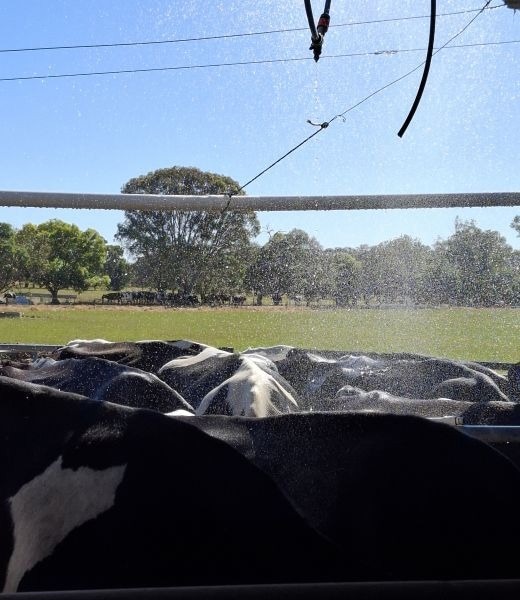 Farms are having increases in water costs because of water spaying heat stressed cows. Image Credit: Kerstin Zander
The project, led by CDU's Northern Institute, aims to explore how rising temperatures are affecting labor productivity, operational costs, crop and livestock production, and the long-term sustainability of agricultural businesses in Australia.
Farmers, farm managers, agricultural workers, contractors, and others working in Australia's agricultural industry are invited to participate in an anonymous survey, which will examine the effects of rising temperatures.
The study is part of a broader research initiative supported by Natural Hazards Research Australia, which focuses on strengthening the nation's resilience to natural hazards and climate-related risks.
Principal Investigator Professor Kerstin Zander, a Senior Research Fellow with CDU's Northern Institute, said the research would address a major knowledge gap in understanding the real-world impacts of extreme heat on agriculture and food security.
“While drought has traditionally received significant attention in Australian agriculture, the impacts of extreme heat and heatwaves on workers’ health and productivity, as well as farm operations remain comparatively underexplored,” Professor Zander said.
“This is particularly important as Australia experiences more frequent and intense heatwaves, placing growing pressure on essential food-producing industries and regional communities.”
This survey is one of the few Australian studies designed to examine human and operational dimensions of heat impacts across multiple agricultural sectors, including horticulture, cropping, viticulture and livestock production.
Professor Zander said the findings could support evidence-based policy development, improve preparedness planning and strengthen climate resilience, and encouraged agricultural workers across the sector to participate to ensure a diverse response.
Research Assistant Amila Udage said the project combined climate resilience research with practical agricultural challenges faced by farmers and workers.
“Extreme heat is not only an environmental issue. It is increasingly becoming a labor, productivity and economic challenge for agricultural businesses,” Mr Udage said.
The study will investigate how heatwaves affect day-to-day farming operations, worker wellbeing, production systems, and adaptation decisions across the agriculture sector.
The project also aims to identify emerging adaptation strategies used by farmers. This includes operational changes, heat-mitigation practices, and future technology-based responses, particularly those enabled by emerging digital technologies.