The majority of refineries currently depend on the Claus process for sulfur recovery. Refineries can enhance their energy efficiency and reduce their carbon emissions by switching to the wet gas sulfuric acid (WSA™) process, with limited changes to existing upstream infrastructure.
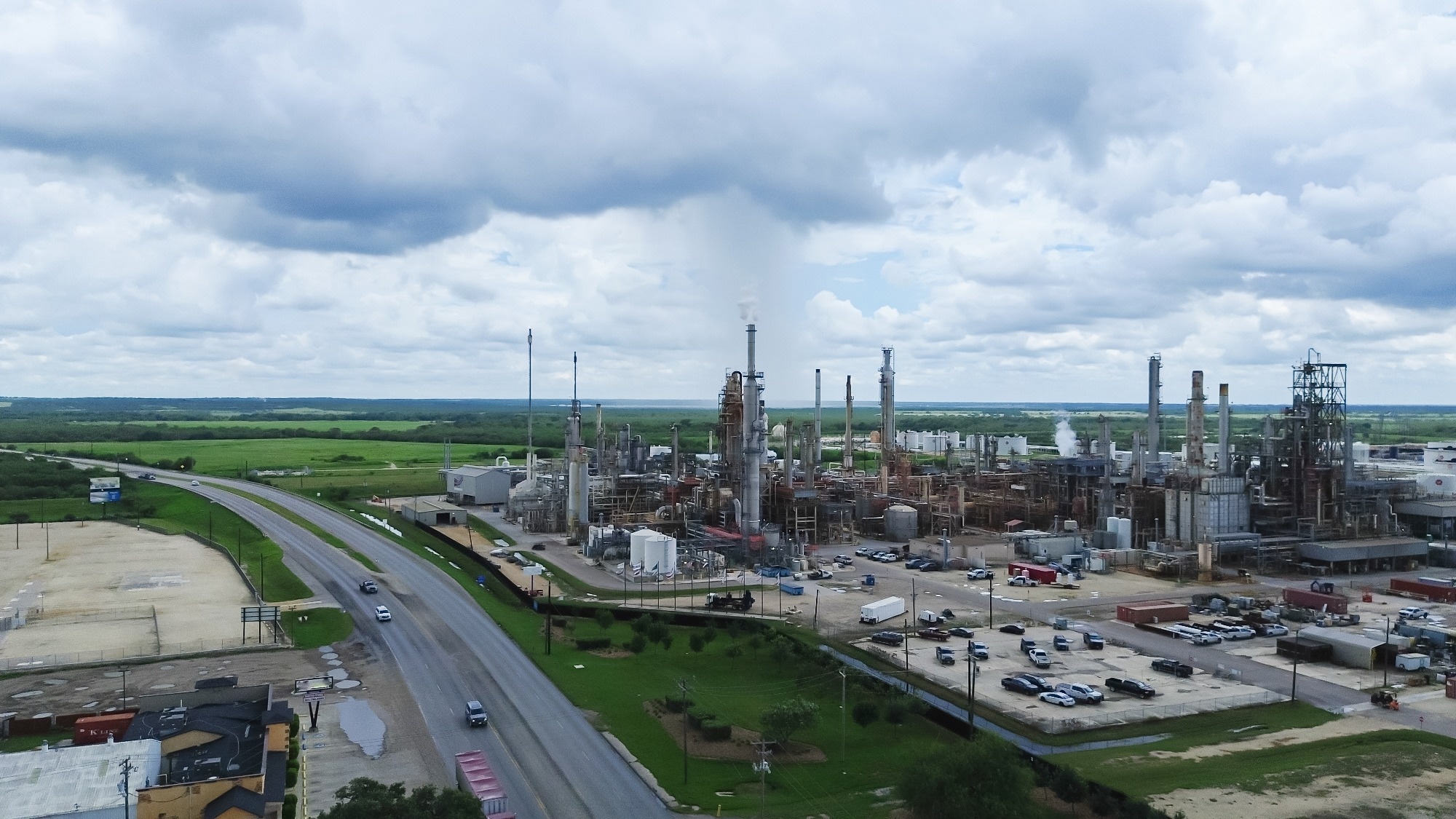
Image Credit: Trong Nguyen/Shutterstock.com
This article explores the advantages of the WSA™ process through the results of a technical case study. A detailed examination of the WSA™ process is presented, alongside a comparison between this process and the modified Claus process for sulfur recovery. This three-stage Claus process uses an amine-based tail gas treatment unit and an incinerator in the back end.
The Refining Industry’s Contribution to Greenhouse Gas Emissions
The global refining industry continues to be a leading source of greenhouse gas (GHG) emissions, but there is considerable potential for decarbonization in this industry.
For example, improving energy efficiency across both primary and auxiliary processes within existing refinery operations has the potential to substantially reduce GHG emissions, with Sulfur Recovery Units (SRUs) playing a critical role in the minimization of carbon dioxide (CO2) emissions.
Technical Advances Improving Environmental Performance
The current refining landscape is largely reliant on the modified Claus process for sulfur recovery. This well-established technology utilizes a series of catalytic stages to convert hydrogen sulfide (H2S) into elemental sulfur.
The Claus process represents a reliable solution, but it has a range of limitations in terms of its capacity to reduce environmental impact and maximize energy recovery.
The WSA™ sulfur recovery process was first introduced in 1980, and while this was initially introduced as a cost-effective means of cleaning low-sulfur waste gases, it rapidly demonstrated wider applicability.
Comparing the WSA™ Process and the Modified Claus Process
A case study completed in 2024 saw Topsoe compare the environmental performance of the modified Claus process and the WSA™ process in a refinery setting.
Both systems had been designed to recover 99.9 % of sulfur, and comparing these two processes allowed Topsoe to assess the overall GHG impact of the two processes and evaluate their potential contribution to the decarbonization goals of the refining industry.
Preliminary findings show that the WSA™ process offers considerable benefits in terms of reduced carbon emissions and energy efficiency versus the modified Claus process, offsetting over 2 tons of CO2 per ton of sulfur processed. A more comprehensive analysis is necessary to quantify the full extent of these benefits, including energy and mass balances.
How WSA Reduces CO2 Emissions
Topsoe’s WSA™ process maximizes energy recovery and generates high-pressure superheated steam, offering a path to reduced CO2 emissions. This approach offers a range of benefits.
Zero Direct Emissions from Operation
The WSA™ process differs from the modified Claus process in that it requires no external fuel for its combustion, meaning that it generates zero direct CO2 emissions from its own operation.
Superior Energy Recovery
The WSA™ process captures considerably more energy while converting H2S, yielding up to six times more usable energy than the Claus process. This is especially evident when compared to the Claus process, because of the energy demands associated with Claus's amine-based tail gas treatment units and incinerators.
High-Pressure Steam for Boiler Substitution
WSA™ generates a substantial amount of high-pressure, superheated steam. It is possible to directly replace the steam typically produced by boilers with this high-quality steam, reducing or even completely removing the need to burn fuel in those boilers. This can, consequently, eliminate the boilers’ direct CO2 emissions.
Getting Started with WSA™
A complete overnight transition from sulfur to sulfuric acid production is often challenging, but a gradual transition represents an effective strategic solution.
The replacement of older Claus units with WSA™ plants can be more cost-effective than constructing new Claus-based capacity, particularly where there is a viable sulfuric acid market and high energy prices.
Produced commercial-grade sulfuric acid can be sold domestically or internationally. Topsoe can also introduce gas processors and refiners to reputable acid traders who can typically guarantee full offtake under agreed contractual terms
The high amounts of high-pressure steam generated by the WSA™ process can be seamlessly integrated into refinery operations, enabling customers to immediately offset fossil fuel consumption in boilers.
Acknowledgments
Produced from materials originally authored by Igor Kostromin from Topsoe.

This information has been sourced, reviewed and adapted from materials provided by Topsoe.
For more information on this source, please visit Topsoe.