Energy-Efficient Technologies in Modern Food Processing
Water Conservation Systems and Reuse Technologies
The Green HACCP Framework: Integrating Safety and Environmental Goals
Non-Thermal Processing Technologies
Challenges in Circular Economy Integration
Recent Research Developments
What Does the Future Hold?
References and Further Reading
The modern food processing industry has two important goals. First, it must maintain high safety standards to protect public health. Second, it needs to reduce its environmental impact through sustainable practices. This includes using energy-efficient technologies, water conservation systems, and innovative packaging solutions. These advancements work alongside the Hazard Analysis and Critical Control Point (HACCP) system, ensuring that sustainability initiatives strengthen rather than compromise food safety protocols.
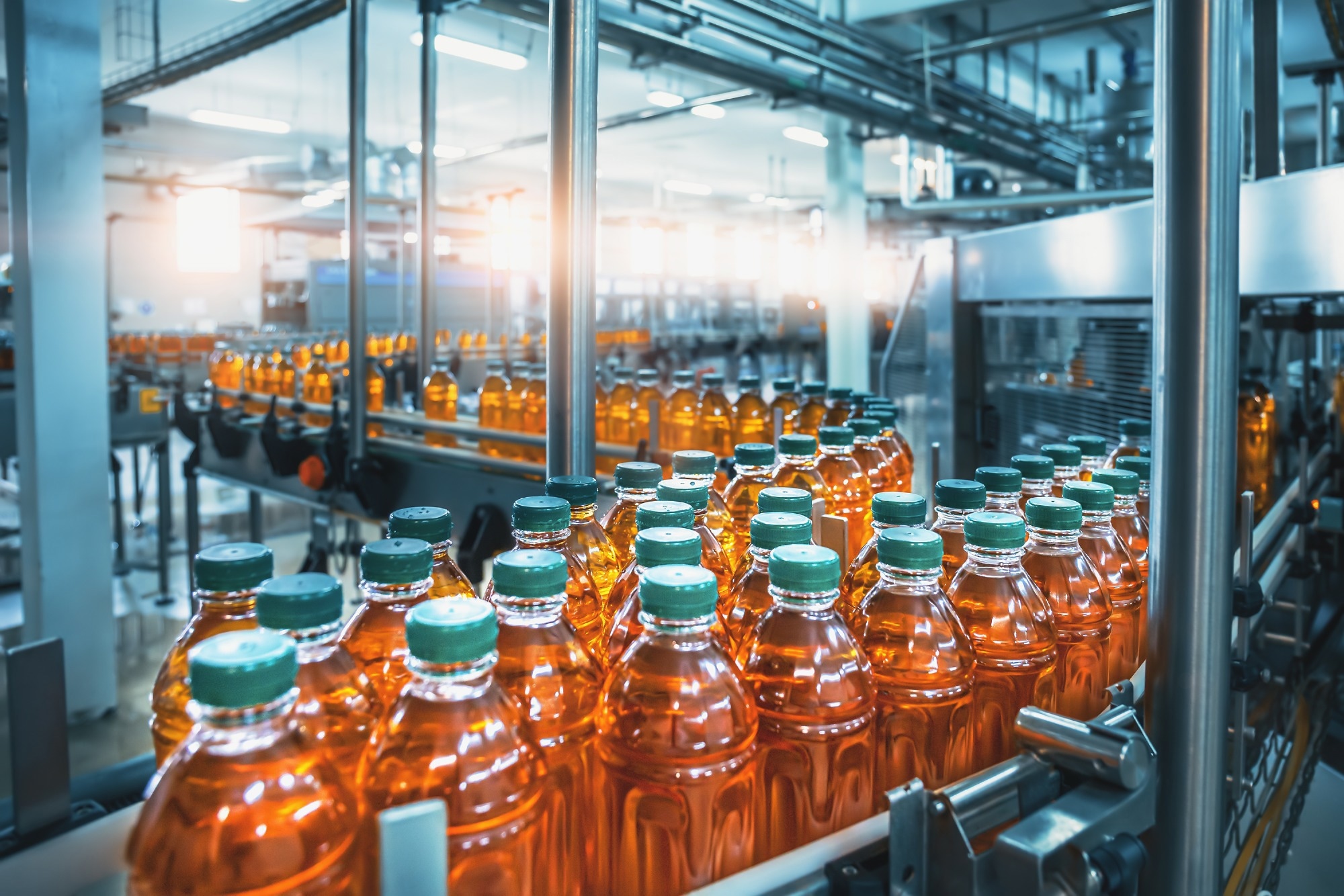
Image Credit: DedMityay/Shutterstock.com
Energy-Efficient Technologies in Modern Food Processing
Using energy-efficient technologies in food processing is essential to help the industry reduce its carbon footprint. A 2022 study in the Journal of Cleaner Production found that ultra-processed foods accounted for 17-39 % of total diet-related energy use and up to a third of total diet-related greenhouse gas emissions, land use, and food waste.1 Although these figures do also take into account agriculture and food production at the very source, these figures are alarming and highlight the real need for more sustainable processing after it leaves the farm. The study also points out that environmental impacts are driven by “intense production methods”, highlighting that the entire journey needs to be considered when developing a more sustainable and circular food production system.1
Heat Recovery Solutions
One area often considered a significant burden on the planet is liquid heating used across many parts of the food industry, including for milk pasteurization and heating of vegetable oil before filtration.2
Recently, more sustainable technologies have been introduced to the market via partnerships between industry and research institutions. For example, heat recovery systems redirect wasted heat for use within facilities, lowering energy use and costs.3,4 This type of technology in the food industry means that up to 60–90 % of the energy lost during the heating and cooling of liquid can be recovered.2
Refrigeration and Oven Technologies
Advanced refrigeration and oven technologies optimize production processes while maximizing resource utilization. These systems align with ISO 14001 guidelines and corporate sustainability reporting standards, providing measurable reductions in carbon emissions.
Using solar thermal systems and biogas recovery in food production also shows how renewable energy can help meet both safety requirements and environmental goals.3,4
Water Conservation Systems and Reuse Technologies
Water conservation is another critical part of sustainable food processing. Membrane filtration technologies, such as reverse osmosis (RO), ultrafiltration, and nanofiltration, help facilities recycle and reuse water by removing pollutants, organic matter, and bacteria from wastewater. This process can cut freshwater use by up to 50 % in areas such as dairy processing and beverage production.5,6
Smart Clean-in-Place systems improve sanitation processes by using real-time sensors to determine exact cleaning needs. These systems recycle water through advanced filters, lowering water use by 30-40 % compared to traditional methods.
Moreover, condensate recovery systems capture and reuse steam condensate for heating and cleaning, reducing boiler feedwater demand and lowering energy costs at the same time. These water-saving technologies ensure that conservation efforts maintain the sanitary conditions required for food safety compliance.5,6
So, how can a more sustainable food processing system be achieved while maintaining safety standards?
The Green HACCP Framework: Integrating Safety and Environmental Goals
The concept of Green HACCP extends traditional food safety frameworks by incorporating Environmental Respect Practices that address the environmental limitations of conventional systems. This integrated approach focuses on resource efficiency, pollution prevention, and eco-friendly operational strategies while ensuring that food safety is not achieved at the expense of natural resource depletion. It aligns with ISO 22000, ISO 14001, and the United Nations Sustainable Development Goals (SDGs), providing food companies with a comprehensive framework for responsible production.7
Green HACCP implementations have achieved documented reductions in resource consumption. For example, some European processors have cut their water usage by 20 % due to improved systems. The framework uses Internet of Things (IoT) sensors and artificial intelligence (AI) for monitoring the environment in real-time and for predictive maintenance, reducing waste and improving hazard detection capabilities.
In addition, blockchain-based systems are used to provide digital traceability and record compliance. This increases transparency and reduces the need for paper documents. These digital tools also support the food industry’s sustainability goals, particularly SDG 12 on responsible consumption and production and SDG 13 on climate action.7
Non-Thermal Processing Technologies
Non-Thermal processing technologies offer superior alternatives to traditional thermal treatments, enhancing safety and environmental advantages simultaneously.
Pulsed electric field (PEF) technology employs high-voltage electric pulses for microseconds to milliseconds, effectively inactivating microorganisms while minimizing thermal damage and preserving essential sensory and nutritional qualities. This innovative method produces safe, healthy, and clean-label foods without the need for chemical preservatives, all while reducing water and energy usage during production.8
Similarly, ultrasound technology has transformed food processing, offering an eco-friendly, cost-effective alternative to conventional heat-based methods.
The cavitation bubbles produced by high-energy ultrasound accelerate reaction rates and improve product quality. This technology finds applications in extraction, freezing, and quality enhancement, all while consuming significantly less energy compared to traditional thermal processes. Furthermore, the environmental advantages of nonthermal processing include lower carbon footprints and reduced greenhouse gas emissions. By supporting the transition toward a more circular food economy, these technologies play a crucial role in minimizing waste and conserving resources throughout the supply chain.8
Click here to download a free PDF copy of this page
Challenges in Circular Economy Integration
Adopting circular economy models in the food sector brings several challenges that researchers and industry leaders are working to solve. Switching to models that reuse wastewater, food waste, organic materials, or packaging can create safety risks because these materials may carry or produce hazards.
In other areas, water reuse efforts are important for reducing environmental impacts and coping with climate issues, but they can also pose food safety risks depending on the quality of the recycled water.8
Food loss and waste valorization through bioactive extraction, conversion to new food sources, or nutrient recovery through composting raises further concerns about contaminant persistence and accumulation through circular practices. Contemporary food safety has also developed alongside linear processes, requiring adaptation to characterize hazards in circular systems.8
Common data gaps hinder effective risk assessment and management of food safety within circular agrifood systems. This highlights the need for thorough hazard characterization during research and the implementation of circular policies. The integration of food safety considerations into sustainability initiatives from the earliest stages ensures that safety and environmental goals advance together rather than in conflict.8
Recent Research Developments
Several recent studies illustrate how food processing technologies can protect safety while advancing sustainability goals.
A recent study published in MDPI Foods combined pulsed electric fields and high-pressure treatments before osmotic dehydration of fresh-cut potatoes. It achieved better color retention, lower water activity, and at least a two-day extension of refrigerated shelf life, while keeping total viable counts below 4 log CFU/g without aggressive thermal treatment or heavy use of additives.9
Moreover, a comparative analysis evaluated pulsed electric field pasteurization of fruit juice integrated with heat recovery against conventional high-temperature short-time pasteurization and quantified differences in cost, energy demand, and environmental impacts while matching required microbial inactivation targets.
Complementing these lab and modeling efforts, a US project has installed a pilot-scale high-pressure processing (HPP) unit to study how fruits, vegetables, and raw meats can be upcycled to deliver safe, longer-lasting products and reduce waste in commercial supply chains.10,11
What Does the Future Hold?
As research and innovation reshape food processing, the industry finds itself at a defining moment. From energy recovery and water reuse to digital traceability and non-thermal technologies, today’s advancements make one thing clear: safety and sustainability are no longer trade-offs. They work together as powerful, complementary drivers of progress.
By integrating environmental goals into frameworks such as Green HACCP and by strengthening hazard assessments within circular systems, food producers can protect public health while actively reducing their environmental impact.
Moving forward will require real collaboration - scientists, regulators, and industry leaders working side by side to close data gaps, sharpen risk models, and scale technologies that have already proven their value.
The tools to produce safer food with fewer resources aren’t theoretical. If the tools already exist to produce safer food with fewer resources, the real question is: how quickly can the industry transform ambition into action?
References and Further Reading
- Anastasiou, Kim. et al. (2022). A conceptual framework for understanding the environmental impacts of ultra-processed foods and implications for sustainable food systems. Journal of Cleaner Production. 368. 133155. 10.1016/j.jclepro.2022.133155. https://www.researchgate.net/publication/362165569_A_conceptual_framework_for_understanding_the_environmental_impacts_of_ultra-processed_foods_and_implications_for_sustainable_food_systems
- Teplo-Polis. (n.d.) What is heat recovery and what are recuperators used for? [Online] Available at: https://teplo-polis.com.ua/en/blog-teplo-polis-en/what-is-heat-recovery-and-what-are-recuperators-used-for/ [Accessed on 19 February 2026].
- Annette, M. et al. (2024). Green food processing and innovation: driving science, technology and climate solutions in agrifood systems. Food and Agriculture Organization. https://www.fao.org/platforms/green-agriculture/news/news-detail/green-food-processing-and-innovation--driving-science--technology-and-climate-solutions-in-agrifood-systems/en
- Qu, B. et al. (2024). Perspectives on sustainable food production system: Characteristics and green technologies. Journal of Agriculture and Food Research, 15, 100988. DOI:10.1016/j.jafr.2024.100988. https://www.sciencedirect.com/science/article/pii/S2666154324000255
- Lakhiar, I. A. et al. (2024). A Review of Precision Irrigation Water-Saving Technology under Changing Climate for Enhancing Water Use Efficiency, Crop Yield, and Environmental Footprints. Agriculture, 14(7). DOI:10.3390/agriculture14071141. https://www.mdpi.com/2077-0472/14/7/1141
- Kumari, S. (2025). Water-Saving Technologies in Food Processing: Advancing Sustainability in the Industry. Food Infotech. https://www.foodinfotech.com/water-saving-technologies-in-food-processing-advancing-sustainability-in-the-industry/
- Zarid, M. (2025). The Green HACCP Approach: Advancing Food Safety and Sustainability. Sustainability, 17(17). DOI:10.3390/su17177834. https://www.mdpi.com/2071-1050/17/17/7834
- Pearson, A. J. et al. (2024). Opportunities and challenges for global food safety in advancing circular policies and practices in agrifood systems. Npj Science of Food, 8(1), 60. DOI:10.1038/s41538-024-00286-7. https://www.nature.com/articles/s41538-024-00286-7
- Katsouli, M. et al. (2024). Shelf-Life Enhancement Applying Pulsed Electric Field and High-Pressure Treatments Prior to Osmotic Dehydration of Fresh-Cut Potatoes. Foods, 13(1). DOI:10.3390/foods13010171. https://www.mdpi.com/2304-8158/13/1/171
- Landi, G. et al. (2025). Comparative Analysis of Cost, Energy Efficiency, and Environmental Impact of Pulsed Electric Fields and Conventional Thermal Treatment with Integrated Heat Recovery for Fruit Juice Pasteurization. Foods, 14(13). DOI:10.3390/foods14132239. https://www.mdpi.com/2304-8158/14/13/2239
- High pressure processing (HPP) equipment to enhance research and extension activities on food safety and value-added food processing. (2023). National Agriculture Library, US Dept. of Agriculture. https://www.nal.usda.gov/research-tools/food-safety-research-projects/high-pressure-processing-hpp-equipment-enhance-research-and-extension-activities-food-safety-and
Disclaimer: The views expressed here are those of the author expressed in their private capacity and do not necessarily represent the views of AZoM.com Limited T/A AZoNetwork the owner and operator of this website. This disclaimer forms part of the Terms and conditions of use of this website.