Alkaline electrolyzers are the most established and widely used technology for electrolysis, serving as a crucial source of industrial hydrogen production for more than a century.
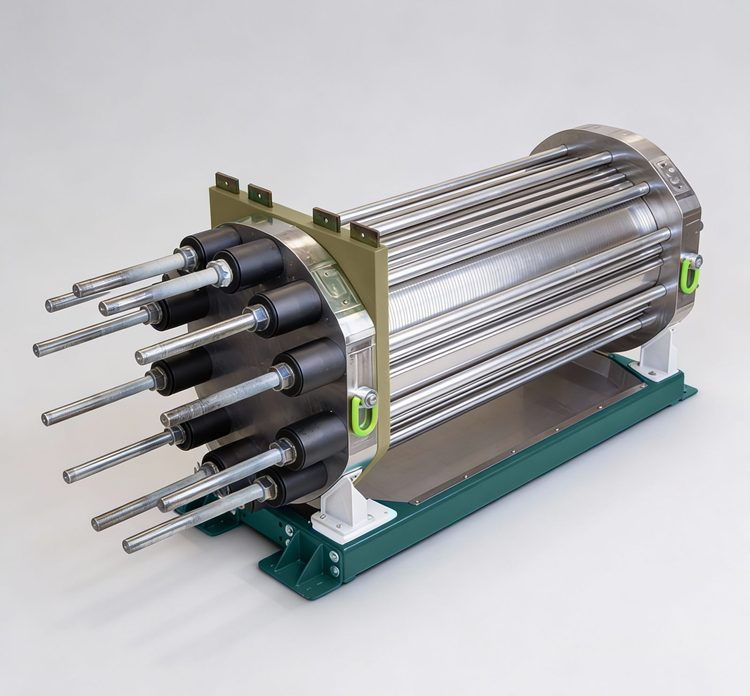
Image Credit: Power to Hydrogen
As the demand for affordable, scalable, and reliable clean hydrogen increases, alkaline systems are an essential technology that has been validated at the gigawatt (GW) scale, while more sophisticated technologies are still undergoing testing at that scale.
Alkaline electrolyzers fundamentally leverage water electrolysis, a process that uses electricity to split water into hydrogen and oxygen. In alkaline systems, an aqueous alkaline electrolyte facilitates ion transport, enabling consistent and large-scale hydrogen production.
How Alkaline Electrolyzers Function
An alkaline electrolyzer comprises an electrolysis stack containing multiple cells. Water is introduced into the system, and when an electric current is applied, hydrogen gas forms at the cathode and oxygen at the anode. A diaphragm separates the gases, ensuring safe and continuous operation.
This configuration has established alkaline electrolyzers as a reliable choice for industrial hydrogen production and various electrolyzer applications. Within the broader category of hydrogen electrolyzers, alkaline systems are frequently chosen for large-scale electrolysis and centralized hydrogen plants where extended operational hours are anticipated.
Alkaline Electrolyzers Compared to Other Electrolysis Technologies
Current hydrogen projects assess various electrolyzer technologies based on performance, costs, and specific applications. Presently, AEM electrolysis is still under development for capacities exceeding 100 MW, leading to the preference for PEM and alkaline methods.
Comparison between PEM and alkaline electrolysis is ongoing; alkaline systems are generally preferred for their lower capital costs and durability, while PEM systems excel in quicker response times and higher power density.
In contrast to proton exchange membrane (PEM) electrolysis, alkaline electrolyzers function at lower pressures and are less adaptable to rapidly changing loads. Emerging technologies such as AEM electrolyzers and solid oxide electrolyzer cells (SOEC) are working to address some of these limitations by enhancing efficiency, operating temperatures, or dynamic responsiveness. Despite these developments, alkaline technology continues to serve as the industrial benchmark.
Performance, Efficiency, and Cost Considerations
Alkaline electrolyzers are appreciated for their stable performance and competitive efficiency, especially during continuous operation. Their mature supply chains and use of non-precious materials reduce system costs, resulting in a lower levelized cost of hydrogen (LCOH) across numerous applications.
Key attributes that sustain the appeal of alkaline electrolyzers for industrial applications include:
- Proven durability and extended operational lifetimes
- Cost-efficient materials and scalable manufacturing
- Strong performance in continuous, base-load operations
- Compatibility with large, centralized hydrogen facilities
However, alkaline systems are not ideal in applications requiring quick ramping or frequent start-stop cycles, limiting their applicability for certain types of distributed hydrogen production. However, they perform effectively in stable, high-utilization environments associated with renewable energy generation or grid-connected energy assets.
Role in Energy Storage and Infrastructure
Alkaline electrolyzers are increasingly important for hydrogen storage and long-duration energy storage. By converting excess electricity into hydrogen, they aid in hydrogen grid integration and grid stabilization, supporting the balancing of renewable-heavy power systems.
The hydrogen produced via alkaline electrolysis can be stored using various methods, such as compressed gas or liquid hydrogen, depending on the scale and application. These systems are essential components of modern hydrogen infrastructure and the wider hydrogen supply chain.
A notable example is the ACES Delta Project in Utah, which employs electrolytic hydrogen stored in underground salt caverns to provide extensive, long-duration clean energy storage for the power grid.
Industrial and Commercial Applications
Due to their scalability and reliability, alkaline electrolyzers are extensively employed across various industrial hydrogen applications, including refining, chemicals, and steel production.
As governments implement hydrogen subsidies, incentives, and clean hydrogen tax credits, alkaline electrolyzers remain an attractive option for organizations seeking cost-effective, proven hydrogen solutions.
Looking Forward
Although newer technologies such as AEM-based and hybrid electrolyzers are advancing, alkaline electrolysis remains fundamental to the current hydrogen economy. Its extensive use, compatibility with large-scale infrastructures, and role in lowering the cost of clean hydrogen ensure that it will maintain its relevance as hydrogen technology and global energy solutions continue to progress.

This information has been sourced, reviewed, and adapted from materials provided by Power to Hydrogen.
For more information on this source, please visit Power to Hydrogen.