Hydrogen electrolysis uses an electric current to split water (H2O) into hydrogen (H2) and oxygen (O2). This process is one of the most promising means of generating clean hydrogen, particularly when electricity is sourced from renewable sources.
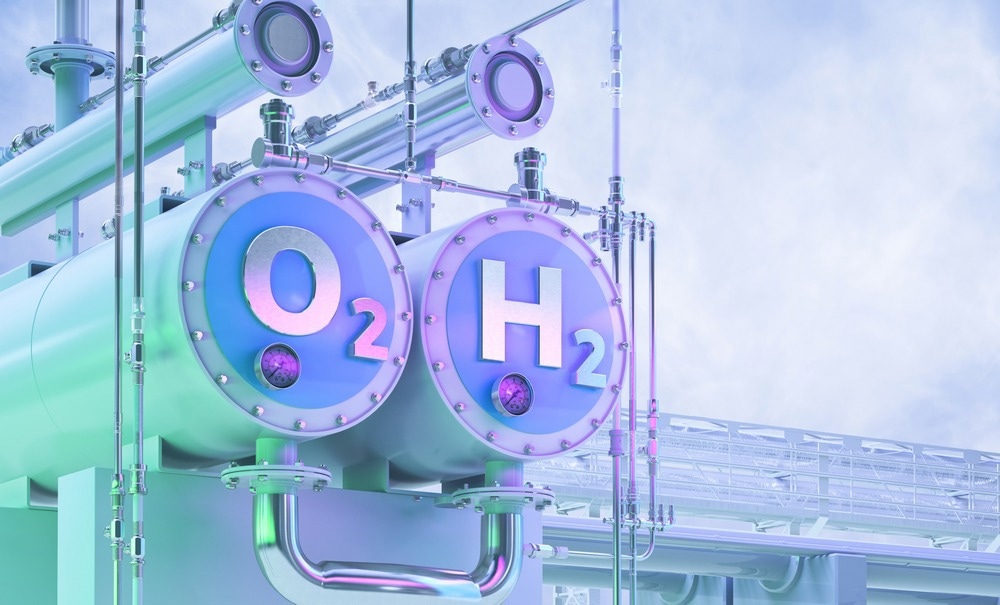
Image Credit: Corona Borealis Studio/Shutterstock.com
Hydrogen electrolysis requires only water and electricity, making it a practical method for generating hydrogen without carbon emissions.
Electrolysis produces hydrogen for use in fuel, metal processing, chemicals, and long-term energy storage. The method enables flexible production because the hydrogen electrolyzer system can start and stop quickly.
For example, electrolyzers can pause if solar output dips and resume when surplus renewable energy floods the grid. They function, therefore, as controllable loads that reduce curtailment and stabilize frequency. Industries from steelmaking to food processing benefit from on-site hydrogen to replace diesel or natural gas.
This article looks at how hydrogen electrolysis technologies work, what drives their cost, and how Power to Hydrogen’s technology helps freight fleets, factories, and electric grids move toward net-zero goals without incurring significant costs.
Understanding Hydrogen Electrolysis
Hydrogen electrolysis uses an electrolyzer stack to initiate the reaction. This system comprises a membrane or electrolyte, two electrodes, and a power source.
Water molecules are broken apart when electricity is applied, with hydrogen gas collected at the cathode and oxygen gas released at the anode. This process generates high-purity hydrogen gas that can feed industrial processes, power fuel cells, or serve as a long-term energy storage source.
Several factors influence the quality of water electrolysis: water purity, cell temperature, and electrode coatings all impact the amount of electricity needed to produce a kilogram of hydrogen.
Even minor efficiency gains lead to considerable cost savings at an industrial scale.
Key Components of an Electrolyzer Stack
A commercial electrolyzer is a fully equipped system designed for performance, precision, safety, and integration. Key components of these systems include:
- An anode (positive electrode) where water loses electrons and forms oxygen
- A cathode (negative electrode) where hydrogen ions gain electrons and form hydrogen molecules
- A membrane and/or electrolyte that blocks gas crossover while conducting ions
- A catalyst layer comprised of nickel (Ni) or platinum (Pt) alloys to speed reactions
- A power supply that provides a steady DC after conversion, including grid power, wind turbines, solar, or hydro plants
- A gas purification system able to dry and cool the product gases for pipeline injection or storage
- A water purification system able to ensure that only distilled or deionized water enters the stack
- Safety controls, including gas detectors, ventilation, and shutdown protocols that protect infrastructure and operators.
Types of Electrolyzers
Most electrolyzers operate on the same principles, but functional differences separate them into distinct categories.
AEM Electrolyzers
Power to Hydrogen’s AEM (Anion Exchange Membrane) electrolyzers blend the performance of PEM (Proton Exchange Membrane) electrolyzers with the cost benefits of alkaline electrolyzers.
AEM electrolyzers achieve stack efficiencies exceeding 80 % (HHV) and use non-noble-metal catalysts. Modules can be used to scale from a few kilowatts (for example, for research labs) to multi-megawatt arrays (for example, for industrial clusters).
Three patented improvements set Power to Hydrogen’s AEM electrolyzer apart from other technologies on the market:
- The patented cell design ensures world-class durability by reducing electrochemical and mechanical stresses on the anion exchange membrane.
- A modular stack frame manufactured from injection-molded composite parts removes the need for heavy machined steel and accelerates assembly.
- Proprietary electrode materials and catalysts increase overall stack efficiency by more than 10 %.
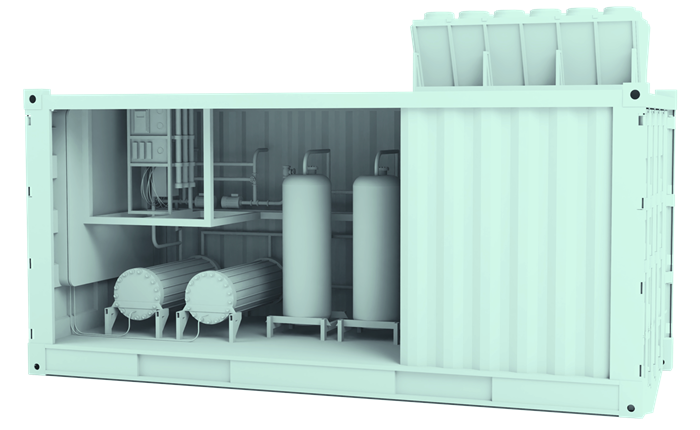
Image Credit: Power to Hydrogen
PEM Electrolyzers
PEM stacks use a polymer membrane to conduct protons while blocking gases. Contemporary PEM systems achieve current densities above 2/A cm2, attain 60–65 % system efficiency (based on higher heating value), and deliver output pressures of up to 30 bar without the need for mechanical compression.
Alkaline Water Electrolyzers
Alkaline technology has been used in industrial hydrogen supply since the 1920s. Alkaline electrolyzers use a porous diaphragm to separate hydrogen and oxygen, while ions are conducted via a liquid potassium hydroxide electrolyte.
These devices offer a lower capital cost per kilowatt and can operate for more hours per year than PEM stacks because they rely on abundant nickel rather than platinum-group metals. Alkaline water electrolyzers deliver hydrogen at atmospheric pressure, generally operating at 1.0 to 1.5 A/cm2 and a 30 to 45 % potassium hydroxide concentration.
SOECs (Solid Oxide Electrolyzers)
SOEC units operate at 650–1000 °C with a ceramic oxygen-ion-conducting membrane (yttria-stabilized zirconia).
High temperatures significantly reduce electricity demand because part of the reaction energy is supplied by the heat. SOEC efficiency can exceed 80 % (higher heating value) when waste heat from a steel mill or cement kiln is available.
Source: Power to Hydrogen
| Feature |
AEM |
PEM |
Alkaline |
SOEC |
| Typical efficiency (HHV) |
80 % |
75 % |
75 % |
70 % |
| Key catalys90 |
Nickel, iron |
Platinum, iridium |
Nickel |
Lanthanum-
strontium oxides |
| Response time |
< one second |
< one second |
Minutes |
10 minutes+
|
| Precious metals |
None |
Required |
None |
None |
| Commercial maturity |
Growing |
High |
High |
Emerging |
| Hydrogen purity |
99.99 % |
99.999 % |
99.9 % |
99.9 % |
How Electrolysis Works: A Step-by-Step Method
Using electrolysis to split water into hydrogen and oxygen involves a number of key stages. A clear process flow is key to ensuring predictable operating costs and reliable output.
Water Purification and Pre-Treatment
The use of high-purity water is imperative, and electrolyzer cells require water that is free of minerals that could degrade membranes.
Role of the Electrolyte
The electrolyte carries charged ions between the electrodes. The liquid medium circulates outside the cells in alkaline electrolyzers, while the electrolyte sits inside the cell between electrodes in PEM and SOEC systems.
It is important to maintain the optimal liquid medium temperature and electrolyte concentration to minimize energy losses and maximize ion mobility. Operators monitor conductivity and pH to ensure conditions stay within narrow limits.
Cathode and Anode Reactions
Water molecules gain electrons to form hydrogen gas at the cathode, while water releases electrons to form oxygen gas at the anode.
The half-reactions are:
Cathode reaction: 2 H2O → O2 + 4H+ + 4e-
Anode reaction: 4 H2O + 4e- → 2H2 + 4OH-
Current control systems balance these reactions to avoid voltage spikes or excessive pressure. Software tweaks current density in real time to protect cell components and extend electrode life.
Gas Separation and Collection
Membranes prevent oxygen and hydrogen from mixing after splitting. Gas outlets collect each gas stream for compression or piping. Safety sensors monitor leaks, triggering alarms within milliseconds where required, and fail-safe valves are installed at client sites, allowing field teams to immediately respond to any abnormal readings.
Hydrogen production scales with stack size. Power to Hydrogen offers two different modular systems:
- The M-Class electrolyzer system allows for 250 kW stacks that can be deployed in systems from 500 kW to 25 MW.
- The K-Class electrolyzer system enables rapid deployment worldwide, with output starting at 10 kW.
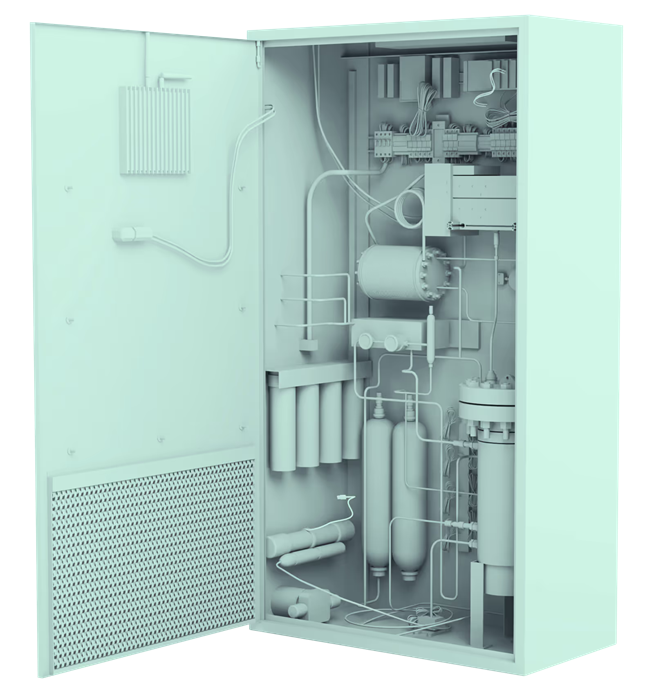
Image Credit: Power to Hydrogen
Electrolysis Versus Other Hydrogen Production Methods
When powered by renewable energy sources, electrolysis offers a zero-carbon route. Other methods of hydrogen production rely on biomass or fossil fuels. The table below outlines how electrolysis compares to other prominent production methods.
Source: Power to Hydrogen
| Method |
Feedstock |
CO2 Emissions |
Hydrogen Type |
Renewable Compatible |
Maturity |
| Electrolysis |
Water and Electricity |
None (if green) |
Green |
Yes |
Growing |
| SMR |
Natural Gas |
High |
Grey/Blue |
No (unless blue) |
Mature |
| Coal Gasification |
Coal |
Very High |
Brown |
No |
Declining |
| Biomass Gasification |
Biomass/
Biogas |
Low–
Moderate |
Green/Bio |
Yes (if
sustainable) |
Emerging |
Steam methane reforming (SMR) is the most popular hydrogen production method, accounting for 76 % of global hydrogen output. SMR produces around 9 kg of CO2 per 1 kg of H2 when no carbon capture and storage (CCS) system is added.
Electrolysis powered by a 50 % renewable grid reduces this carbon footprint, and an entirely renewable power supply virtually eliminates it. SMR is currently the most cost-effective method, but it fails to eliminate greenhouse gas release without the integration of CCS.
NREL produced levelized cost analyses in 2024, placing alkaline electrolysis at $3 per kg in areas where wind delivers electricity at $40 per MWh. Incentives delivered via the Inflation Reduction Act (up to $3 per kilogram for zero-carbon hydrogen) tilt the economics toward electrolyzers even further, particularly as carbon prices rise.
Advantages of Hydrogen Electrolysis
Hydrogen produced via electrolysis offers a number of clear advantages versus fossil-derived hydrogen or other storage media.
- Zero-Emission Fuel: The hydrogen life cycle emits no carbon when electricity comes from wind, solar, or hydroelectric sources. Electrolytic hydrogen is therefore a strong candidate for decarbonizing sectors where it is not easy to power with batteries.
- Load Balancing and Grid Services: Electrolyzers can serve as controllable loads on the electricity grid, allowing operators to throttle hydrogen production to absorb excess renewables during low-demand hours. This helps reduce curtailment of clean power and stabilize frequency.
- On-Site Hydrogen Production for Industry: Moving compressed or liquid hydrogen is costly, but situating an electrolyzer at a fueling depot or inside a plant reduces safety paperwork and trucking miles while providing users with hydrogen on demand.
- Scalable Output: Modular stacks can facilitate stepwise capacity increases. For example, a small-scale unit serving a single hydrogen refueling station could operate alongside gigawatt-scale plants that produce thousands of tons per year for industrial clients.
- Industrial Feedstock: In cases such as methanol production, ammonia synthesis, and steelmaking, hydrogen is used as a raw material. Making the transition from gray hydrogen (created from natural gas) to green hydrogen reduces lifecycle emissions by up to 100 %.
- Long-Duration Energy Storage: It is possible to convert excess renewable energy to hydrogen and then back to power via turbines or fuel cells. This approach bridges seasonal gaps in solar or wind output.
Hydrogen electrolysis has proven to offer many benefits, which are driving government incentives worldwide. The United States Inflation Reduction Act offers tax credits up to $3 per kilogram for hydrogen produced via electrolysis, while the European Union’s Green Deal includes grants for electrolyzer factories.

This information has been sourced, reviewed and adapted from materials provided by Power to Hydrogen.
For more information on this source, please visit Power to Hydrogen.