Researchers have harnessed the potential of wetland sludge to remove dyes and heavy metals from wastewater - without requiring energy-intensive processing.
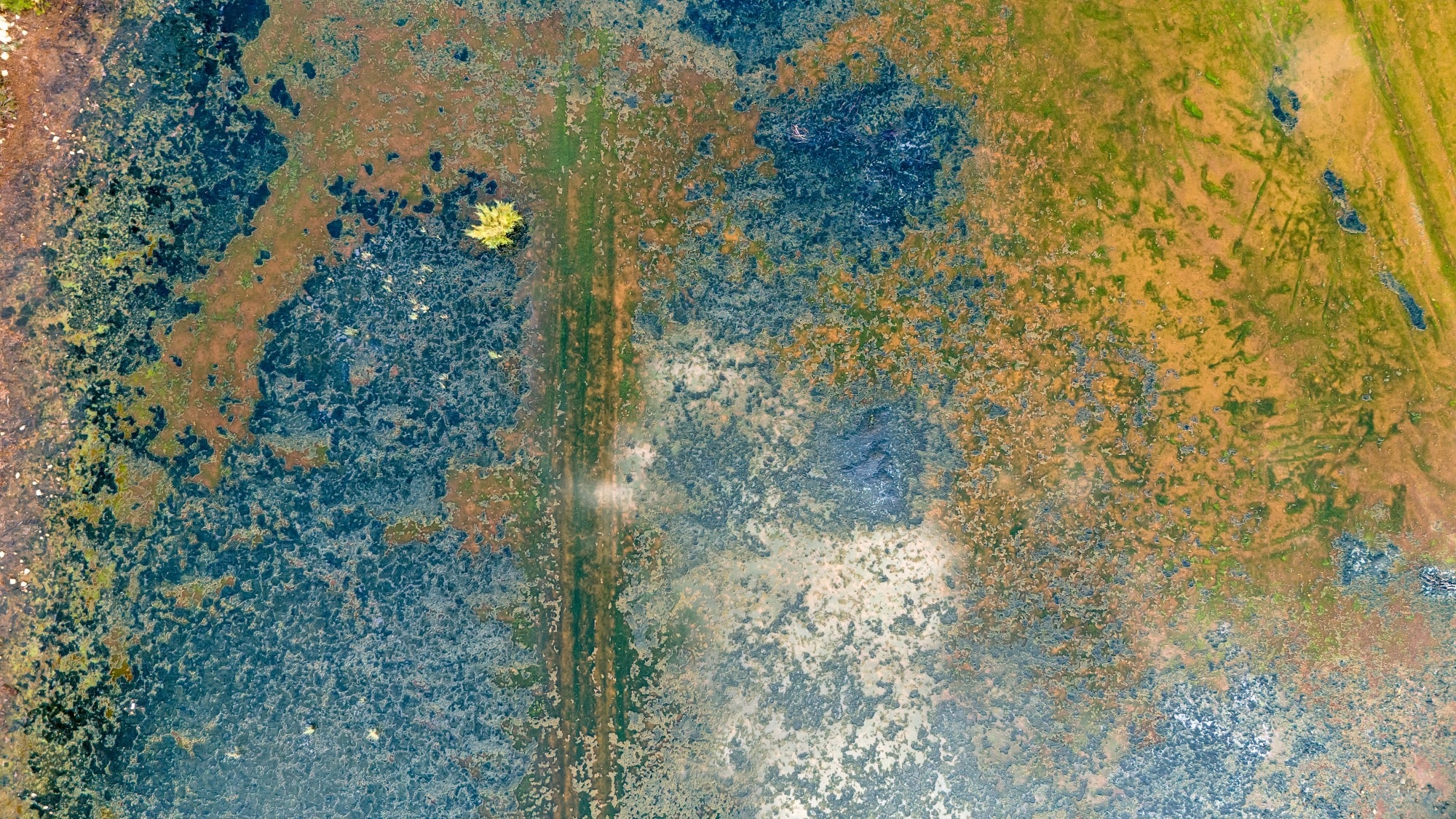
Image Credit:Bugra Kaan Ersoy/Shutterstock.com
A New Take on an Old Problem
Water pollution from synthetic dyes and heavy metals is a pressing environmental concern, particularly in areas affected by industrial runoff. Methylene blue (MB), a common dye, and lead (Pb²+), a toxic heavy metal, are among the most persistent contaminants in wastewater.
Traditional water treatment approaches often rely on activated sludge from engineered wastewater plants, which requires significant energy for aeration or chemical treatments to enhance performance.
But what if nature already provides a better alternative?
A recent study published in Scientific Reports explores the potential of naturally formed activated sludge - collected from wetlands - to serve as a cost-effective, low-energy material for water purification.
Why Natural Sludge Deserves More Attention
Natural sludge, formed in ecosystems like wetlands or riverbeds, has long been overlooked. Unlike its engineered counterpart, this sludge forms without intensive human intervention, evolving with microbial communities and organic matter that could offer unique pollutant-binding capabilities.
Researchers hypothesized that these natural microbial ecosystems might enhance adsorption and even aid in breaking down pollutants, offering a double benefit: biosorption and biodegradation. This could make natural sludge a sustainable, low-cost solution - especially in regions where resources for conventional treatment are limited.
From Wetlands to the Lab
To put this idea to the test, scientists collected sludge from a mature wastewater treatment wetland near Egypt’s Ismailia Canal. The sample, with a natural pH of 7.2 and 78.5 % moisture, was taken from 15–20 cm below the surface.
After cleaning and drying, the material was processed into a fine powder (75–125 µm). The final yield was 17–19 % of dry biosorbent - ready for testing.
How the Sludge Was Characterized
The team applied a suite of advanced techniques to understand the material's structure and adsorption potential:
- SEM & EDX: Analyzed surface morphology and elemental composition
- FTIR: Identified functional groups responsible for binding pollutants
- BET & BJH models: Measured surface area and pore structure
- XRD & TGA: Assessed crystalline phases and thermal stability
These analyses confirmed the material had a high surface area, well-developed porosity, and active functional groups - ideal for capturing contaminants.
Performance Under Pressure
In batch experiments, the sludge was tested against MB dye and Pb²+ ions under varying conditions. The most effective removal occurred at:
- pH: 6
- Contact time: 120 minutes
- Dosage: 2 g/L
Kinetic analysis revealed that the process followed a pseudo-second-order model, indicating that chemical interactions played a significant role. The Langmuir isotherm model best fits the data, suggesting uniform monolayer adsorption on the sludge surface.
The results were impressive:
- MB dye: 78.6 mg/g
- Pb²+ ions: 52.3 mg/g
These high capacities were attributed to the physical properties of the sludge and its chemically active sites.
Built to Last: Reusability in Focus
One of the most encouraging findings was the sludge’s durability. Even after five cycles of pollutant removal and regeneration, it retained around 80 % of its original capacity for both MB and Pb²+. The regeneration process was simple: rinsing with deionized water for MB and 0.1 M HCl for Pb²+.
This reusability points to a practical, low-maintenance solution for wastewater treatment.
What's Next?
Despite its promise, natural sludge presents challenges. Variability in composition and logistics around collection could complicate large-scale use. However, the study suggests that improvements, such as solar-assisted drying and regional sourcing strategies, could make this approach even more sustainable and scalable.
Final Thoughts
This study shines a light on a low-tech but highly effective material for wastewater treatment: naturally occurring activated sludge from wetlands. Its strong adsorption capabilities, reusability, and minimal processing requirements make it a viable alternative to conventional methods - especially in areas where energy resources are limited.
Journal Reference
Fayad E., Shuheil M.A., et al. (2025). Activated sludge recovered from wastewater provides a sustainable approach for removing dyes and heavy metals from effluents. Scientific Reports 15, 43225. DOI: 10.1038/s41598-025-30904-7, http://nature.com/articles/s41598-025-30904-7