A breakthrough method for chemically recycling acrylic – one of the world’s most widely used plastics – has been developed by researchers at the University of Bath.
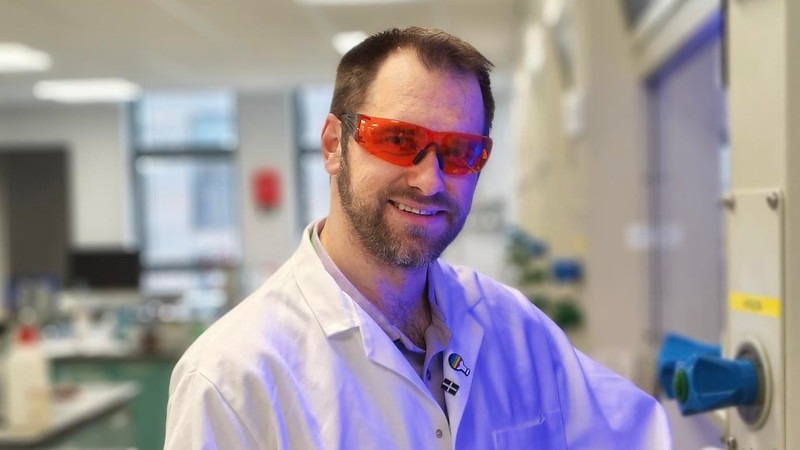 Dr Jon Husband led the research at the University's Institute of Sustainability and Climate Change. Image Credit: University of Bath
In contrast to conventional mechanical recycling, this method uses lower temperatures and sustainable solvents without losing material quality, meaning the plastic can be recycled many times over with minimal environmental impact.
Acrylic, sold under the brand names including Perspex and Plexiglas, is made from the transparent thermoplastic polymethyl methacrylate (PMMA).
Approximately 3 million tonnes are used worldwide each year, in a wide range of applications including automotive components, screens and construction materials.
The work, published in Nature Communications, was led by Dr Jon Husband and Dr Simon Freakley from the University’s Institute of Sustainability and Climate Change (ISCC) and co-authored by the Innovation Centre for Applied Sustainable Technologies (iCAST) Director Professor Matthew Davidson.
Dr Jon Husband, ISCC Research Fellow, said: “With current methods for recycling both energy intensive and inefficient, the demand for cleaner, more efficient recycling technologies has never been greater.
“Plastic recycling can be tough to make economically feasible, due to issues around high energy costs and low-quality product; this work directly addresses both of these issues.”
The Perspex Problem
Mechanical recycling is the most common recycling method, which can involve shredding or melting the plastic to reform pellets for new uses. However, this leads to discolouration and a gradual decline in quality, meaning the recycled material can no longer be used for glass-like applications like screens or spectacles.
Recent industry focus has been on pyrolysis - the heating of Perspex to 350-400 °C – to turn the plastic back into its monomer building blocks to be made from scratch again, in pristine quality. However, this process is very energy-intensive and is easily contaminated by other plastics.
A Cleaner, Safer Way to “Unzip” Acrylic Plastics
The new process developed by the team at Bath uses UV light under oxygen-free conditions to chemically break down consumer-grade PMMA plastic into its original monomer building blocks.
Crucially, the chemistry works at 120-180 °C, far below the 350-400 °C typically needed for conventional pyrolysis-based recycling.
This significantly lowers the energy input needed, improving both environmental performance and commercial scalability.
High Yields Suitable for True Circularity
The new approach delivers over 95 % conversion of the plastic and yields more than 70 % monomer, which can then be purified and repolymerised into “as new” materials.
Dr Simon Freakley says: “Developing new chemical recycling approaches matters because it turns waste back into pristine new materials, rather than a lower-grade, low-value material destined for eventual disposal.
“This method allows us to recover high-quality monomers from used PMMA, offering a clear pathway toward genuine circularity in acrylic materials.”
Scalable, Sustainable Plastics Recycling
The Bath team’s discovery advances beyond a concurrent discovery in PMMA recycling from researchers at ETH Zurich, which relies on UV-activated chlorinated solvents to drive depolymerisation.
In contrast, the Bath team’s process is compatible with more sustainable solvents, opening the door to greener, simpler and more industrially viable recycling routes.
Currently, the team can recycle a few grams of real plastic waste at a time. Research is ongoing to improve the efficiency and scale the process.