As atmospheric carbon dioxide continues to dissolve into the ocean, declining seawater pH could reshape the availability and uptake of trace metals essential to marine life. A recent study published in Marine Ecology used neutron activation analysis (NAA) to investigate how CO2-driven acidification affects two marine diatom species.
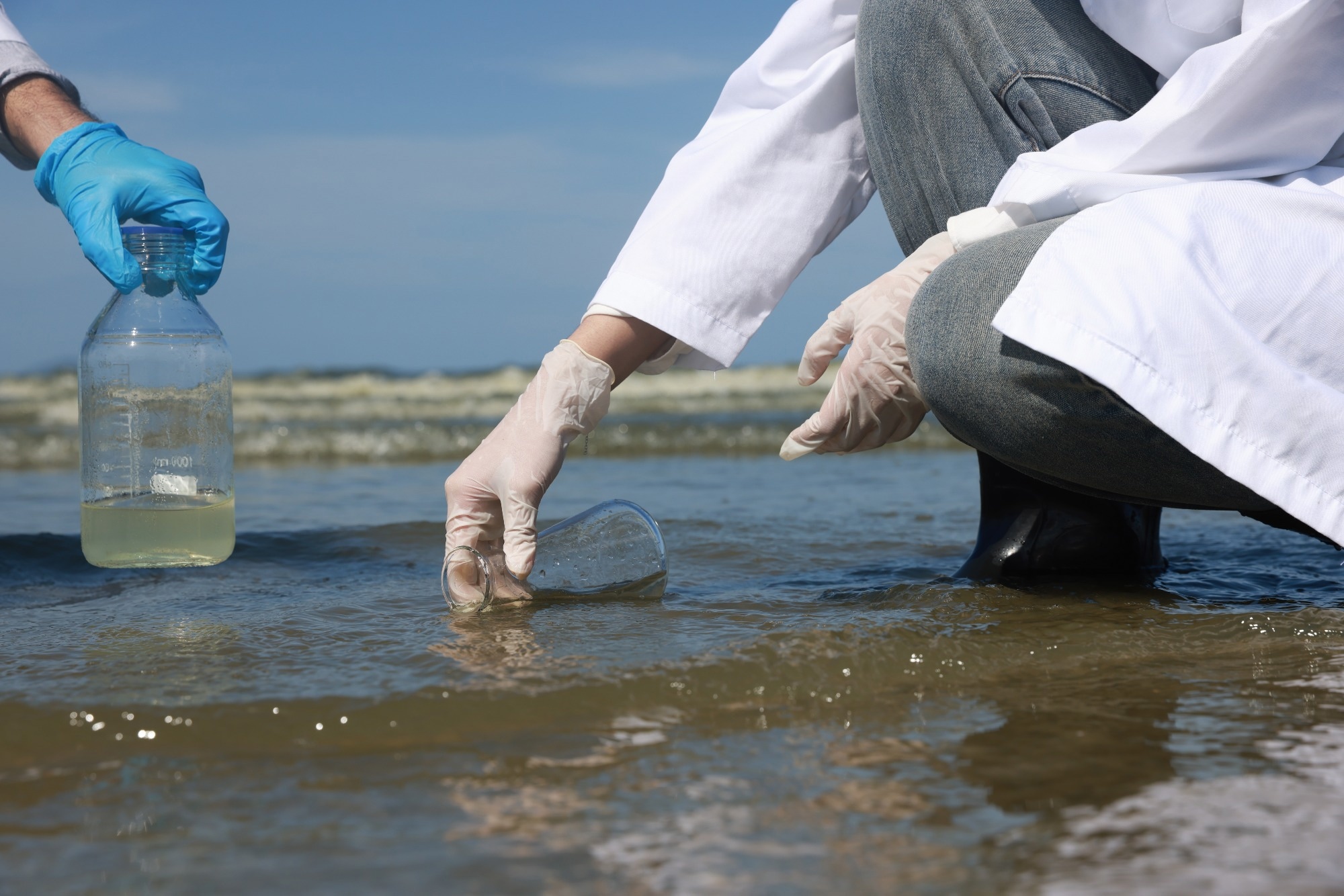
Study: The Impact of Ocean Acidification on the Sorption of Trace Metals by Diatoms. Image Credit: narai chal/Shutterstock.com
The researchers found that lower-pH conditions altered the diatoms' elemental composition and increased their abundance during the stationary growth phase, with no significant effect on overall growth rates. The findings demonstrate NAA's potential for studying trace-metal interactions in marine organisms and provide new insight into how ocean acidification could influence diatom biogeochemistry.
Role of Diatoms in Marine Ecosystems
Diatoms, a key phytoplankton group, play a crucial role within aquatic biogeochemical processes. These widely distributed photoautotrophic microalgae form the base of aquatic food webs in freshwater and marine environments.
Their metabolism depends on trace metals as enzyme cofactors, and changes in seawater pH could affect trace-metal sorption. Primary ocean producers, such as coccolithophores and diatoms, fix carbon dioxide from near-surface waters and export organic carbon to ocean depths, contributing to the biological pump.
Environmental variables, including anthropogenic factors, control diatom species distributions. They can also accumulate trace metals at concentrations far exceeding those in surrounding waters.
Want to save this article for later? Click here.
Impact of Ocean Acidification
While diatoms play a key role in the global carbon cycle, ongoing ocean acidification is expected to change diatom physiology, biogeochemical function, and community structure.
Such changes can impact carbon sequestration in marine environments. Seawater temperature and pH can affect the adsorption and solubility of metals, which can alter the dissolved concentrations of metals.
Constant emissions of carbon dioxide can lead to a 0.2–0.6-unit reduction in ocean pH, as projected by the end of the century. Such a reduction in pH could result in changes in biogeochemical cycles of the ocean.
At lower pH, trivalent and divalent metals will exist in higher concentrations in their free forms, which will affect their bioavailability to organisms.
Investigating the Impact of pH Variability
In this work, the authors explored how pH variability from carbon dioxide dissolution in the ocean affects diatom trace-metal sorption and growth using NAA, a quantitative, sensitive method for multi-element analysis.
The study used two experimental setups: one for the carbon dioxide treatment and one for the air control. Both marine diatom species, including Nitzschia navis-varingica (N. navis-varingica) and Thalassiosira pseudonana (T. pseudonana), were cultured within nutrient-replete f/2 medium to prevent confounding effects of nutrient limitation.
Researchers compared a centric diatom, T. pseudonana, with a pennate diatom species, N. navis-varingica, as responses to ocean acidification are interspecific. The pennate diatom N. navis-varingica was isolated, cryopreserved, and then cultured for this experiment, while T. pseudonana used in the study was cultured and cryopreserved for decades.
The authors quantified and compared the elemental concentrations in diatom species grown under acidified and present-day ocean conditions. During the statistical analysis, they performed analyses of the growth rates, cell counts, and pH levels.
Multivariate statistics on trace and major elements were also performed. Overall, 21 trace elements were included in this analysis: sodium (Na), magnesium (Mg), aluminum (Al), chlorine (Cl), calcium (Ca), scandium (Sc), vanadium (V), chromium (Cr), manganese (Mn), iron (Fe), cobalt (Co), zinc (Zn), arsenic (As), bromine (Br), rubidium (Rb), strontium (Sr), indium (In), iodine (I), lanthanum (La), cerium (Ce), and hafnium (Hf).
Study Findings
Researchers successfully demonstrated the suitability of NAA for analyzing trace-metal sorption on marine diatoms and suggested its expanded application to studies of trace-metal adsorption and absorption in marine organisms.
The pH was significantly lower in the carbon dioxide treatment than in the air control throughout the experiment for both diatom species. Growth of T. pseudonana and N. navis-varingica was assessed by daily cell counts, with no significant difference in growth rates between treatments.
However, both species showed significantly higher cell abundance under carbon dioxide treatment during the stationary phase. Despite the higher cell abundance, concentrations of several major and trace elements were lower in diatoms grown under the CO2 treatment, although the response varied by element.
Specifically, N. navis-varingica had significantly lower concentrations of Mg, Mn, Co, Cr, Al, Ce, Fe, and Zn under carbon dioxide treatment, which is consistent with previous studies.
The authors suggested that lower Zn concentrations could reflect reduced enzymatic metal requirements at lower pH, since Zn is a cofactor in enzymes involved in inorganic carbon acquisition.
N. navis-varingica also showed significantly lower Co levels under lower pH. The authors noted that lower carbonate concentrations could hamper high-affinity Fe uptake and that reduced operation of carbon-concentrating mechanisms at lower pH might also decrease cellular Fe requirements.
However, Fe remained essential for photosynthetic and respiratory processes supporting the carbon-concentrating mechanism.
Not all elements followed the same pattern. Vanadium concentrations were significantly higher under the carbon dioxide treatment. The authors noted that changes in the uptake of trace elements could have broader ecological consequences, although research on the specific effects of increased vanadium uptake by diatoms remains limited.
The mechanisms underlying the changes in elemental concentrations also remain uncertain. The authors suggested that lower carbonate concentrations under carbon dioxide treatment could hamper high-affinity Fe uptake, while reduced operation of carbon-concentrating mechanisms at lower pH could decrease cellular Fe requirements. These explanations were proposed interpretations rather than mechanisms directly demonstrated by the experiment.
The study demonstrated the suitability of NAA for investigating trace-metal sorption in marine diatoms and suggested that the technique could be applied more widely to studies of metal adsorption and absorption in marine organisms. The findings also showed that carbon dioxide-driven changes in seawater pH can alter diatom abundance and elemental composition, although responses varied among elements. While such changes could have implications for processes including primary production, silicification and carbon export, the authors emphasized that the larger environmental consequences of altered major- and trace-element concentrations remain uncertain.
Journal Reference
Leterme, S. C. et al. (2026). The Impact of Ocean Acidification on the Sorption of Trace Metals by Diatoms. Marine Ecology, 47(4), e70112. DOI: 10.1111/maec.70112, https://onlinelibrary.wiley.com/doi/full/10.1111/maec.70112
Disclaimer: The views expressed here are those of the author expressed in their private capacity and do not necessarily represent the views of AZoM.com Limited T/A AZoNetwork the owner and operator of this website. This disclaimer forms part of the Terms and conditions of use of this website.