An Imperial College study published in Frontiers in Science urges immediate action to prevent permanent ecological harm by reducing microplastic pollution.
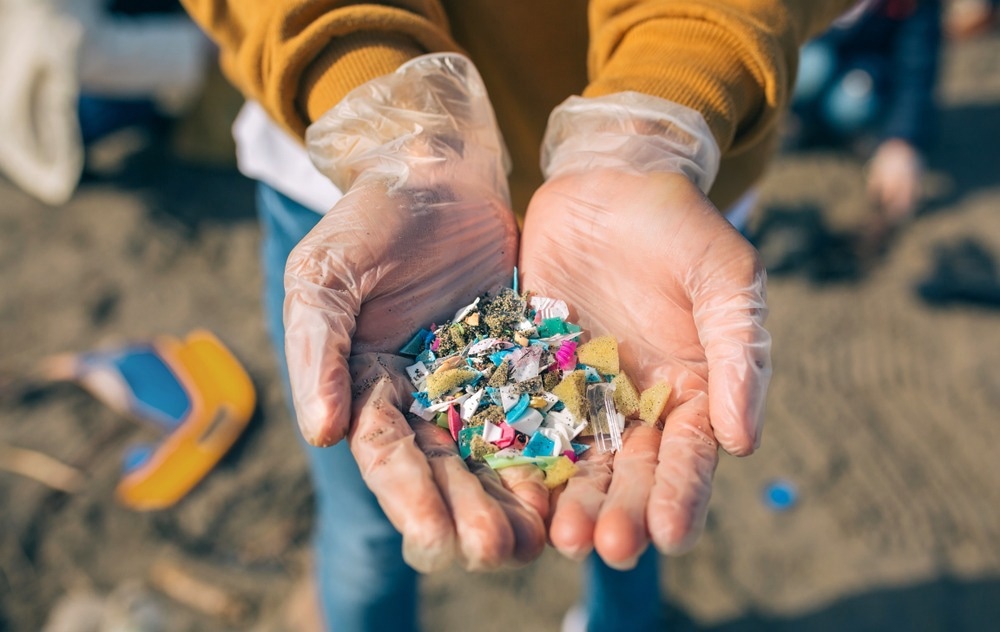
Image Credit: David Pereiras/Shutterstock.com
Changes in climate transform plastics into pollutants that are more mobile, lasting, and dangerous. This occurs by accelerating the degradation of plastics into microplastics, dispersing them over greater areas, and intensifying their environmental effects.
Plastic production and climate change are intensifying the problem. From 1950 to 2023, yearly global plastic manufacturing increased by a factor of 200.
The authors recommend phasing out unnecessary single-use plastics (representing 35 % of production), restricting new plastic manufacturing, and establishing global guidelines for plastic reusability and recyclability.
Plastic pollution and the climate are co-crises that intensify each other. They also have origins – and solutions – in common. We urgently need a coordinated international approach to stop end-of-life plastics from building up in the environment.
Frank Kelly, Lead Author and Professor, School of Public Health, Imperial College London
Joint Crises
The researchers performed an extensive analysis of current data, demonstrating that the climate crisis exacerbates the effects of plastic pollution.
Elevated temperatures, humidity, and UV radiation accelerate plastic degradation. Severe storms, floods, and winds can enhance the breakdown and spread of plastic waste – currently at six billion tons and growing – into landfills, water, land, the atmosphere, and food chains.
Microplastics raise worries due to their durability, dispersal, and build-up, which can disrupt aquatic nutrient cycles and harm soil and crops. They can also negatively impact the feeding, breeding, and actions of creatures that consume them if concentrations surpass safe limits.
Microplastics can function as "Trojan horses", transporting pollutants such as metals, pesticides, and persistent PFAS "forever chemicals". Weather conditions may increase the binding and movement of these pollutants, along with the release of hazardous substances such as plasticizers or flame retardants.
Previously stored plastics are also a concern. Sea ice gathers and concentrates microplastics, removing them from the water. However, melting sea ice caused by warming could reverse this, creating a significant new source of plastic pollution.
There’s a chance that microplastics – already in every corner of the planet – will have a greater impact on certain species over time. Both the climate crisis and plastic pollution, which come from society’s over-reliance on fossil fuels, could combine to worsen an already stressed environment in the near future.
Dr. Stephanie Wright, Study Co-Author, School of Public Health, Imperial College London
Apex Predators are Particularly Vulnerable
The combined effect of multiple stressors is evident in various marine species. Studies on corals, sea snails, sea urchins, mussels, and fish indicate that microplastics reduce their resilience to rising temperatures and ocean acidification.
Mussels that filter feed can accumulate microplastics and pass them on to their predators, potentially increasing microplastic concentrations in the food web.
Species at higher trophic levels are often susceptible to other stressors, and plastics can exacerbate these effects. For example, microplastic-related fish mortality was recently shown to increase fourfold with higher water temperatures. Another study revealed that cod ingested twice as many microplastics when exposed to increased ocean hypoxia, which is also caused by warming.
Top predators, such as orcas, are vulnerable to the combined effects of microplastics and climate change. These mammals with long lifespans are prone to considerable microplastic exposure during their lives.
The possible disappearance of keystone species, which influence the operation of the broader ecosystem, may have extensive consequences.
Apex predators such as orcas could be the canaries in the coal mine, as they may be especially vulnerable to the combined impact of climate change and plastic pollution.
Guy Woodward, Study Co-Author and Professor, Department of Life Sciences, Imperial College London
Microplastics impact terrestrial ecosystems as well, although these interactions are more intricate and less predictable compared to those in aquatic environments.
Urgent Action Required
The growing evidence of microplastics' increased quantity, distribution, and negative effects reinforces the need for immediate action on plastic contamination.
The researchers suggest that a new approach to plastic use is needed.
“A circular plastics economy is ideal. It must go beyond reduce, reuse, and recycle to include redesign, rethink, refuse, eliminate, innovate, and circulate – shifting away from the current linear take–make–waste model,” notes co-author Dr. Julia Fussell, also from Imperial’s School of Public Health.
This study highlights that combining the interactive impacts of plastic pollution and climate stressors provides a method to guide, align, and emphasize research, monitoring, policy, and interventions.
Wright says, “The future will not be free of plastic, but we can try to limit further microplastic pollution. We need to act now, as the plastic discarded today threatens future global-scale disruption to ecosystems.”
“Solutions require systemic change: cutting plastic at source, coordinated global policy such as the UN Global Plastics Treaty, and responsible, evidence-based innovation in materials and waste management,” concludes Kelly.
Journal Reference:
Kelly, F. J., et al. (2025) Plastic pollution under the influence of climate change: implications for the abundance, distribution, and hazards in terrestrial and aquatic ecosystems. Frontiers in Science. DOI:10.3389/fsci.2025.1636665. https://www.frontiersin.org/journals/science/articles/10.3389/fsci.2025.1636665/full.