Reviewed by Frances BriggsDec 10 2025Reviewed
A new study published in Ecological Economics uses citizen science data to look at how the global plastic waste trade contributes to pollution on coastlines and waterways in importing countries.
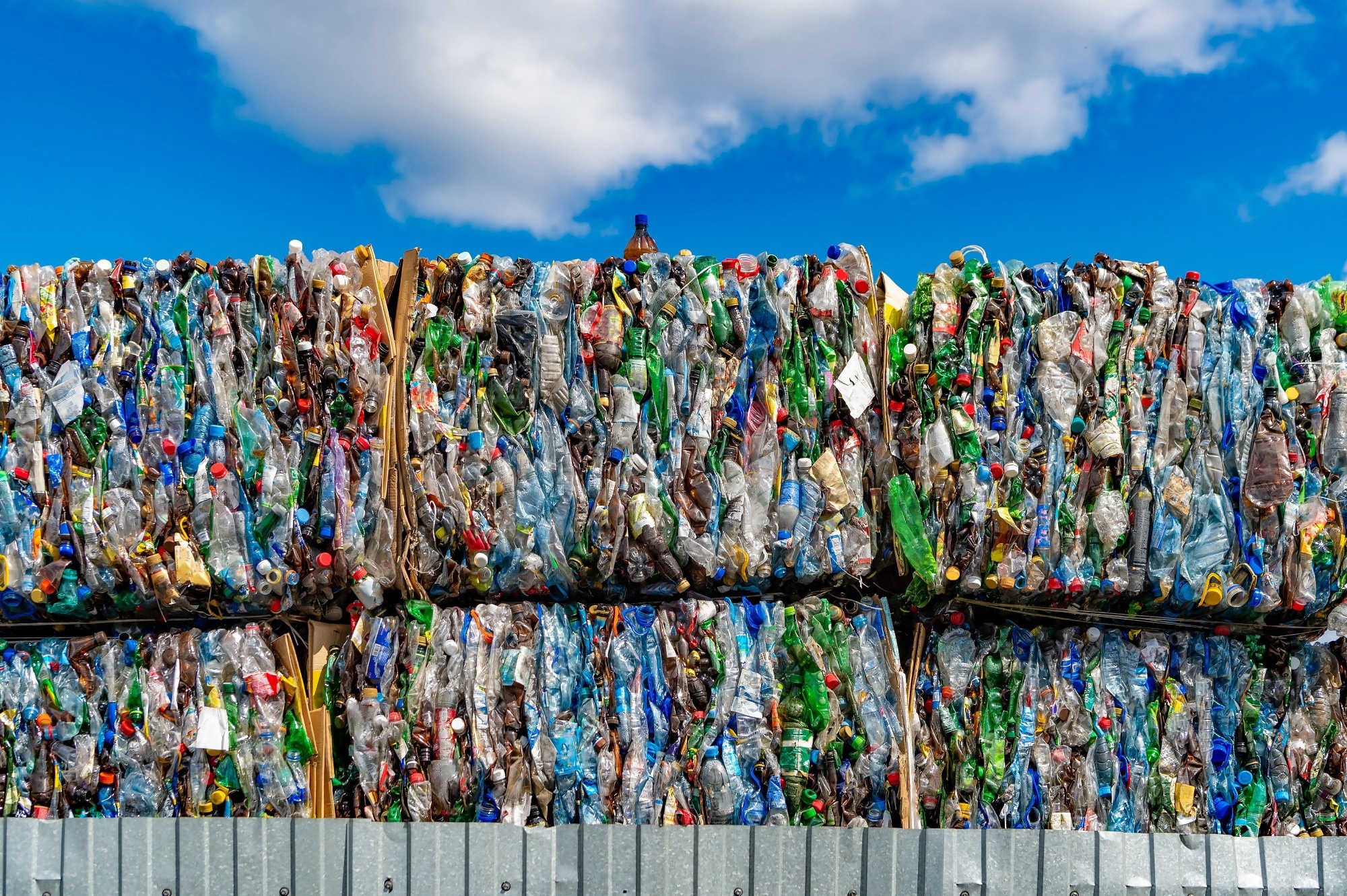 Image Credit: Evgenii Panov/Shutterstock.com
Plastic bottles are ubiquitous. This form of drinking bottle accounts for over half of the plastic waste collected for recycling in the United States, according to University of Illinois Urbana-Champaign.
Of what can be recovered, the majority is processed domestically, while a percentage is traded internationally.
There has been a lot of news coverage about the plastic waste trade. The concern is that exporting waste to another country creates opportunities for that waste to escape into the environment during transportation and storage. We wanted to see if plastic waste imports lead to higher amounts of plastic litter found in coastal areas.
Becca Taylor, Assistant Professor, Department of Agricultural and Consumer Economics, University of Illinois Urbana-Champaign
Plastic waste is now a globally traded commodity that can be recycled into reusable products. But shipping untreated waste can cause plastic litter during transport.
Overall, we find that a 10 % increase in the amount of plastic waste a country imports is associated with a 0.6 % increase in the amount of littered plastic bottles collected from coastal areas.
Becca Taylor, Assistant Professor, Department of Agricultural and Consumer Economics, University of Illinois Urbana-Champaign
Such a small percentage doesn't seem like much, but it rapidly adds up. While only around 2 % of plastic waste is sold internationally, this is a significant quantity given the rapid expansion of plastic manufacture over the previous 30 years.
The international trade of plastic waste peaked in 2014 at 16 million metric tons (approximately 35 billion pounds).
On top of this, waste commerce flows predominantly from the global North to the global South, raising concerns about “pollution havens,” where nations with lax environmental regulations and ineffective waste management systems are more likely to attract polluting companies.
To answer this, the researchers turned to citizen scientists, collecting data from everyday people worldwide.
The Ocean Conservancy, a non-governmental environmental advocacy group, organizes a global beach cleanup event each year. Volunteers are taught to collect and document all coastal litter in certain locations. This data is consolidated nationally and made publicly available.
Taylor and her colleagues at the University of Illinois at Urbana-Champaign collected data from 90 countries from 2003 to 2022.
The researchers made use of the United Nations' global trade database to calculate plastic waste imports by nation and year. They also used current academic data to assess plastic waste mishandling rates across countries.
According to the authors, doubling a country's plastic trash imports results in a 6 % rise in the number of littered bottles retrieved. Furthermore, nations with weak waste management systems had a proportionate rise in litter.
The authors also looked at recent developments in the international waste trade, which underwent significant changes in 2017, following China's ban on plastic waste imports. China had been the largest market for plastic waste, and its policy shift resulted in a 73 % reduction in overall plastic imports.
Some of the waste made its way to countries like Thailand and Malaysia, where plastic imports soared dramatically following China's ban.
The researchers investigated what happened to litter in those nations and discovered that a 1,000-ton increase in plastic waste imports between 2016 and 2017 was associated with a 0.7% rise in littered plastic bottles.
However, nations that originally witnessed a rise in plastic imports following China's policy shift went on to enact their own waste import bans.
The addition of plastic to the Basel Convention, a global accord on the trade of hazardous waste, in 2019 brought about yet another policy change. As a result, nations that have ratified the convention – the United States is not one of them – agree to abide by specific trade rules.
In summary, we do find that plastic waste imports lead to increased coastal litter, and policies that aim to regulate or ensure importing industries are following best practices will have an impact. But cutting down on trade is not sufficient to eliminate litter along the coastlines. We also need to consider waste management practices more broadly and provide assistance to countries with less advanced waste management systems.
Becca Taylor, Assistant Professor, Department of Agricultural and Consumer Economics, University of Illinois Urbana-Champaign
Journal Reference:
Taylor, R. L. C., et al. (2025) Plastic waste imports & coastal litter: Evidence from citizen science data. Ecological Economics. DOI: 10.1016/j.ecolecon.2025.108848. https://www.sciencedirect.com/science/article/pii/S0921800925003313