Preserving fish during and immediately after fishing is essential for maintaining quality and safety. Conventional preservation methods predominantly rely on ice-based cooling or industrial refrigeration systems. Researchers have developed a sustainable off-grid solar photovoltaic thermoelectric cooling system for fish preservation. The research was published in Scientific Reports.
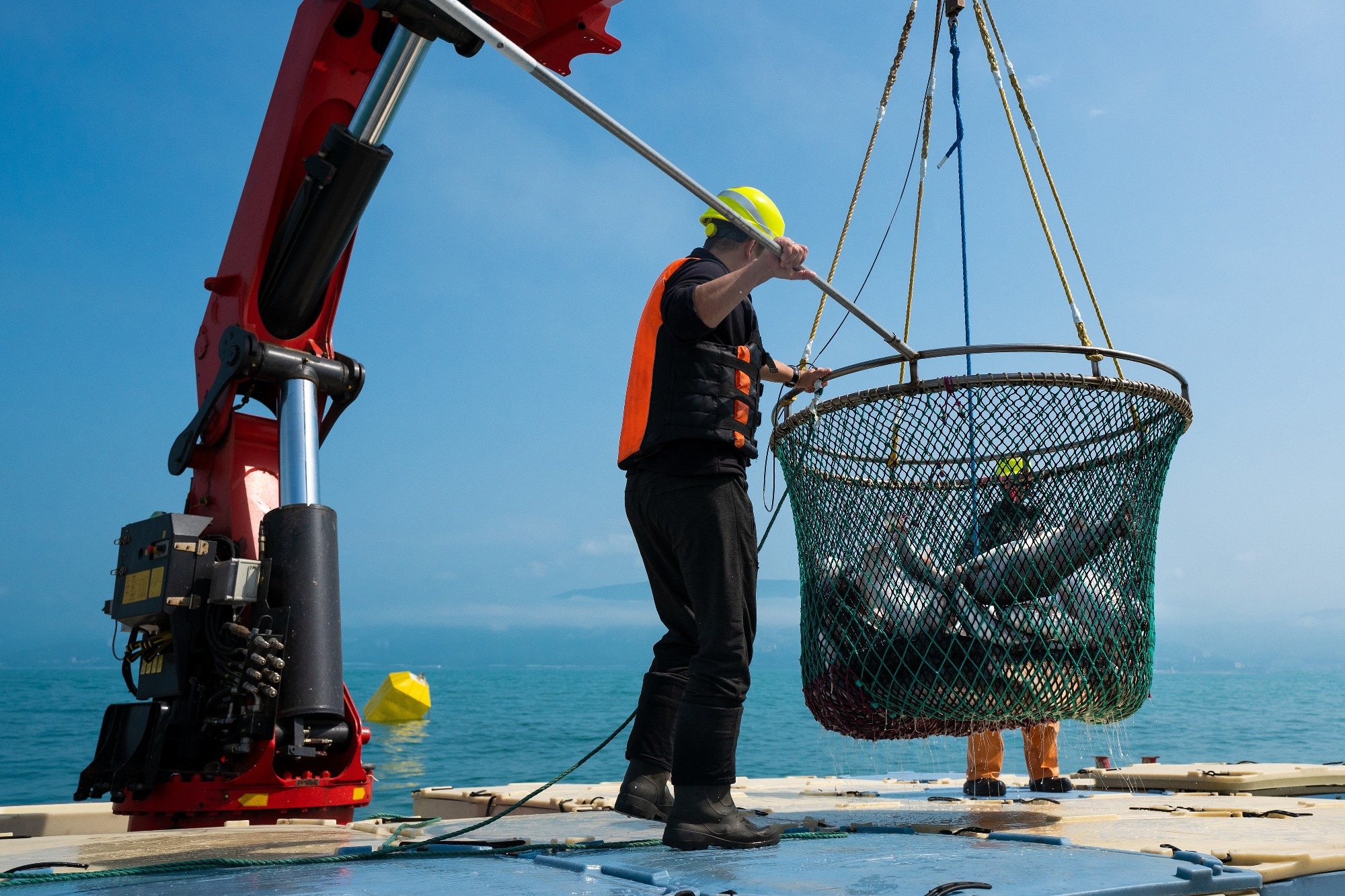
Study: Development of an off-grid solar photovoltaic thermoelectric cooling system for sustainable fish preservation. Image Credit: fortton/Shutterstock.com
Fish Preservation Challenges and Solutions
Ice cooling presents challenges such as limited capacity, uneven temperature distribution, and physical handling difficulties, while conventional refrigeration often depends on fossil fuels, leading to greenhouse gas emissions and higher operational costs.
These issues particularly impact small-scale fishermen who require an affordable, effective, and sustainable solution. Given Egypt’s abundant solar radiation potential and the global shift toward renewable energy, integrating solar power with thermoelectric cooling is a promising alternative.
Thermoelectric modules, which operate through the Peltier effect, provide a refrigerant-free, compact, and environmentally benign cooling technology suitable for off-grid applications. This study aims to develop, test, and evaluate a solar-powered thermoelectric cooling system designed for fish preservation during fishing operations, focusing on its environmental and economic viability.
Want to save this article for later? Click here.
Design and Experimental Setup
The research involved designing a solar cooling unit (SCU) integrating a cooling chamber, heat exchanger, Peltier modules, a solar photovoltaic (PV) power system, and an automated control unit. The cooling chamber was constructed from plywood with internal shelving and equipped with fans to ensure even cold air distribution. Heat exchangers utilized water flow through aluminum tubing to absorb and transfer heat efficiently.
Three configurations of Peltier modules, single, dual, and triple, were tested to assess cooling performance under varying power inputs. Solar energy was harnessed via PV panels, with the system controlled intelligently to optimize energy use and maintain target temperatures.
Experimental tests were conducted in Alexandria, Egypt, using 20 kg batches of fresh fish, monitoring environmental variables including temperature, humidity, and wind speed. Energy consumption and cooling efficiency were recorded throughout the trials.
The system’s cooling performance was statistically analyzed using Monte Carlo simulations to evaluate robustness and probability of maintaining preservation temperatures under dynamic environmental conditions. Finally, an economic assessment, including payback period calculations, was conducted to determine the financial feasibility of adoption by small-scale fishermen.
Cooling Performance and Analysis
The testing demonstrated a clear relationship between the number of Peltier modules used and the cooling effectiveness of the system. The triple-module configuration achieved the highest temperature reduction, lowering the internal chamber temperature by up to 4 °C and maintaining it between 4 and 8 °C throughout the day, which aligns well with safe preservation limits for fish freshness.
Single and dual-module setups also provided temperature reductions but were insufficient to reach the critical preservation threshold, with temperatures ranging from 10 to 21 °C, limiting their practical applicability.
The enhanced cooling from increased module count was accompanied by higher energy consumption; the triple-module system consumed 1.6 kWh total and exhibited specific energy consumption (SEC) of 0.079 kWh/kg of fish, which remained significantly lower than traditional refrigeration methods.
Despite the higher energy use, the triple-module setup delivered the best performance coefficient, indicating efficient conversion of electrical power into cooling capacity.
Monte Carlo statistical analysis further validated the triple-module system’s reliability, showing a 76.2% probability of maintaining critical cooling temperatures under variable solar irradiance and ambient conditions.
Relative cooling performance improved markedly by 67% and 108% for the dual and triple configurations, respectively, compared to the single-module system. These findings confirm that scaling up the thermoelectric modules can substantially enhance system robustness, although at a trade-off with power requirements.
Economically, the triple-module SCU showed the shortest payback period, approximately 0.15 years, highlighting its affordability and potential for rapid return on investment for small-scale fishermen. This draws attention to the feasibility of deploying solar-powered thermoelectric refrigeration in off-grid, resource-limited fishing contexts without reliance on fossil fuels or bulky ice transport.
The clean energy integration reduces greenhouse gas emissions associated with fish preservation and aligns with broader sustainability goals. The study acknowledged limitations concerning testing in a single month and fish species but suggests broad applicability, with further testing recommended for different seasons and fish types.
Sustainable Fish Cooling Outlook
This research establishes the viability of a solar photovoltaic-powered thermoelectric cooling system tailored for sustainable fish preservation in small-scale fishing operations. The system successfully maintained the required low temperatures for fish freshness using renewable energy, significantly reducing environmental impacts compared to conventional methods reliant on ice or fossil fuels.
Although further development of more efficient thermoelectric materials and expanded testing across seasons and fish species are needed, this study provides a strong foundation for adopting solar-driven refrigeration technologies in the fisheries sector, promoting environmentally responsible, cost-effective, and energy-independent fish preservation.
Journal Reference
El-Sebaee I., Helal H.S., et al. (2026). Development of an off-grid solar photovoltaic thermoelectric cooling system for sustainable fish preservation. Scientific Reports 16, 22542. DOI: 10.1038/s41598-026-61443-4, https://www.nature.com/articles/s41598-026-61443-4