Decades of offshore oil and gas activity have left an extensive network of pipelines and umbilicals beneath the sea, but their long-term environmental legacy may extend beyond the infrastructure itself. A recent study published in the Journal of Hazardous Materials examined plastics embedded within subsea infrastructure on the United Kingdom Continental Shelf, revealing evidence of degradation after decades in the marine environment. The findings raise important questions about an overlooked source of microplastic pollution and what it could mean for future offshore decommissioning decisions.
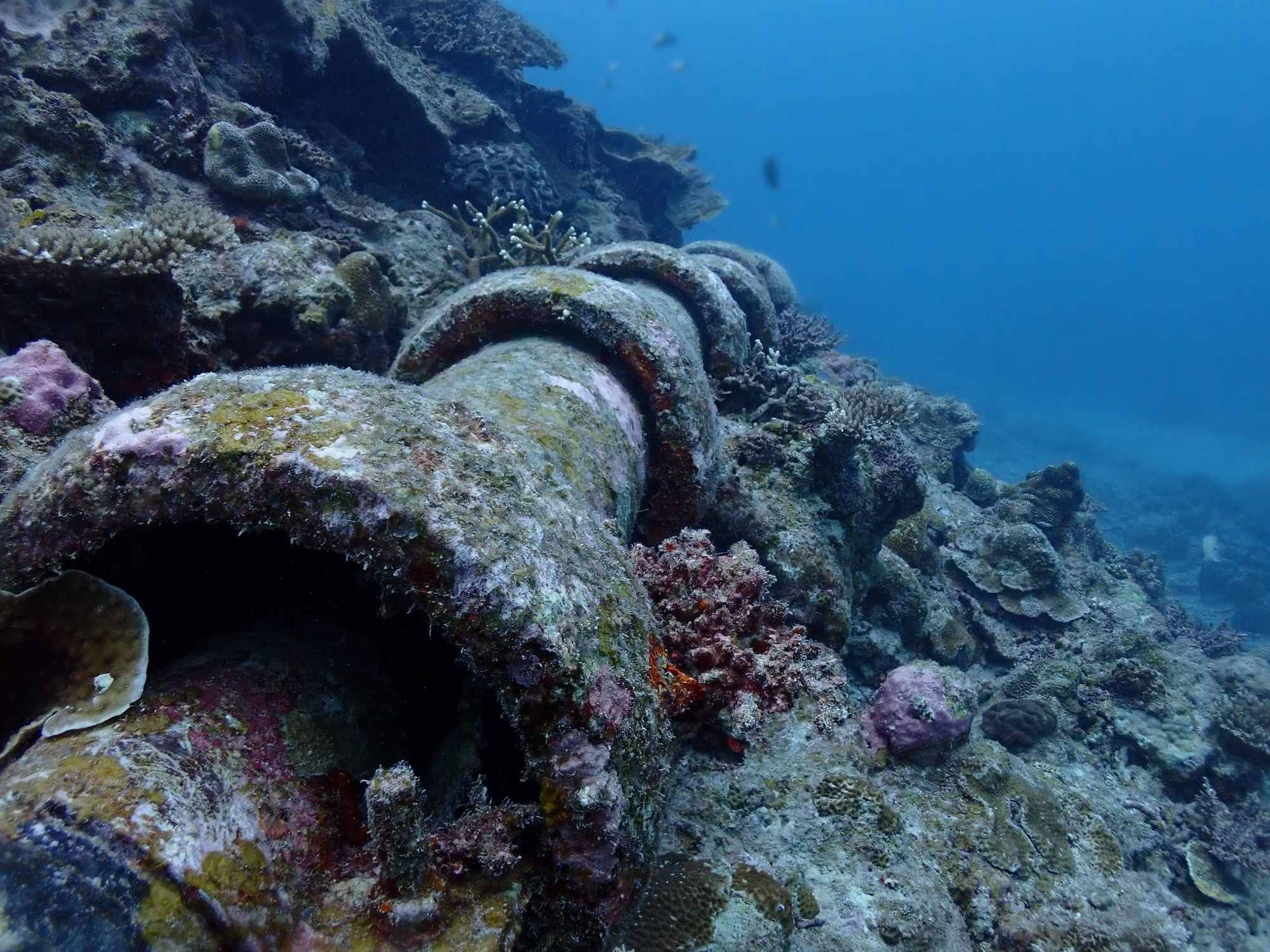
Study: Legacy subsea plastics from the oil and gas industry: Environmental risks of decommissioning in situ. Image Credit: osaka.maki/Shutterstock.com
Impact of Subsea Plastics on the Environment
In the oil and gas industry, plastics are used for subsea applications such as flexible flowlines and rigid pipelines (collectively pipelines) and umbilicals to ensure thermal insulation and protection from seawater corrosion owing to their persistence, durability, and versatility.
However, these properties also slow plastic degradation in the marine environment, resulting in plastic accumulation that adversely affects marine life. Plastics are abraded from pipelines and umbilicals both after use when decommissioned in situ and during their service life.
This degradation fragments plastics into nanoplastics and microplastics, with adverse effects, including ingestion, toxicity, and entanglement. Oil and gas installations, after a typical operational service of 20 years, are either removed or left in situ, specifically where repurposing them for new developments is impractical.
For instance, in situ decommissioning is the norm in the United States of America (USA), with more than 97% of all decommissioned pipelines since the 1960s left in situ/on the seafloor. This raises concerns that safety and environmental risks are left unaddressed.
Specifically, the environmental risk from plastics in subsea infrastructure is not well understood because of limited attention to plastics in umbilicals and pipelines and a lack of evidence on degradation behavior in real-world settings, microplastic generation, and overall contributions to marine plastic pollution.
Investigating Potential Environmental Risks
In this work, researchers assessed the potential environmental risks from plastics contained in subsea infrastructure. They then applied a novel method using predicted no-effect concentration (PNEC) analysis to estimate potential environmental risks from in situ decommissioning.
The researchers generated empirical data using the UKCS as a case study on the degradation of plastics in pipelines recovered from subsea environments.
Researchers estimated the mass of plastics in subsea umbilicals and pipelines, quantified the resultant mass of plastics that will degrade into microplastics over time, and assessed chemical and physical degradation of pipeline samples recovered from subsea environments.
Subsequently, based on current modeling studies, researchers developed and applied a novel method to assess the relative contributions of specific plastic pollution sources based on potential environmental harm, estimate the extent to which degradation of plastics from umbilicals and pipelines contributes to microplastic pollution, and determine whether this poses a risk to the environment.
The Research Effort
In the UKCS, oil and gas activity is primarily based on the North Sea, with extensive infrastructure since the 1960s. Researchers used the North Sea Transition Authority (NSTA) database to estimate the quantity of oil and gas umbilicals and pipelines in the UKCS.
Researchers used a desk-based method to estimate plastic mass in these subsea umbilicals and pipelines. Samples of plastics obtained from coatings of umbilicals and pipelines in the Brent Field were analyzed to evaluate the degradation of plastics present in subsea infrastructure.
Researchers also assessed the potential of those plastic samples to pose environmental risks by generating microplastics. Pipeline samples used in this study had been installed in 2002 and were recovered in 2024 during a decommissioning campaign after 22 years in the marine environment.
Researchers analyzed an umbilical section recovered after 20 years of service during the same decommissioning campaign. They also calculated the plastic mass loss and determined the potential environmental risk due to microplastics.
The Risks of Legacy Subsea Plastics
Researchers demonstrated chemical and physical degradation of oil and gas plastics after 22 years on the seabed/in the UKCS. Available data indicated that decommissioning pipelines in situ could leave 121,000 tons of plastics on the UKCS.
Based on environmental conditions, researchers estimated that degrading 121,000 tons of plastics could generate 4.5–500 tons of microplastics annually.
The lowest estimate is comparable to the annual microplastic releases from UK rivers to the North Sea, while the highest estimate exceeds the annual microbead releases from cosmetics before the UK ban. The PNEC analysis also indicated the potential of microplastics generated from legacy oil and gas plastics to harm marine life.
Thus, researchers recommended formally integrating oil and gas legacy plastics into decommissioning decision-making and into consenting and planning for new installations, including offshore renewable energy infrastructure.
They made these recommendations while acknowledging the uncertainties in absolute levels of microplastics generated from oil and gas legacy plastics.
Journal Reference
Mendrik, F., Gall, S. C., Chen, J., Northam, A. J., Andrady, A. L., & Thompson, R. C. (2026). Legacy subsea plastics from the oil and gas industry: Environmental risks of decommissioning in situ. Journal of Hazardous Materials, 516, 143055. DOI: 10.1016/j.jhazmat.2026.143055, https://www.sciencedirect.com/science/article/pii/S0304389426020352
Disclaimer: The views expressed here are those of the author expressed in their private capacity and do not necessarily represent the views of AZoM.com Limited T/A AZoNetwork the owner and operator of this website. This disclaimer forms part of the Terms and conditions of use of this website.