Researchers have demonstrated that combining carbon nanomaterials with plant roots and soil microbes could accelerate the breakdown of polyethylene (PE) plastic in soil. The study, published in Environmental Science and Ecotechnology, found that multi-walled carbon nanotubes helped achieve 12.1% PE mass loss over 90 days, compared with just 0.6% in planted soil without nanomaterials.
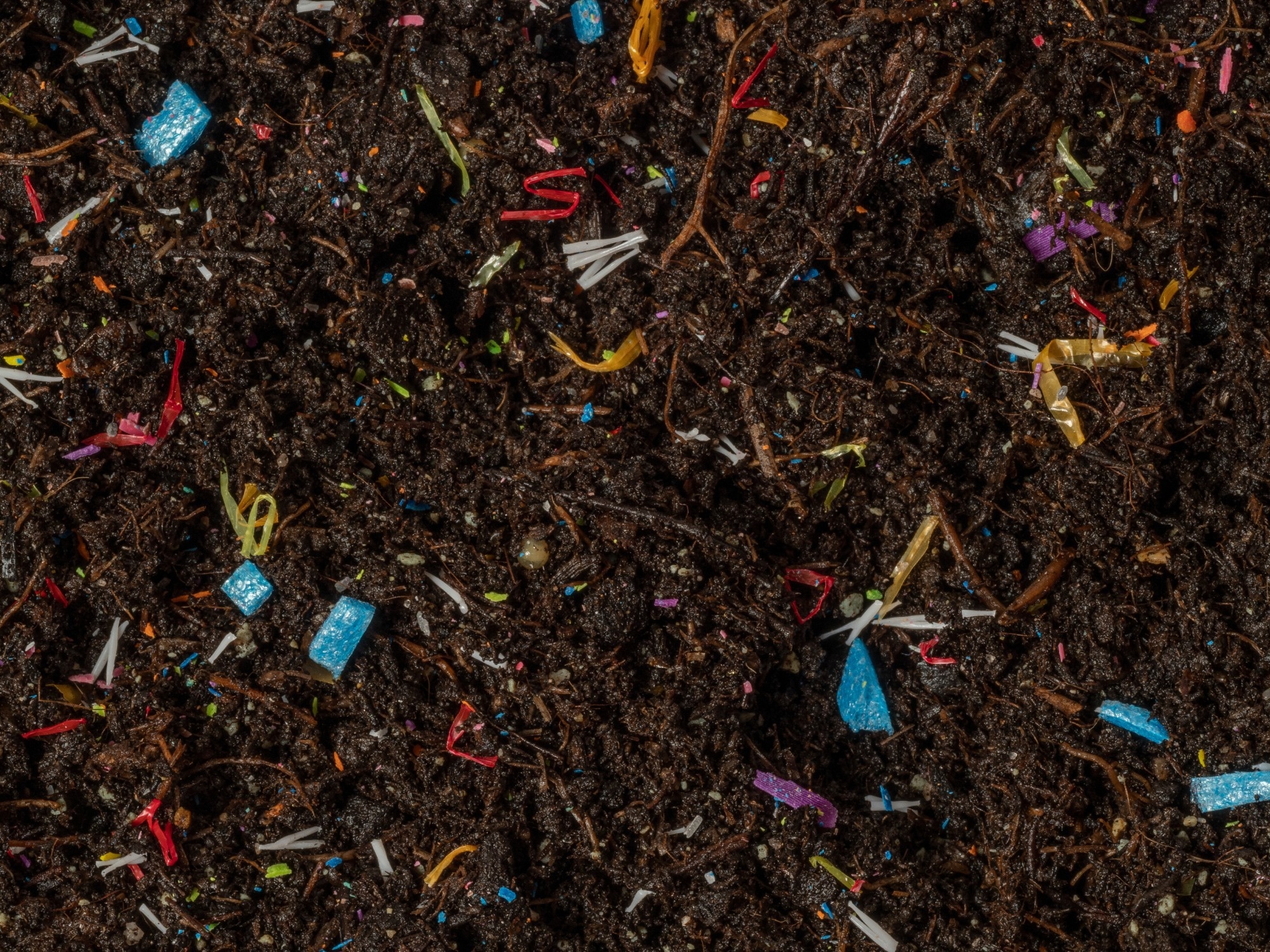 Study: Accelerated polyethylene biodegradation in soil through carbon nanomaterial-primed rhizospheres. Image Credit: Kuttelvaserova Stuchelova/Shutterstock.com
The findings suggest that carbon nanomaterials could enhance plant-assisted plastic remediation, offering a potential approach to tackling persistent plastic pollution in terrestrial environments.
Why Is Polyethylene Pollution So Difficult to Tackle?
PE, which accounts for most of the plastic waste in terrestrial environments worldwide, represents a major socio-ecological problem. Its resistance to biodegradation and chemical inertness result in its long-term accumulation in soil.
Traditional remediation strategies, such as landfilling and incineration, are energy-intensive and can cause secondary pollution. This necessitates the development of low-impact, sustainable approaches that align with natural ecosystems.
Plants and their associated microbes can be harnessed through phytoremediation and rhizoremediation to stabilize or degrade pollutants, providing potential alternatives owing to their ecological compatibility and low cost.
Leguminous plants, specifically alfalfa (Medicago sativa L.) and soybean (Glycine max L.), have demonstrated significant plastic degradation. Yet, quantitative data on degradation remain limited for plant-based plastic remediation, and few studies have reported relatively low degradation rates.
A kinetic bottleneck created by the recalcitrant carbon–carbon (C–C) backbones has been shown in previous studies to limit the loss of plastic mass to under 3%. Thus, for rhizoremediation, auxiliary strategies are crucial to address this PE recalcitrance.
Can Carbon Nanomaterials Accelerate Plastic Degradation?
Carbon-based nanomaterials like graphene oxide (GO) and multi-walled carbon nanotubes (MWCNTs) could accelerate the breakdown of organic pollutants through their surface-mediated transfer of electrons and high specific surface areas.
While the catalyst-like acceleration of degradation has been established under controlled laboratory conditions, most of the studies have employed simplified solid-film or aqueous systems and short time scales.
Additionally, the degradation dynamics at different soil depths have been compared explicitly by a few studies. Thus, systematic evaluation of the carbon-based nanomaterial performance across soil depths and over time is required for rhizoremediation applications.
Download a free copy of this page here!
Combining Plant Roots and Nanomaterials to Break Down Plastic
In this work, researchers systematically elucidated the spatial (bottom and surface) and temporal (90, 60, and 30 days) regulatory effects of GO and MWCNTs on PE degradation in a soil–plant system. They used alfalfa amended with GO and MWCNTs to perform a 90-day dynamic bioremediation experiment.
Researchers also identified metabolic pathways and microbial taxa associated with improved degradation and assessed plant growth responses under PE stress and nanomaterial amendment.
The objective of the study was to elucidate ways to apply commercial carbon-based nanomaterials for sustainable remediation of plastic while also informing their effective and safe use in soil–plant systems.
Testing Polyethylene Degradation Across Soil Depths
The researchers used 5–20 nm MWCNTs, 0.8–2 nm GO, alfalfa seeds, and commercial black, linear, double-layer low-density PE film as starting materials. GO and MWCNTs were utilized as model nanomaterials.
Alfalfa seeds were germinated in a standard multipurpose peat-free compost comprising composted green waste, sand, and wood fiber. Finally, the PE film containing carbon black pigment had a density of 0.91–0.93 g cm-3 and a thickness of 20 μm.
The researchers used various methods, including X-ray photoelectron spectroscopy (XPS), Fourier-transform infrared spectroscopy (FTIR), Brunauer–Emmett–Teller analysis, atomic force microscopy (AFM), and scanning electron microscopy (SEM), to characterize the physicochemical properties of the commercial nanomaterials before the experiments.
A preliminary 45-day hydroponic test was conducted to determine the appropriate concentration range and evaluate the potential to promote PE degradation. Based on these results, the authors performed a germination test to evaluate the effects of nanomaterials, PE, and their joint exposure on alfalfa seeds.
At 90, 60, and 30 days after planting, the authors performed destructive sampling. They harvested aboveground plant tissues and extracted the roots from the soil at every time point. This was followed by soil microbial community analysis.
Carbon Nanotubes Achieve 12.1% Plastic Mass Loss in 90 Days
Functioning as initial-stage, catalyst-like agents, MWCNTs accelerated surface-layer breakdown, realizing a 12.1% mass loss in the surface layer within 90 days, compared to less than 0.1% and 0.6% in abiotic controls and unamended soil, respectively, for initiating the degradation of recalcitrant polymers, specifically at 200 mg kg-1.
In bottom-layer degradation, GO played a supporting role, with the 150 mg kg-1 treatment assessed in a later experimental batch displaying promising activity, which deserves further validation in dose–response studies in the future.
A 97% reduction in tensile modulus (from 782.8 to 19.6 MPa) and an increase in surface oxidation, with the O 1s/C 1s ratio increasing from 0.17 (pristine PE) to 0.49 (surface-layer films from the combined plant–MWCNT treatment), accompanied the degradation of the nanomaterial-amended samples.
GO sustained long-term degradation (5.8%) strongly synchronized with root penetration in deeper soil. Microbial community analysis identified changes in the abundance of potentially plastic-degrading bacteria, including Rhodanobacter and Pseudolabrys. Predicted metabolic pathways also suggested possible roles for carbon–carbon bond cleavage and the detoxification of degradation intermediates.
Most importantly, the nanomaterials alleviated PE-induced phytotoxicity, thereby improving plant biomass and possibly supporting plant–microbe interactions.
In conclusion, the findings suggest that carbon nanomaterials could enhance plant- and microbe-assisted polyethylene degradation, although further research is needed to establish their long-term environmental safety and effectiveness under real-world soil conditions.
Journal Reference
Liu, H., Ciric, L., & Bhatti, M. (2026). Accelerated polyethylene biodegradation in soil through carbon nanomaterial-primed rhizospheres. Environmental Science and Ecotechnology, 34, 100772. DOI: 10.1016/j.ese.2026.100772, https://www.sciencedirect.com/science/article/pii/S2666498426001171.
Disclaimer: The views expressed here are those of the author expressed in their private capacity and do not necessarily represent the views of AZoM.com Limited T/A AZoNetwork the owner and operator of this website. This disclaimer forms part of the Terms and conditions of use of this website.