For more than three decades, the University of Michigan Solar Car Team has turned the challenge of racing on sunlight into a proving ground for the future of transportation.
Since 1989, generations of students have designed, built, and raced increasingly sophisticated solar-electric vehicles, combining advanced aerodynamics, high-efficiency solar cells, battery technology, and meticulous energy management. With 10 national championships and extensive international competition experience, the team’s ambitions extend well beyond the finish line: its cars offer students a demanding real-world engineering laboratory while testing technologies and design principles that could help shape more efficient and sustainable transportation.
In this interview, Team Manager Cecilia Hetling and Communications Director Sofía Ferreiro Goedelmann discuss the engineering behind the team’s vehicles, the lessons learned from competition and the recent Solar Trek, and how student-led innovation can contribute to a solar- and electric-powered future.
The University of Michigan Solar Car Team has designed, built, and raced solar-electric vehicles since 1989. What originally motivated you to develop these cars, and how has that purpose evolved over the years?
Our team's motto throughout our 36-year history has been Earn the Victory, Move the World. Every year, we work to follow that goal through technological innovation, cross-disciplinary collaboration, and community involvement. Solar cells and solar technology are at the forefront of the sustainable energy movement, and we are here, ready to grow with them. This push to create the most efficient solar-powered vehicle brings us closer to a more sustainable future, strengthening our motivation without changing it. Our purpose has remained the same since 1989. We are Earning the Victory in our solar racing competitions, and through that process, we are Moving the World with new technology uses, student knowledge advancement, and greater sustainable energy awareness.
Could you describe the main features of the technology and how it works?
The car is a fully solar-powered electric vehicle. The electric powertrain consists of an array of high-efficiency solar cells, a battery made of high-performing battery cells, a top-quality motor controller, and a custom motor. The wing, which sits behind our driver's canopy, allows for active aerodynamics and lets us “sail” with the wind. This is all packaged in a three-wheel monohull or bullet design aerobody optimized for a large array area, low drag, and stable driving.
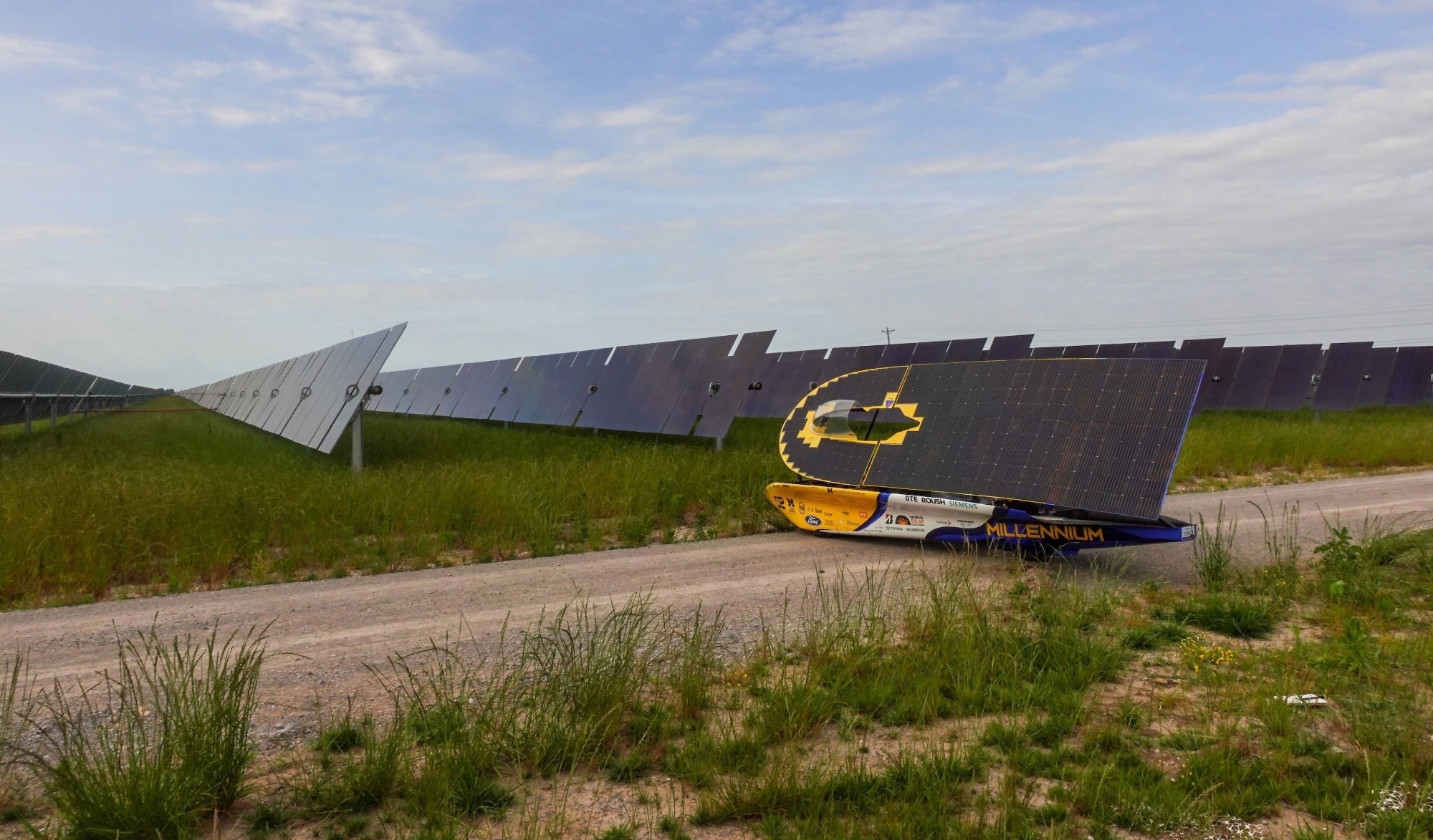
Image Credit: University of Michigan Solar Car Team
From an engineering perspective, what are the most difficult trade-offs when designing a competitive solar car, particularly between aerodynamics, weight, energy storage, driver safety, reliability, and solar efficiency?
One of the biggest trade-offs in a solar competition vehicle is the one between the vehicle’s aerodynamics and the array. A solar array is optimized when it’s as flat as possible in order to absorb the most direct sunlight. However, a car with the least drag would ideally have all smooth, curved surfaces. This balance is critical to assess, especially during the early design stages of our car, since it directly determines how much solar power versus aerodynamic drag we must account for.
You won the 2024 American Solar Challenge, adding to a long record of national success. What technical or strategic decisions were most important in achieving that result?
In 2024, the team won its 10th National Title at the American Solar Challenge with Astrum, our 17th vehicle. This car placed 4th at the World Solar Challenge in Australia in 2023, after which we adapted and improved it to become a national champion car.
One of the biggest strategic differences in building and manufacturing Astrum was that, in 2023, the team worked more toward a systems engineering approach. The team developed a target race time before creating a single part and set design requirements a year before the World Solar Challenge. The team set the design requirements for the American Solar Challenge after the World Solar Challenge ended in 2023, giving them a full year of preparation. This systems engineering approach gave us a high-level understanding of the car and what it would take to win the American Solar Challenge. In other words, we were able to clearly visualize and prepare what we needed to accomplish, and then we achieved it.
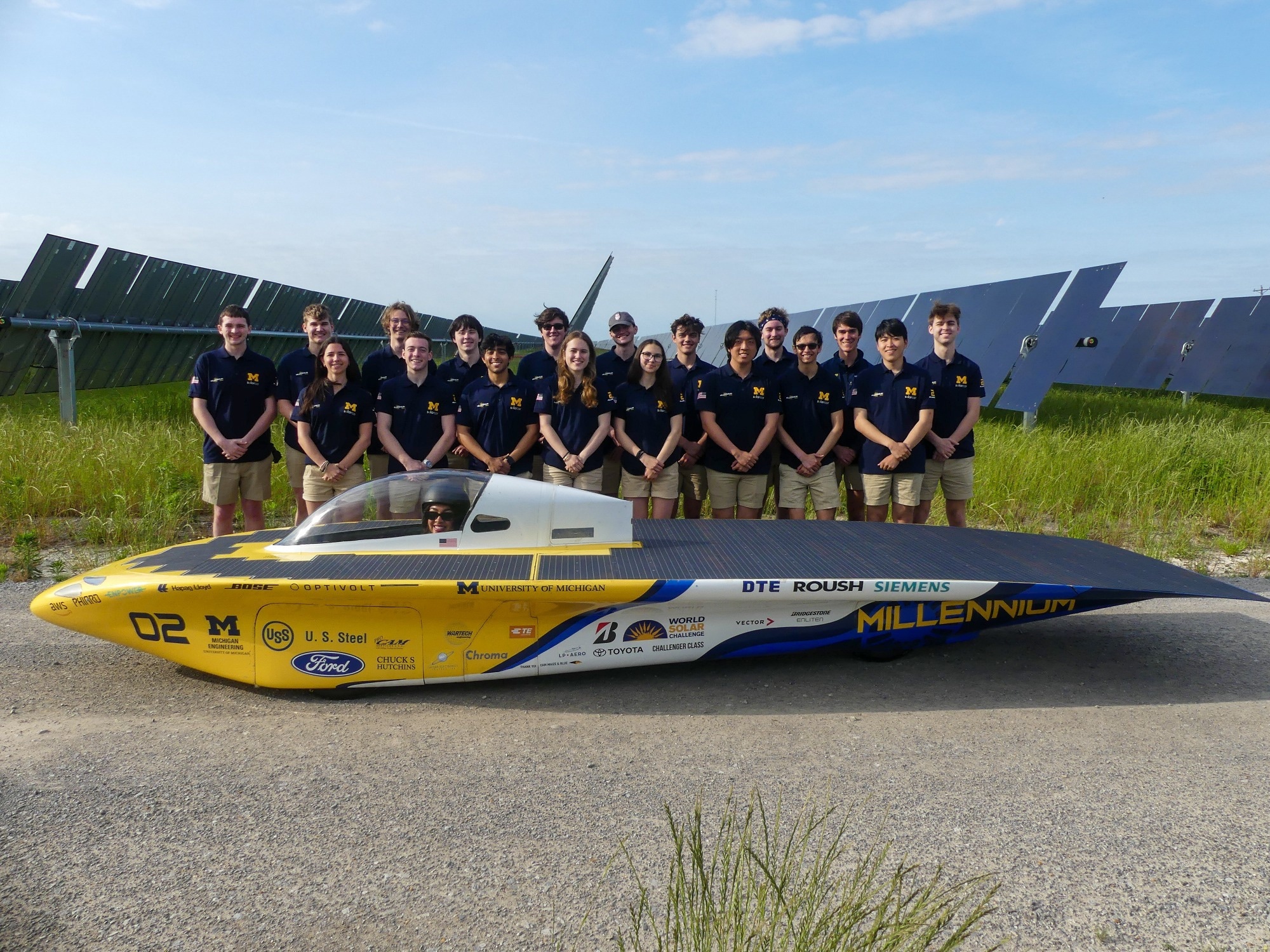
Image Credit: University of Michigan Solar Car Team
You just completed the Solar Trek across the country in May 2026, adding to a long record of team success. What technical or strategic decisions were most important in achieving that result?
The Solar Trek helped prepare our team for the World Solar Challenge. We started with an incredible vehicle, our 19th car, Millennium, which raced across Australia in August 2025. Over the course of a year, we adapted and perfected the systems to complete a two-week road trip from Detroit to Dallas to LA, which we called The Solar Trek. This journey prepared us for the World Solar Challenge 2027 and gave us the opportunity to give back to our sponsors and community that support us.
Rather than entering a competition that would require extensive modifications to Millennium, we focused our energy on preparing the team for the World Solar Challenge. We now have a team that is ready to take on the most competitive solar racing competition on the planet.
UMSCT Presents Millennium
Video Credit: University of Michigan Solar Car Team
Solar car racing is often seen as an extreme testbed for efficiency. Which technologies or design principles from your vehicles have the strongest potential to influence future electric vehicles or renewable transportation systems?
Our solar array and our battery cells are the key to our solar vehicle innovation. Electric vehicles require maximum efficiency in energy collection and storage. Our solar array uses the latest solar cell technology, and our battery needs the best battery cell technology. We test this state-of-the-art technology in Australia’s unforgiving weather, allowing real-world implementation and bringing us closer every day to a solar- and electric-powered future.
How do you approach integrating solar cells, batteries, power electronics, and motor systems to get maximum performance from a limited energy budget?
Powertrain integration is all about minimizing our losses. The powertrain with the least resistance and fewest losses will outperform the rest. We do an intense analysis of our energy consumption before we even design a single element. From this, we set a goal for our energy budget, and we make every decision to avoid wasting energy.
Reliability appears to have been a recurring priority for the team since its earliest competitions. How do you test and validate each vehicle before a race, and what kinds of failures are hardest to predict?
Reliability in a solar racing competition doesn’t just mean a reliable vehicle; it takes a reliable car, a reliable team, and a reliable support network to have a successful race.
From our first race, we have seen how a car we trust and know will earn us the victory. With a reliable car, we can keep our stops to a minimum, saving valuable time.
To test and validate our vehicle, we fully design it in CAD and run a full analysis before manufacturing begins, from mass calculations to FEA. From there, we build and test subsystems meticulously before adding them to the vehicle. Finally, once the vehicle is assembled, we do even more testing to ensure all systems work in harmony. On the team side, a smooth race takes preparation, from a practiced driver to a responsible, well-prepared caravan team/pit crew that can work as a unit to fix any problems that arise.
The hardest failures to predict are always the new ones. With so much history in solar racing, we have seen the mistakes teams often make and aim to be as prepared for them as possible. New failures bring new difficulties, and the best way to know you’re prepared is to have the right team with the right mindset, ready to take on any new challenges or setbacks that come their way.
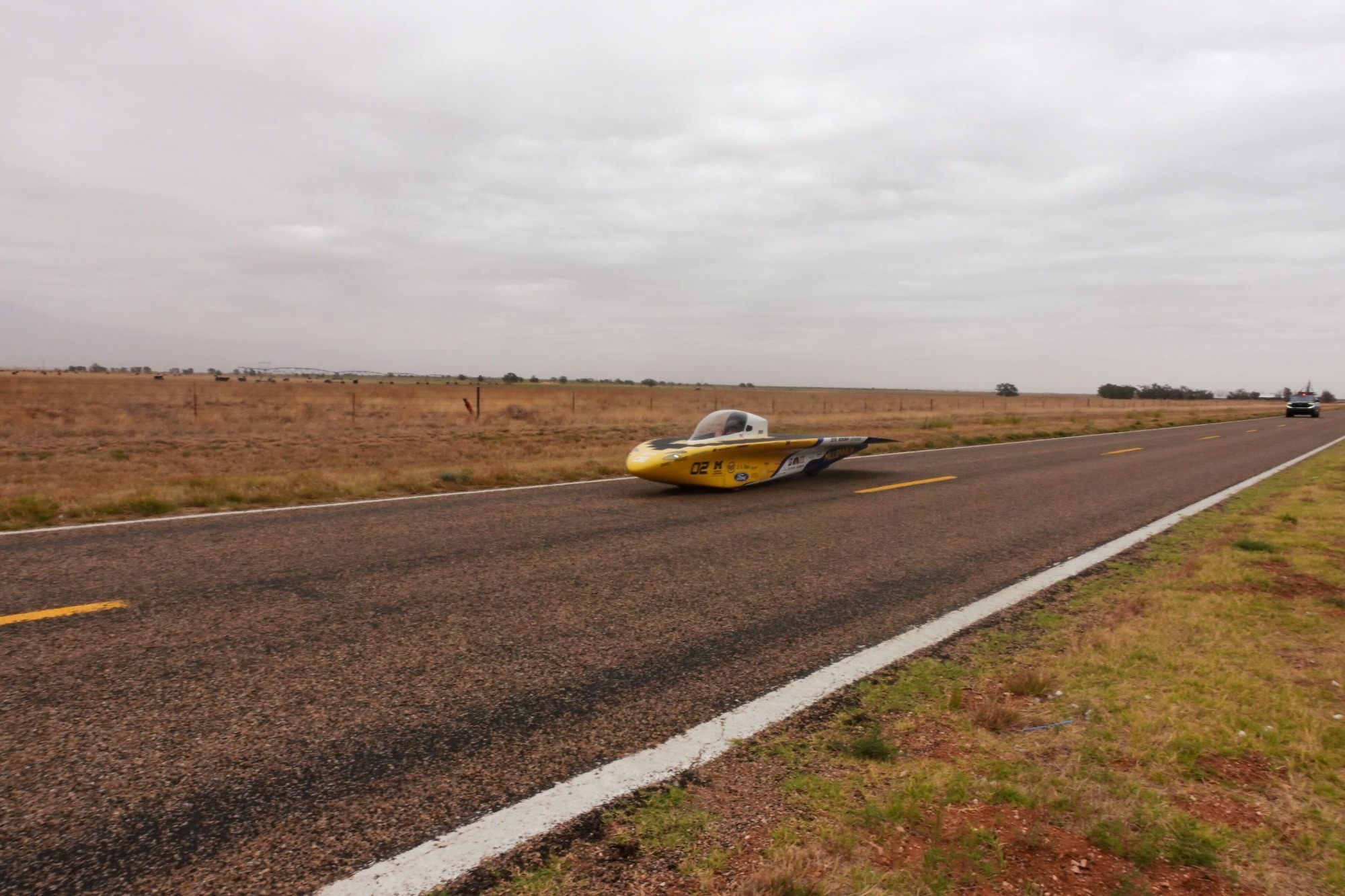
Image Credit: University of Michigan Solar Car Team
Partnerships with technology companies, including Chroma Systems Solutions for testing and validation support, appear to play a role in your development process. How do industry collaborations help the team improve the vehicle's performance and safety?
Industry collaboration and sponsorship support are essential to building the best solar vehicle in the world. Technology companies, such as Chroma Systems Solutions, are a powerful resource for the building, testing, and validation that occurs throughout our build cycle. In addition, the engineers and business people who work with us through these companies are the industry experts; as such, they have knowledge that one can only gain through years in the industry. This knowledge is key to making our vehicle stronger, safer, and faster.
Looking ahead, what needs to happen for solar-assisted vehicle technology to become more practical at scale, and do you see the work of teams like yours helping accelerate that transition?
Teams like ours are really taking these technologies and testing them out on the road. The Australian outback is an unforgiving environment, so proving our car's capabilities in these conditions moves the world closer to a sustainable future where solar energy solutions could become the go-to answer for the average consumer.
Where can readers find more information?
Official website - umsolar.com
About the University of Michigan Solar Car Team
The University of Michigan Solar Car Team is currently preparing for the 2027 World Solar Challenge across Australia, the most competitive solar racing competition. Since 1989, the team has designed, built, and raced America's best solar vehicles. With 10 National Championships, eight Top-3 World finishes, and one International Championship, we lead American and World solar racing innovation.
About Cecilia Hetling

Cecilia Hetling is the current Team Manager of the University of Michigan Solar Car Team. She is entering her third year of study pursuing a Bachelor’s in Electrical Engineering at the University of Michigan College of Engineering with Minors in Mathematics and Multidisciplinary Design. Cecilia started on the team as a battery engineer, designing the battery pack for their 19th vehicle, Millennium. She then became High Voltage Lead, handling all high-voltage-related projects from battery to wiring harness to powertrain.
Cecilia is now the Team Manager, where she leads the entire 150-person team supporting all engineering and non-engineering functions, including the design, build, and manufacturing of the car; financials and sponsor communication; and operations to get the team and car to competitions and events.
About Sofía Ferreiro Goedelmann

Sofía Ferreiro Goedelmann is the current Communications Director of the University of Michigan Solar Car Team. She is currently studying Biomedical Engineering with minors in electrical engineering and economics at the University of Michigan.
In Solar Car, Sofía designs and manages everything related to public image, including social platforms and Race Crew uniforms, and contributes to overarching decisions. She assumed this position in April 2026. Before this, she was the Business Division member in charge of media outreach.
Disclaimer: The views expressed here are those of the interviewee and do not necessarily represent the views of AZoM.com Limited (T/A) AZoNetwork, the owner and operator of this website. This disclaimer forms part of the Terms and Conditions of use of this website.