The Carbon Footprint of Cement
Capturing Carbon at the Kiln
Emission Cuts Versus Removal
Pairing Cement Kilns with Air Capture
Carbon Mineralization
Key Challenges
Outlook
References and Further Reading
Cement is essential to several industries worldwide, but the question remains: Can we continue using cement at the levels we do without taking further steps to reduce its impact on the environment?
Researchers have gone a step further, asking whether cement plants can go beyond cutting their own emissions and pull carbon dioxide (CO2) out of the air. The short answer is a conditional yes using certain technology combinations, and standard carbon capture alone cannot make cement production a net carbon sink.
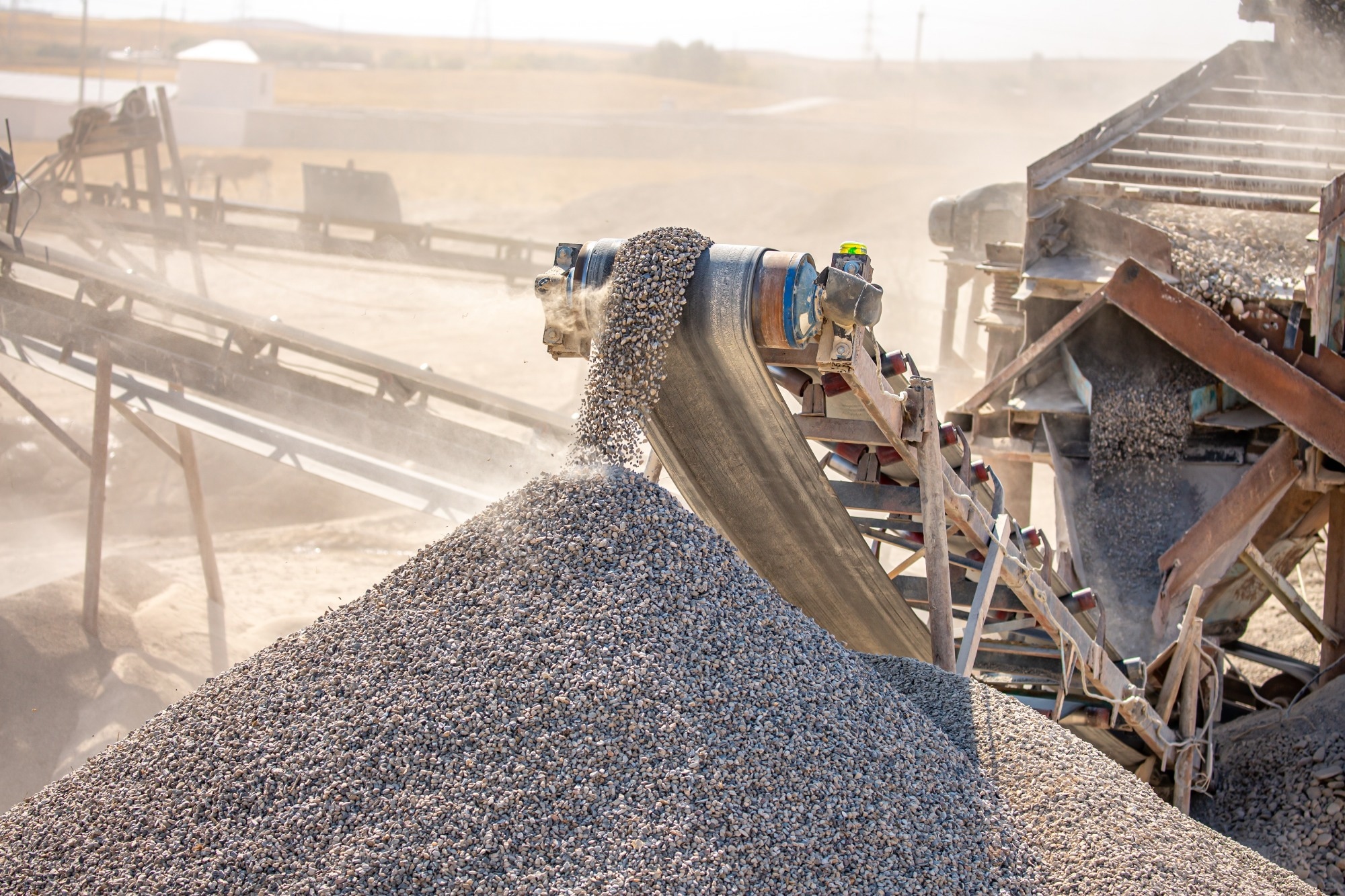
Image Credit: Vera Larina/Shutterstock.com
Cement manufacturing is responsible for roughly 7% of human-caused greenhouse gas emissions.1 About three-fifths of the sector’s emissions have nothing to do with fuel. They come from calcination, in which heated limestone breaks down into lime and CO2.1 As per the reports by the International Energy Agency (IEA), the sector now emits more CO2 in total than it did in 2015, while emissions per ton produced have stayed flat.2 The industry body, the Global Cement and Concrete Association (GCCA), targets net zero concrete by 2050 and counts capture at plants as part of the route.3
Capturing Carbon at the Kiln
Trapping CO2 at the kiln stack and then using or storing it, together known as CCUS, is the furthest developed way to reduce plant emissions. Heidelberg Materials inaugurated its Brevik plant in Norway in June 2025, billed as a world first for cement.4 The unit is built to trap roughly 0.4 million tons annually, about half of what the site emits. The gas is then liquefied and shipped for storage beneath the seabed offshore.4 The IEA stresses that only permanent storage counts as removal, not use in products.5
Emission Cuts Versus Removal
A kiln capture unit keeps limestone and fuel CO2 out of the atmosphere, lowering emissions, but it leaves the existing atmospheric stock unchanged. A plant that trapped everything it emitted would at most break even. To remove CO2, the carbon must have come from the air to begin with, whether via biomass or direct air capture, and then be kept in permanent storage.5 One option is burning biomass in the kiln and capturing the resulting CO2 (BECCS). Seven cement projects plan this, according to the IEA, but most expect at best carbon neutrality, since they will not capture everything or will replace only part of the fossil fuel.5
Pairing Cement Kilns with Air Capture
In 2026, researchers at ETH Zurich published a life cycle assessment of direct air capture (DAC) based on calcium looping, a process that uses the same limestone chemistry as cement making.6 Their model suggests that running the kiln on electricity and capturing the clean CO2 stream released by the limestone itself could shrink the sector’s climate impact by roughly 78% towards 2050, a figure that excludes any further removal from the air.6
Before entering the kiln, if the limestone passes through the DAC unit once, the cement ends up with a modeled footprint of about -0.15 t CO2-eq per ton, which is net negative. The CO2 taken from the air goes to underground storage instead of being held inside the cement.6 Large commercial plants of this type, with storage, remove more CO2 than they emit, with the process chain releasing 40 to 150 kg per ton captured and stored.6 Their inputs came from a working plant in California, run by a US company since 2023 and rated at 1,000 tons a year.6
Carbon Mineralization
Mineralization locks CO2 into solid carbonate minerals. One techno-economic analysis estimated that reacting CO2 with silicate minerals could lower the sector’s emissions by between 8% and 33%. It also projected extra earnings of up to €32 per ton of cement, provided the mineral products serve as partial cement replacements and the stored CO2 earns emission credits.1 Concrete also absorbs CO2 through carbonation. A 2025 review portrays cement-based materials as possible carbon sinks, though reaction rates and performance control are not yet well understood.7
Key Challenges
The IEA puts the production cost of early near-zero cement made with CCS at between 75% and 150% above that of conventional cement.2 Infrastructure is a second hurdle: CO2 transport and storage networks are a bottleneck for BECCS projects, and biomass raises land-use concerns.5 Energy is a third. Air capture needs a lot of power, and the ETH results assume a much cleaner grid by 2050. The electrically heated calciners the concept needs have not yet been used at industrial scale, and the authors did not assess costs.6
Outlook
Cement plants can contribute to carbon removal, but conventional capture alone will not get them there.
Capture at sites like Brevik is vital for cutting emissions, yet CO2 from limestone and fossil fuels was never in the air to begin with, so trapping it does not draw anything down.
Genuine net removal calls for CO2 of atmospheric or biological origin, low-carbon power and long-term storage. The IEA points to public purchasing and binding offtake contracts as tools for creating a market for low-emission cement.2
Want to save for later? Click here.
References and Further Reading
- Strunge T, Renforth P, Van der Spek M. Towards a business case for CO2 mineralisation in the cement industry. Communications Earth & Environment. 2022;3:59. https://doi.org/10.1038/s43247-022-00390-0
- International Energy Agency. Breakthrough Agenda Report 2025: Cement and concrete. Paris: IEA; 2025. https://www.iea.org/reports/breakthrough-agenda-report-2025/cement-and-concrete
- Global Cement and Concrete Association. Our commitment and pathway: GCCA 2050 Cement and Concrete Industry Roadmap for Net Zero Concrete. https://gccassociation.org/concretefuture/our-commitment-pathway/
- Heidelberg Materials. World premiere at Heidelberg Materials: Opening of CCS facility in Norway marks new era of sustainable construction. Press release, 18 June 2025. https://www.heidelbergmaterials.com/en/pr-2025-06-18
- Fajardy M, Greenfield C. Bioenergy with Carbon Capture and Storage. Paris: International Energy Agency. https://www.iea.org/reports/bioenergy-with-carbon-capture-and-storage
- Bolongaro V, Shu DY, McQueen N, Bardow A. Life cycle assessment of solid calcium-looping direct air capture and its synergistic dual use for net-negative cement. Chem Circularity. 2026 Jun 4. https://doi.org/10.1016/j.checir.2026.100041
- Huang L, Li B, Zhu X, Li N, Zhang X. Cement and concrete as carbon sinks: transforming a climate challenge into a carbon storage opportunity. Carbon Capture Science and Technology. 2025;16:100490. https://doi.org/10.1016/j.ccst.2025.100490
Disclaimer: The views expressed here are those of the author expressed in their private capacity and do not necessarily represent the views of AZoM.com Limited T/A AZoNetwork the owner and operator of this website. This disclaimer forms part of the Terms and conditions of use of this website.