Deep beneath Cornwall’s historic mining landscape lies a vast energy source with the potential to transform the UK’s renewable power sector. In this interview, we speak with Ryan Law, Founder and CEO of Geothermal Engineering Ltd., who has set up the UK's first-ever geothermal power plant as well as the first commercial-scale, zero-carbon lithium carbonate plant.
Geothermal power is well established in other countries, such as Iceland. What originally convinced you that deep geothermal electricity could work in the UK, and what kept you pursuing the project when there was no domestic precedent to follow?
Cornwall's geology, which made it such an important area for mining in the past, also makes it well suited for geothermal development today. Much of the region sits above large bodies of granite that naturally generate heat due to the radioactive decay of uranium, thorium, and potassium within the rock.
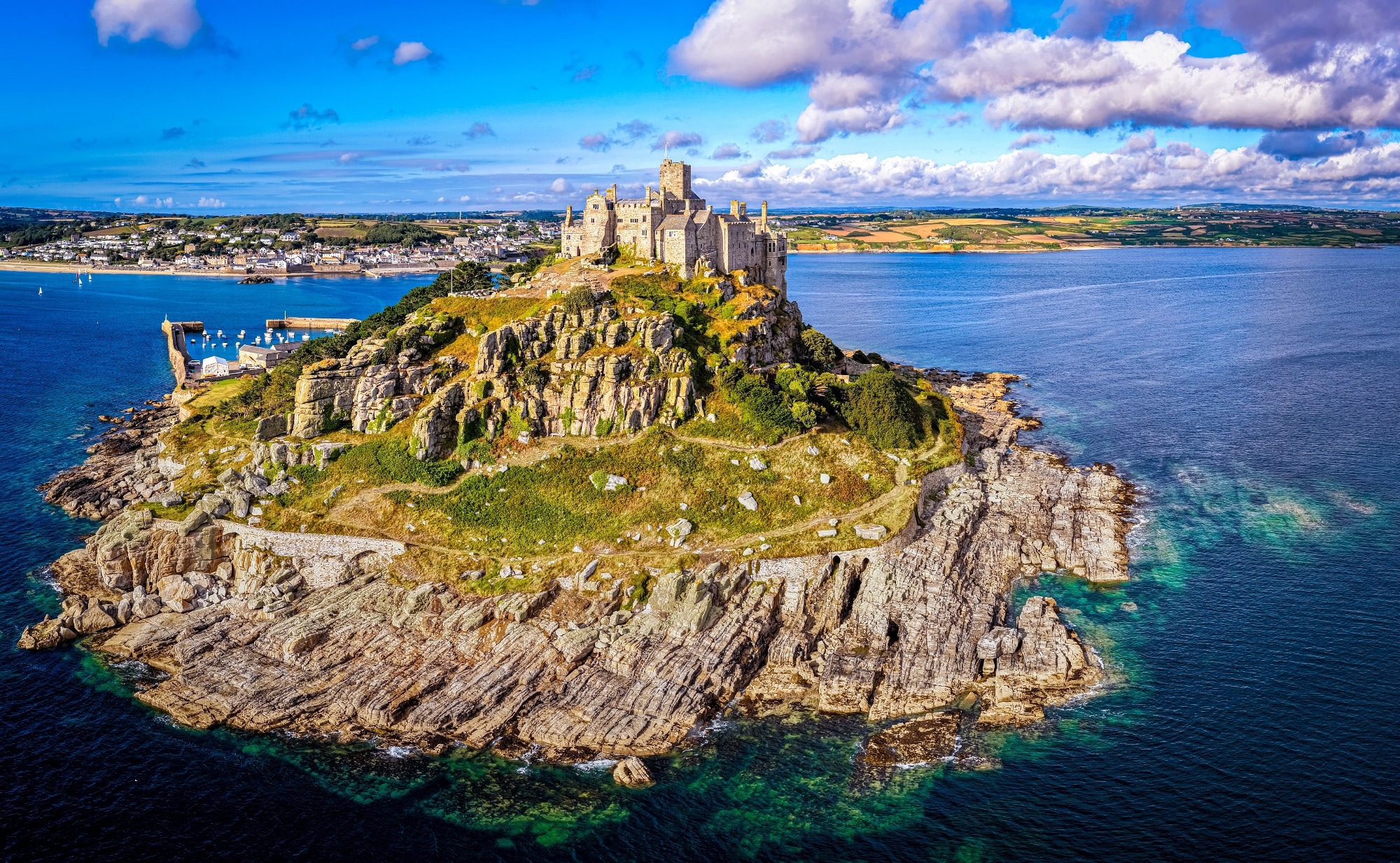
Cornwall's geology makes it an ideal spot for geothermal development. Alexey Fedorenko/Shutterstock.com
The Hot Dry Rocks (HDR) project, which ran throughout the 1980s in Cornwall, focused on researching and developing the geothermal potential in the granite batholith and showed what might be possible. It’s been exciting to be working on a project that builds on this work and is a first for the UK. This feeling, along with seeing the success of geothermal projects in other parts of the world, such as Iceland or the United States, has kept us motivated.
What have been the biggest barriers to developing the project? Were they technical and geological, or did regulatory, planning, and financial barriers prove equally significant?
One of the major challenges we have faced has been turning interest in the project into investment. When a project truly is the first of its kind in the UK, it is difficult to find hard evidence that the capability is there. Unlike solar or wind projects, where the technology is already well understood, deep geothermal development carries exploration risks similar to those found in oil and gas, and many of the processes and technologies are still being developed.
In the end, it’s been experience and momentum that helped to eventually get funding over the line. We’ve had a mix of government and private funding that together has got us to this point, and we’re excited to keep moving forward as the project continues to expand.
To generate geothermal electricity at United Downs, drilling was performed more than 5 km underground. What were the greatest engineering challenges associated with drilling to these depths, and what did the project teach you about developing deep geothermal resources in the UK?
The biggest challenges relate to finding and developing a viable resource, that is to say zones within the granite rock that contain hot fluid. The technology to drill to these sorts of depths is relatively well established, but accurately predicting (with relatively little solid data) where the zones of hot water are at 5 km is both an art and a science. We have learned a lot about how to identify these zones when we drill through them and how to successfully enhance the natural fractures to produce more flow.
One of geothermal electricity’s main advantages is its ability to generate power continuously rather than depending on sunshine or wind. Where do you think geothermal could fit within a future UK electricity system, and what role could it play alongside wind, solar, storage, and other low-carbon technologies?
As you say, one of geothermal's strengths is its ability to provide constant baseload power 24/7, without relying on the weather or other external factors. This makes it a really valuable asset around the world at the moment, in that it is able to satisfy minimum round-the-clock demand by providing power overnight, or at times of low wind. Because of this, it is a great complement to other renewables like wind and solar.
Recent estimates from Project Innerspace suggest that the eventual resource potential for electricity from geothermal is around 25 GW nationally, which is about 75% of what we use each year and roughly 2.5 times the contribution that wind currently provides. We’re obviously a long way off from this point, but geothermal clearly has potential to make a massive contribution to our energy mix.
What’s more, the clean energy generated at the plant is being used to extract lithium from the exact same brine, making it an incredibly sustainable way of producing a mineral that is critical to the green transition.
Beyond producing low-carbon electricity, what wider benefits could a UK geothermal industry bring in terms of energy security, skilled employment, regional investment, and the use of local supply chains?
GEL pledged early in the planning stages of the project to use as many local service providers, contractors and hospitality outlets as possible. So far, over £2.5m has been invested in the local economy (within 10 km of the site). Looking forward, while geothermal projects like the one at United Downs are not large-scale employers in the same way as heavy industry, they do create highly skilled technical roles in engineering, geology, operations, and maintenance which can provide much-needed jobs to regional economies.
More widely, the geothermal industry has a lot to gain by harnessing the skills and experience from the oil and gas industry, clustered around places like Aberdeen. At United Downs, we have drawn on these well-established mining, oil, and gas supply chains, including specialist expertise in drilling and subsurface engineering, to develop the project. So, we really do believe that investing in a growing geothermal industry brings regional and national benefits.
Developing and operating a first-of-its-kind plant inevitably produces lessons you can’t get from models. What have been the biggest surprises in day-to-day operation, and what do you think the project has proven that you could not demonstrate to investors, policymakers, or the energy industry five to 10 years ago?
The biggest surprise was the quantity of lithium in the deep water (the highest concentration seen in Europe) and the water quality (making it relatively easy to extract the lithium). Ten years ago, very few investors were interested in direct lithium extraction, and we would not have been able to demonstrate the resource or prove that we could extract it.
Lithium emerged as another potentially valuable resource within the geothermal fluid at United Downs. How did the discovery change the economics and wider ambitions of the project, and what are the advantages of producing geothermal electricity and extracting lithium from the same resource?
Discovering lithium at the site has helped with financing the project(s). Once we proved the lithium was there and that we could extract it and produce technical-grade lithium carbonate, it provided a second stream of income, which was attractive to potential investors.
More importantly, it also changed the project's broader implications for the UK as a whole. The Government has set a target of meeting 10% of the UK’s critical mineral demands from domestic production by 2035, including at least 50,000 tons of lithium carbonate, and GEL will play a vital role in meeting this target. We’re aiming to scale up to 30,000 tons per annum by 2033 from multiple sites, meeting over 60% of the UK’s lithium target alone.
Because the lithium is extracted using the electricity generated at the plant, from the brine raised up from the ground (which then circulates back underground), it is a low-impact and sustainable way of producing lithium carbonate.
GEL has invested in school engagement, educational activities, site visits, and efforts to develop skills locally. Why has community engagement been important when introducing a technology that is unfamiliar to many people in the UK, and what have you learned about building public understanding and acceptance of deep geothermal projects?
Community acceptance is always an important topic, and I think one of the key aspects to that is actually understanding who your community is.
For us, Cornwall’s long mining history played a major role in building public acceptance of the geothermal project. We’ve also worked a lot on education, making sure that people understand what the project is and what it isn’t, and why they should care about it.
GEL establishes a Community Grant Fund for each site, with an initial contribution of £40,000. To date, the United Downs fund has provided full or partial funding to 14 local projects focused on community cohesion and sustainability. We’re looking forward to supporting further initiatives and creating lasting positive impact within the local community in the years ahead.
If another UK- or Europe-based team came to you wanting to develop a deep geothermal power and/or lithium project from scratch, what would be the one piece of hard-won advice you’d offer that you wish you’d heard 15 years ago?
It has been a long path to get to this point, but that’s what makes being the first to complete a project like this so rewarding. My advice to anyone considering starting out in this space is to secure sufficient financial backing as soon as you can. Geothermal projects often require large upfront investments, and you must be prepared to deal with unexpected challenges during drilling or reservoir development.
Despite all the challenges, it has been an incredibly rewarding experience to get to this point, and I would love to see the UK’s geothermal industry continue to develop over the next few years and decades.
About Ryan Law
With over 25 years of experience in geothermal project development and an MSc in hydrology, Ryan Law has designed, managed and overseen the installation of geothermal schemes ranging from individual systems to city-scale district heating networks.
Ryan founded GEL in 2009 after running the geothermal unit within the global engineering consultancy ARUP. Ryan is a geologist specializing in shallow and deep geothermal systems; he has a degree in Geology from Oxford University, a Master's in Hydrogeology, and a PhD on the transport and modeling of heat in fractured rocks.
Disclaimer: The views expressed here are those of the interviewee and do not necessarily represent the views of AZoM.com Limited (T/A) AZoNetwork, the owner and operator of this website. This disclaimer forms part of the Terms and Conditions of use of this website.