A material often made from agricultural and organic waste could help improve one of the cleaner routes for removing nitrogen from wastewater, according to a recent review published in Biochar.
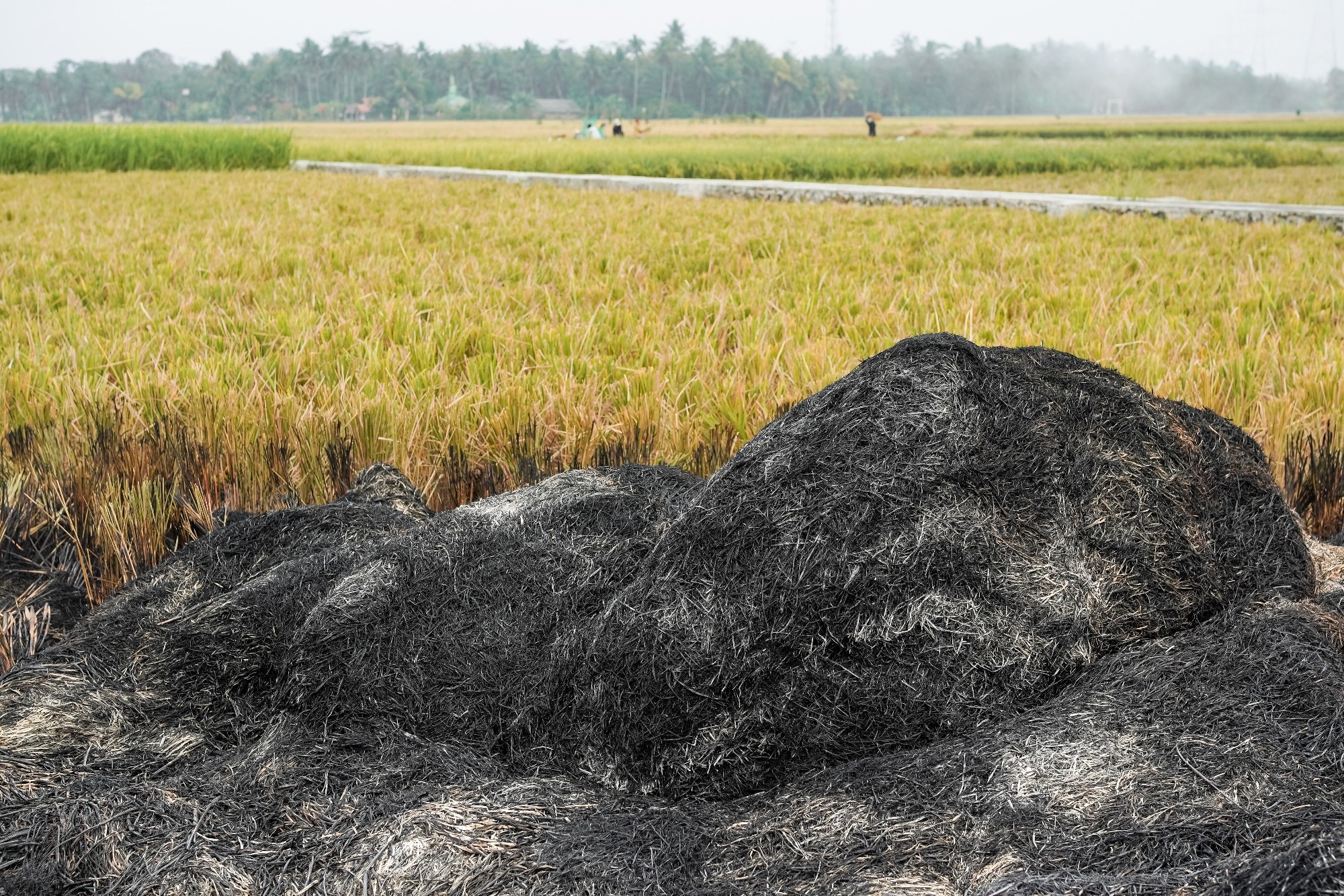
Study: Biochar as an electron bridge: mechanistic insights into enhanced anammox performance in wastewater treatment. Image Credit: aros art gallery/Shutterstock.com
The review focuses on the relationship between biochar and anaerobic ammonium oxidation, known as anammox. In this process, specialized bacteria convert ammonium and nitrite into nitrogen gas. For wastewater treatment plants, the appeal is clear: anammox can remove nitrogen while using less energy than conventional approaches, largely because it reduces the need for aeration and added carbon.
The catch is the biology. Anammox bacteria grow slowly and are easily affected by environmental shifts. That makes them difficult to establish, maintain, and scale in real treatment systems.
Want to save this article for later? Click here.
Biochar Offers Way to Make Process More Reliable
Produced by heating biomass under limited oxygen, biochar is porous, carbon-rich, and chemically varied depending on how it is made.
In wastewater reactors, those features can give microbes places to attach and form biofilms. The review suggests biochar may also play a more active role by helping electrons move more efficiently through microbial communities.
Electron transfer is central to anammox chemistry. If electrons move more easily between microbial cells and reaction sites, nitrogen removal can become faster and more stable. The review brings together evidence for three main routes by which biochar may help.
Extracellular Polymeric Substances
One route involves extracellular polymeric substances (EPS). These sticky compounds form the matrix around microbial biofilms. Biochar appears to encourage the development of EPS that contains more redox-active compounds, meaning the biofilm itself may become better suited to electron movement.
Conductivity
Another route depends on conductivity. Some biochars, especially those produced at higher pyrolysis temperatures, develop more graphitic carbon structures and higher electrical conductivity.
In anammox systems, those conductive surfaces may help microbes exchange electrons directly with one another. This is known as direct interspecies electron transfer, or DIET.
Chemistry on Biochar Surface
A third route comes from the chemistry on biochar’s surface. Biochar can contain functional groups that accept and donate electrons, allowing it to behave like a reusable electron shuttle. Lower-temperature biochars often retain more oxygen-containing groups, including phenolic structures, which may support this mediated form of electron transfer.
In practice, these mechanisms are unlikely to act in isolation. A single biochar may support biofilm growth, influence EPS chemistry, provide conductive contact points, and take part in redox reactions at the same time. The dominant pathway will depend on the feedstock, production temperature, surface chemistry, reactor conditions, and microbial community.
The Limitations
That variability is one reason the field is still difficult to interpret. Biochar made from wood at 700 °C will not behave like biochar made from manure at 350 °C. A material that performs well in one reactor may be less effective in another. The review notes that while many studies report improved nitrogen removal after biochar is added, the exact mechanisms behind those improvements are still being worked out.
The Reported Gains
Some reported gains are encouraging. The reviewed literature includes an anammox system in which biochar addition increased nitrogen removal by 9.3 to 14.7% and tripled electron transfer capacity. Results like these help explain why researchers are paying closer attention to biochar as a functional material rather than a passive support.
The next step is to make the evidence more specific. The authors call for methods that can separate the different electron-transfer pathways instead of treating biochar’s effects as a single outcome. Suggested approaches include electron-flux measurements, inhibitor experiments, isotope tracing, electrochemical analysis, and advanced imaging of EPS and biofilm structure.
Better biochar design will also be important. Treatments such as metal doping, acid-base modification, or changes to pyrolysis conditions could tune conductivity, pore structure, and surface functional groups for particular wastewater applications. Machine learning may help narrow the search by predicting which feedstock and processing-condition combinations are most likely to produce useful properties.
Cost and Sustainability Need Careful Attention
Higher-temperature biochars may offer better conductivity, but producing them can require more energy.
If biochar-enhanced anammox is to be used at scale, researchers will need to weigh those production costs against the savings from lower aeration demand and reduced chemical inputs. Life cycle assessment and techno-economic analysis will be needed before the approach can be judged as genuinely green or commercially practical.
For now, the review presents biochar as a promising tool rather than a finished solution. Its value lies in how it is made and how well its properties match the needs of the anammox system.
If researchers can pin down those relationships, biochar could help turn anammox from a highly efficient but delicate process into a more dependable option for low-energy nitrogen removal.
Journal Reference
Zhao W., Li W., et al. (2026). Biochar as an electron bridge: mechanistic insights into enhanced anammox performance in wastewater treatment. Biochar 8, 131. DOI: 10.1007/s42773-026-00650-8, https://link.springer.com/article/10.1007/s42773-026-00650-8