AIMPLAS, the Plastics Technology Center, is participating in GREEN (Generating sustainable, Responsible, Effective, and Eco-frieNdly delivery systems for fertilizing products), a European project coordinated by the University of Birmingham that has received almost €3 million in funding from the Circular Bio-based Europe Joint Undertaking (CBE JU).
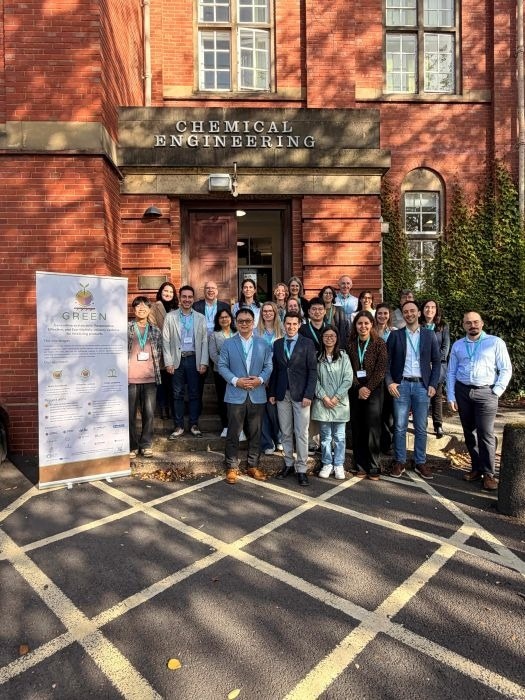 Image Credit: AIMPLAS
The project aims to develop innovative bio-based biodegradable delivery systems (BBDS) for fertilizers, providing an alternative to conventional polymer-based coatings currently used in enhanced efficiency fertilizers (EEFs).
EEFs are designed to improve nutrient uptake by crops and reduce nutrient losses to the environment. However, many existing fertilizer delivery systems rely on polymer coatings that are not biodegradable and can contribute to microplastic accumulation in agricultural soils.
According to the project consortium, approximately 22,500 tons of microplastics are released each year in the European Economic Area from conventional polymer-coated fertilizers. GREEN aims to address this challenge by developing biodegradable alternatives derived from renewable plant-based feedstocks.
The new delivery systems will be designed to respond to environmental conditions and crop requirements, enabling a controlled release of nutrients while remaining fully biodegradable in soil and water. The solutions developed within the project are intended for both conventional and organic farming applications.
AIMPLAS Role in the Project
Within the project, AIMPLAS will coordinate and develop bio-based biodegradable fertilizer delivery systems (BBDS) in the form of microcapsules and polyelectrolytes, using a range of technologies, including mechanochemistry.
GREEN brings together 12 partners from 10 European countries, combining expertise from academia, research organizations, industry and the agricultural sector.
The project is expected to deliver four large-scale bio-based fertilizer delivery systems and demonstrate their technical, environmental and economic viability. In addition to fertilizers, the technologies developed could also be applied to seed coatings and plant protection products.
By supporting the development of sustainable nutrient delivery solutions, GREEN seeks to contribute to reducing microplastic pollution, improving nutrient use efficiency and advancing the transition towards a circular and sustainable bioeconomy in Europe.