Marine scientists are warning that continued warming of UK waters is likely to cause major changes to plankton, the tiny drifting plants and animals that form the foundation of marine food webs and feed the fish that end up on our plates.
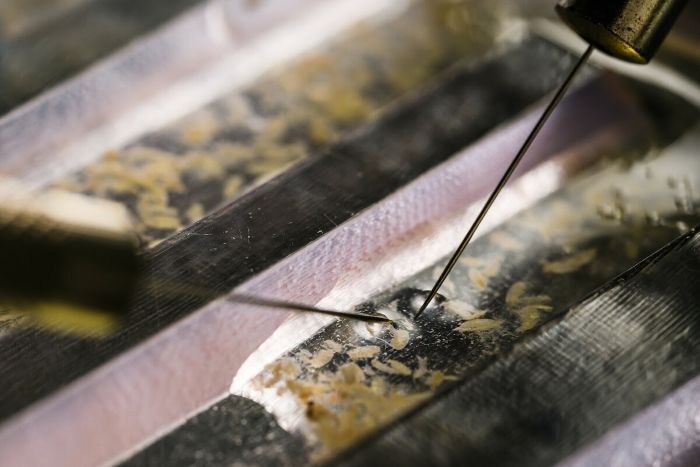 Plankton support virtually all marine life. Image Credit: The Marine Biological Association
A new study from the Marine Climate Change Impacts Partnership (MCCIP) reveals that climate change is making the UK’s marine food web less efficient. As plankton communities change, less energy is passed up the food chain to fish, raising concerns about the future productivity of UK fisheries and the long-term security of seafood supplies.
Findings from the review, Impacts of Climate Change on plankton and pelagic habitats in UK waters around the UK and Ireland, show that as sea temperatures rise, the annual spring plankton bloom is expected to start earlier and last longer in some areas, while many plankton species’ populations are likely to shift further north, following a latitudinal shift in suitable habitat conditions. Fish and other marine wildlife are expected to follow these shifts.
Pelagic habitats, and the plankton they support, form the foundation of marine ecosystems in UK waters, underpinning fisheries, food webs, biodiversity, and climate regulation. Plankton are sensitive to environmental change, making them useful early warning indicators of climate impacts.
The rolling review is led by Dr Matthew Holland from the Centre for Marine Biology and Conservation Science (CMACS) at the University of Plymouth and co-authored by scientists including David Johns and Dr Clare Ostle at the Marine Biological Association, Plymouth Marine Laboratory, Environment Agency, Cefas, the Marine Directorate of the Scottish Government and the UK Scottish Association for Marine Science. They worked from a range of data sources that bring together the latest evidence on how climate change is affecting UK seas, including impacts on habitats, species, fisheries and coastal communities.
A key source of data was the Marine Biological Association’s Continuous Plankton Recorder (CPR) Survey, one of the world’s longest-running and most geographically extensive marine ecological surveys. Its near-century record of plankton observations is crucial evidence as it allows scientists to distinguish long-term climate-driven changes from natural variability, track shifts in plankton abundance, timing, and distribution, and to assess what those changes mean for food webs, fisheries, and ocean health.
“Plankton are the foundation of marine ecosystems, generating most of the ocean’s biological production, capturing carbon dioxide from the atmosphere, and providing the food that sustains fish, seabirds and marine mammals,” says CPR Director David Johns. “As highly sensitive indicators of environmental change, they provide an early warning of the impacts of climate change on our seas.”
Harmful Effect on Food Web and Fisheries
The scientists predict that warmer seas will become more ‘layered’, making it harder for nutrients from deeper waters to reach the ocean surface. This could reduce the amount of plankton produced overall and favor the smaller species that can survive in nutrient-poor waters.
“This new MCCIP report shows that warming seas are driving major changes in plankton communities around the UK and Northeast Atlantic. Spring blooms are occurring earlier, warm-water species are shifting northwards, and smaller plankton and microbial species are increasingly replacing larger, more nutritious plankton,” explains Johns. "This changes the efficiency with which energy moves through marine food webs and may increase the risk of mismatches between plankton availability and fish spawning.”
These changes matter because plankton support virtually all marine life, from commercially important fish to seabirds and marine mammals. Changes in the abundance and types of plankton could make marine food webs less productive and less efficient, potentially affecting fish populations and reducing catches in some fisheries. Fish most likely to be affected by these changes include herring, mackerel, sprat, and sandeel (an important prey for seabirds, larger fish and marine mammals).
Warmer waters could create additional challenges for young fish. Fish larvae are likely to need more food to survive as higher temperatures increase their energy demands, but suitable prey may become less available. The report suggests herring larvae could need up to 35% more food under future warming conditions. Knock-on impacts could be felt in cod, haddock, and whiting populations and therefore fisheries if these changes to plankton populations reduce prey availability for juvenile fish or alter the wider marine food web.
Weakening of the Ocean’s Climate Defense
Changes to plankton could affect not only marine life and fisheries, but the ocean’s ability to store carbon. Plankton play a crucial role in removing carbon dioxide from the atmosphere by helping transport carbon to the deep ocean. “The consequences extend beyond changes in distribution and biodiversity,” says Johns. “Reduced food web productivity threatens fisheries, while changes in plankton communities may weaken the ocean’s capacity to remove carbon from the atmosphere.”
Every step in the food chain loses energy, and warmer water increases the amount of energy fish need simply to stay alive. In future seas, more energy is expected to get trapped in microbial loops, where it is repeatedly recycled among tiny organisms instead of being passed up to fish.
Damaging Marine Heatwaves are Becoming More Frequent
The report identifies marine heatwaves as a growing concern. Such events have become more frequent, intense, and longer-lasting in recent decades, disrupting plankton life cycles and pushing some species towards their thermal limits. Other extreme events, including storms, flooding, and drought, are also expected to become more intense and can dramatically alter coastal conditions, sometimes causing sudden plankton declines.
Researchers are also watching for the possibility of larger-scale changes in Atlantic Ocean circulation. A substantial weakening of the Atlantic Meridional Overturning Circulation (AMOC), the system of ocean currents that helps transport heat through the North Atlantic, could significantly reduce plankton growth, affect fish populations, and further alter the UK's climate.
More Comprehensive Monitoring Now Needed
The review highlighted significant gaps in monitoring. While the UK hosts some of the world's most comprehensive long-term marine observation programs, including the CPR Survey, some important groups of plankton remain difficult to track. Tiny plankton species and jelly-like organisms, which are becoming more common in some regions, are not always adequately captured by existing monitoring systems, while important offshore areas remain under-sampled.
The findings underline the need to keep monitoring plankton and the wider pelagic environment, so that changes in UK seas can be detected early and reflected in decisions about fisheries, conservation and climate adaptation.
Unique Long-Term CPR Datasets Reveal Crucial Changes Over Time
For almost a century, the CPR Survey has provided an unparalleled view of life in our oceans. These long-term observations reveal that climate change is fundamentally altering plankton communities, with implications for biodiversity, fisheries, carbon storage, and ultimately UK society itself.
“As the world’s longest running and most extensive marine biological monitoring program, the CPR Survey is uniquely placed to reveal these trends,” says Johns. “It provides the long-term, basin-scale evidence needed to detect change, understand climate impacts, and guide effective marine management and adaptation.”
As climate change continues to reshape UK seas, understanding how plankton respond will be critical to protecting marine biodiversity, managing sustainable fisheries, and maintaining the ocean’s ability to absorb carbon, helping to safeguard the benefits of healthy seas for us all.