Scientists have developed a new catalyst that could make converting carbon dioxide into synthetic fuel more efficient. Using a rapid flame-based production method, the researchers created a nickel-ceria catalyst that converted 85% of CO2 at 400 °C while achieving 98% methane selectivity, outperforming a catalyst made using a conventional preparation technique.
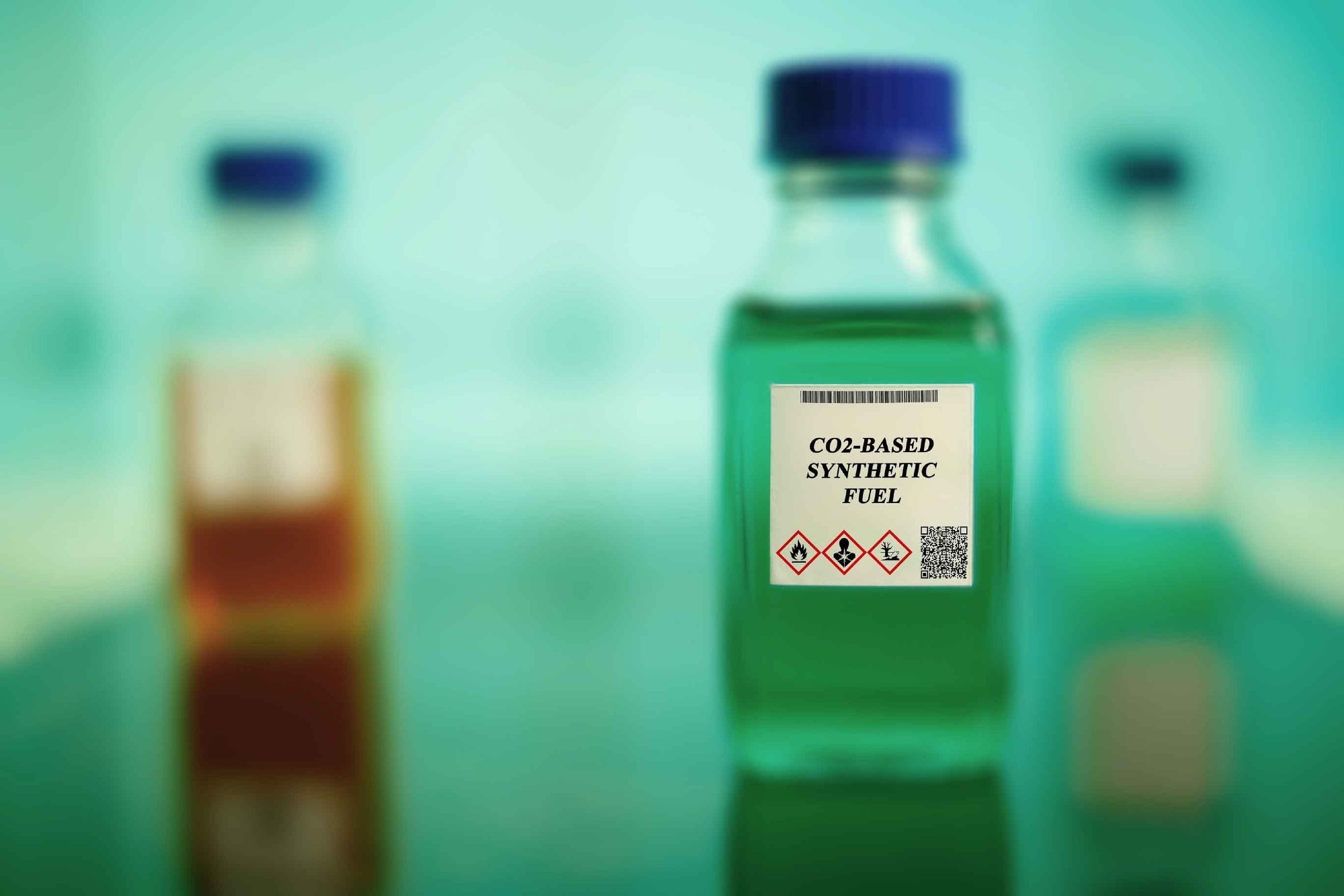
Study: One-step synthesis of Ni/CeO2 catalyst with fine structure for CO2 methanation by flame-assisted spray pyrolysis. Image Credit: luchschenF/Shutterstock.com
The Catalyst Challenge in CO2 Methanation
As atmospheric CO2 concentrations continue to rise, researchers are looking for practical routes to capture and convert the greenhouse gas into useful products. One approach attracting growing interest is CO2 methanation, a reaction in which CO2 combines with hydrogen to form methane that can be used as a synthetic fuel.
The process becomes more sustainable when hydrogen is produced using renewable energy, creating a pathway to reduce fossil fuel dependence while supporting a more circular energy system. However, scaling CO2 methanation for industrial use depends on catalysts that are efficient, stable, affordable, and suitable for large-scale production.
A key target is high catalytic activity at lower temperatures. Operating under milder conditions can reduce energy demand and lower overall process costs, making CO2-to-methane conversion more practical.
Nickel catalysts supported on cerium dioxide are promising candidates because they combine relatively low cost with good catalytic activity and favorable support properties. In particular, the interaction between nickel and ceria can help activate CO2 and promote methane formation.
Click here to download a PDF copy of this page
Comparing FASP with Conventional Impregnation
To examine how the synthesis method affects catalyst performance, the researchers prepared Ni/CeO2 catalysts using two routes: flame-assisted spray pyrolysis and conventional impregnation.
For the FASP process, the researchers dissolved cerium(III) nitrate hexahydrate and nickel(II) nitrate hexahydrate to form a precursor solution. We atomized this solution using an ultrasonic transducer, and the resulting droplets entered a laminar-flow diffusion flame with a maximum calculated temperature of 2026 K.
Catalyst particles formed rapidly in the flame and were collected for direct use without additional treatment. This one-step formation process is a key feature of FASP and allows particle structure and metal-support contact to be shaped during synthesis.
For comparison, the impregnation method catalyst was prepared by impregnating CeO2 powder with a nickel nitrate solution, followed by drying and calcination at 500 °C. The FASP catalyst had a nominal nickel loading of 4.76 wt%, while the impregnation catalyst had a target loading of 5 wt%.
The materials were then analyzed using a range of characterization techniques. SEM and TEM examined particle morphology and size, while XRD identified crystalline phases. BET analysis and metal dispersion measurements provided information on surface area and accessible nickel sites. EXAFS, XPS, and H2-TPR were used to investigate local structure, oxidation states, reducibility, and the interaction between nickel and the CeO2 support.
Catalytic activity was tested in a fixed-bed reactor between 200 and 500 °C. To reduce local overheating, the catalyst was diluted with α-Al2O3. A CO2/H2/Ar gas mixture was continuously supplied, and reaction products were analyzed by gas chromatography to determine CO2 conversion and CH4 selectivity.
Finer Structure Creates More Active Sites
The two preparation methods produced clearly different catalyst structures, which directly affected methanation performance.
The FASP catalyst consisted mainly of fine particles around 10 to 20 nm in size, although solid and hollow particles several hundred nanometers across were also present. By contrast, the impregnation catalyst contained micrometer-scale CeO2 particles supporting nickel particles of about 30 nm. This finer structure gave the FASP catalyst a higher surface area and better nickel dispersion, increasing the number of accessible active sites for CO2 methanation. Its BET specific surface area reached 58.4 m²/g, compared with just 3.82 m²/g for the impregnation catalyst, while Ni dispersion increased from 0.471% to 3.30%.
Chemical analysis also showed several advantages of the FASP catalyst. XAFS, XPS, and H2-TPR results indicated that it contained more oxygen vacancies, which are important for CO2 adsorption and activation. The catalyst also had more Ni-O-Ce interfacial sites, strengthening the interaction between nickel and the ceria support. EXAFS measurements supported this structural difference: the FASP catalyst showed a lower Ni-Ni coordination number of 9.2 compared with 12 for the impregnation catalyst, indicating smaller Ni clusters and supporting more Ni-CeO2 interfacial sites.
The researchers propose that oxygen vacancies help adsorb CO2 and convert it into reaction intermediates such as CO, while nickel dissociates H2 to supply the hydrogen needed for subsequent hydrogenation. Ni-O-Ce interfacial sites are therefore considered important for promoting methane formation and selectivity. The FASP catalyst also showed more easily reducible nickel species, which increased the availability of active metallic nickel during the reaction. H2-TPR measurements showed lower-temperature reduction features around 200 and 300 °C only for the FASP catalyst, consistent with increased Ni-CeO2 interaction.
Together, these structural and chemical features translated into stronger catalytic performance. Across the tested temperature range, the FASP catalyst achieved higher CO2 conversion and CH4 selectivity than the impregnation-prepared catalyst. At 300 °C, it delivered a methane production rate of 81.3 μmol/(gcat·s), which the researchers described as high compared with reported literature values despite the catalyst's relatively low nickel loading. At the same temperature, the methane turnover frequency reached 3.28 s-¹ for the FASP catalyst compared with 1.09 s-¹ for the impregnation catalyst, indicating that FASP also improved methane-forming activity per exposed Ni site.
The FASP catalyst performed particularly well around 400 °C, reaching 85% CO2 conversion, 98% CH4 selectivity, and 83% CH4 yield, with a methane production rate of 3.08 × 10⁻⁴ mol/(gcat·s).
The methane yield was close to the thermodynamic equilibrium value under the tested conditions. By comparison, the impregnation catalyst reached its maximum activity at 500 °C, producing 54% CO2 conversion, 77% CH4 selectivity, and a 41% CH4 yield.
Implications for CO2 Utilization
The study shows that flame-assisted spray pyrolysis can effectively produce high-performance Ni/CeO2 catalysts for CO2 methanation. Compared with conventional impregnation, the FASP method produced a catalyst with finer particles, higher surface area, improved nickel dispersion, more oxygen vacancies, and more Ni-O-Ce interfacial sites.
These characteristics helped the catalyst achieve better CO2 conversion and methane selectivity, particularly under lower-temperature conditions. This matters because efficient methane production at milder temperatures could reduce the energy required for CO2 utilization processes.
Overall, the findings suggest that FASP offers a practical one-step synthesis strategy for designing efficient methanation catalysts. With further development, this approach could support scalable and sustainable conversion of captured CO2 into synthetic fuels.
Reference
Okada K., Nagasawa T., et al. (2026). One-step synthesis of Ni/CeO2 catalyst with fine structure for CO2 methanation by flame-assisted spray pyrolysis. Fuel 428:140563. DOI: 10.1016/j.fuel.2026.140563, https://www.sciencedirect.com/science/article/pii/S0016236126023185