A paper recently published in PLOS Climate investigated the effect of historical emissions from major cement, coal, gas, and oil producers on climate across several future emissions pathways.
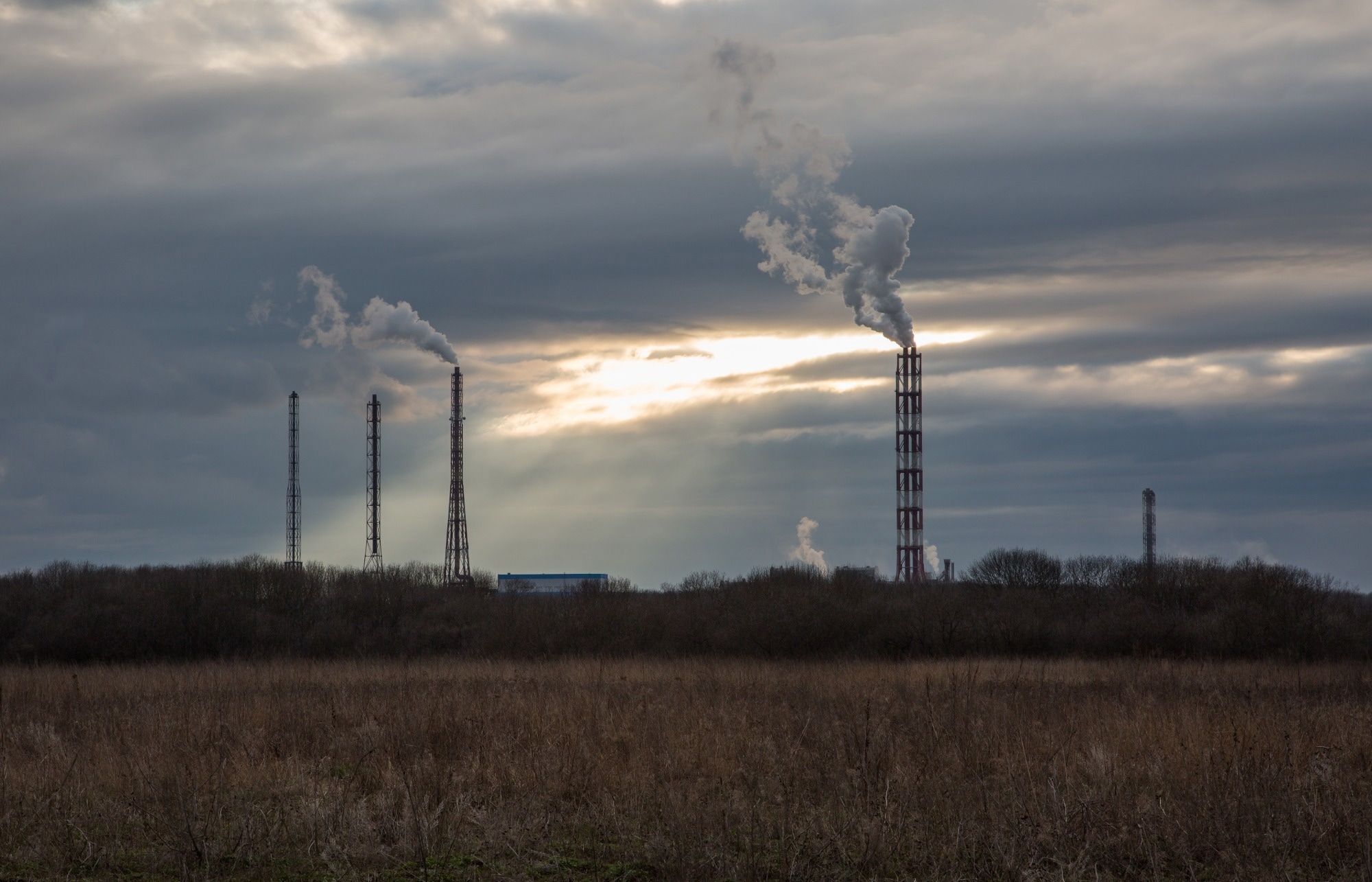 Study: Centuries of global heating from Carbon Majors: Dependence on future emissions pathways. Image Credit: Ekaterina Dyatlova/Shutterstock.com
Tracing Climate Change Back to Major Emitters
Recently, several studies have developed datasets and methods to attribute present and past temperature changes worldwide to individual emitters. For specific events, these methods can determine the accountability of individual cement and fossil fuel producers based on well-corroborated climate science.
The chain of evidence begins with the impacts of cement and fossil fuel emissions on atmospheric methane and carbon dioxide concentrations. This is followed by higher temperatures and radiative forcing, and eventually the dependence of extreme events on background climate.
Counterfactual simulations are typically used for analysis. In these simulations, pollution from cement and fossil fuel producers is subtracted from historical emissions. Then, the climate impact of the cement and fossil fuel emissions is calculated through a comparison with a control simulation.
Modeling the Long-Term Impact of Past Emissions
Earlier studies on climate accountability have almost exclusively focused on the past. Yet, climate damages in the future will also be caused by
past emissions, owing to the high persistence of carbon dioxide emissions.
In this context, a model capable of simulating the impact of emissions on atmospheric methane and carbon dioxide concentrations, and their subsequent effects on temperature change and radiative forcing, is necessary to attribute changes in global temperature to individual entities.
While such simulations can be performed using Earth system models, simple climate models such as OSCAR and the finite-amplitude impulse response (FaIR) can also be used at substantially lower computational cost.
Tracking Historical Emissions Across Future Climate Pathways
In this work, researchers investigated the climate effect of historical emissions from major cement, oil, coal, and gas producers across diverse future emissions pathways.
The objective was to better understand the characteristics of emissions scenarios affecting temperature change resulting from prior emissions, and the climate processes relevant for quantification of accountability.
Researchers examined simulations using FaIR, a well-documented, frequently used, and open-source model.
Previously, the model has been used to explore the impact of airline emissions on climate, estimate the temperature effect of emissions reductions induced by coronavirus disease 19 (COVID-19), and determine whether emissions scenarios meet temperature thresholds.
Download a copy of this page for later by clicking here!
Removing Carbon Majors Emissions to Test Their Climate Impact
Researchers used the FaIR model version 2.1.4 and calibration 1.4.1 for this study. Based on emissions updated through 2022, the 1.4.1 tuning was the most suitable fit. Using data from emissions datasets and climate models, a set of calibrated FaIR parameter distributions was derived.
A limited set of simulations was selected following sampling from these distributions based on consistency with observations. The 1.4.1 calibration consisted of 841 ensemble members.
The 1854–2024 emissions of methane and carbon dioxide were removed from the 2026 update of the Carbon Majors (CMs) database from the shared socioeconomic pathway (SSP) scenarios to construct the counterfactual simulations.
During counterfactual experiments, alternative histories were presented in which the Scope 3 and Scope 1 emissions from the CMs did not exist. The authors used the SSP5-8.5, SSP3-7.0, SSP2-4.5, and SSP1-2.6 scenarios from Meinshausen et al.2
Between 2015 and 2024, counterfactuals slightly differed as the SSP scenarios started in 2015, though the difference between counterfactual and scenario was the same for every experiment. By 2100, methane emissions doubled in SSP3-7.0, decreased sharply in SSP1-2.6, increased modestly in SSP5-8.5, and decreased in the other simulations.
Researchers subtracted the CMs emissions during 1854–2024 from each scenario to calculate future and past warming due to historical emissions to develop the counterfactual scenarios. Future emissions were not subtracted from the CMs.
Past Emissions Could Drive Warming for Centuries
In a lower-emissions future, the atmospheric carbon dioxide anomaly attributable to a company's past emissions is smaller and has less ensemble spread than in a high-emissions future.
Yet, the change in temperature from past emissions is greater, even with the smaller change in carbon dioxide, in a lower-emissions future, owing to the logarithmic sensitivity of carbon dioxide radiative forcing to concentration.
The historical emissions from cement, coal, gas, and oil producers impact several aspects of the climate system for all future emissions scenarios, including stratospheric water vapor, ozone, methane, and carbon dioxide in the atmosphere and other parts of the carbon cycle.
Post-2080, methane concentration experiences a negative anomaly owing to a reduction in methane lifetime from higher temperatures, which is a small negative feedback. The overall radiative forcing generated by these elements remains positive throughout all simulations, which results in positive temperature perturbations.
In conclusion, apart from damages that have already occurred, the simulations suggest that historical CMs could contribute to quantifiable climate damages for many centuries. However, the authors caution that FaIR operates outside its tuned range under some higher-emissions scenarios and recommend further testing with other climate models
Journal Reference
Frierson, D. M., & Henrie, L. A. (2026). Centuries of global heating from Carbon Majors: Dependence on future emissions pathways. PLOS Climate, 5(9). DOI: 10.1371/journal.pclm.0001036, https://journals.plos.org/climate/article/metrics?id=10.1371/journal.pclm.0001036.
Further Reading
Meinshausen, M. et al. (2019). The SSP greenhouse gas concentrations and their extensions to 2500. Geoscientific Model Development Discussions. 1-77. DOI: 10.5194/gmd-13-3571-2020, https://gmd.copernicus.org/articles/13/3571/2020/.
Disclaimer: The views expressed here are those of the author expressed in their private capacity and do not necessarily represent the views of AZoM.com Limited T/A AZoNetwork the owner and operator of this website. This disclaimer forms part of the Terms and conditions of use of this website.