Dissolved inorganic carbon (DIC) has been estimated in real time in batch cultures of Chaetoceros gracilis (C. gracilis) through a strategy that combined continuous carbon dioxide CO2 sensing with periodic titration-based calibration. These findings were published in Algal Research.
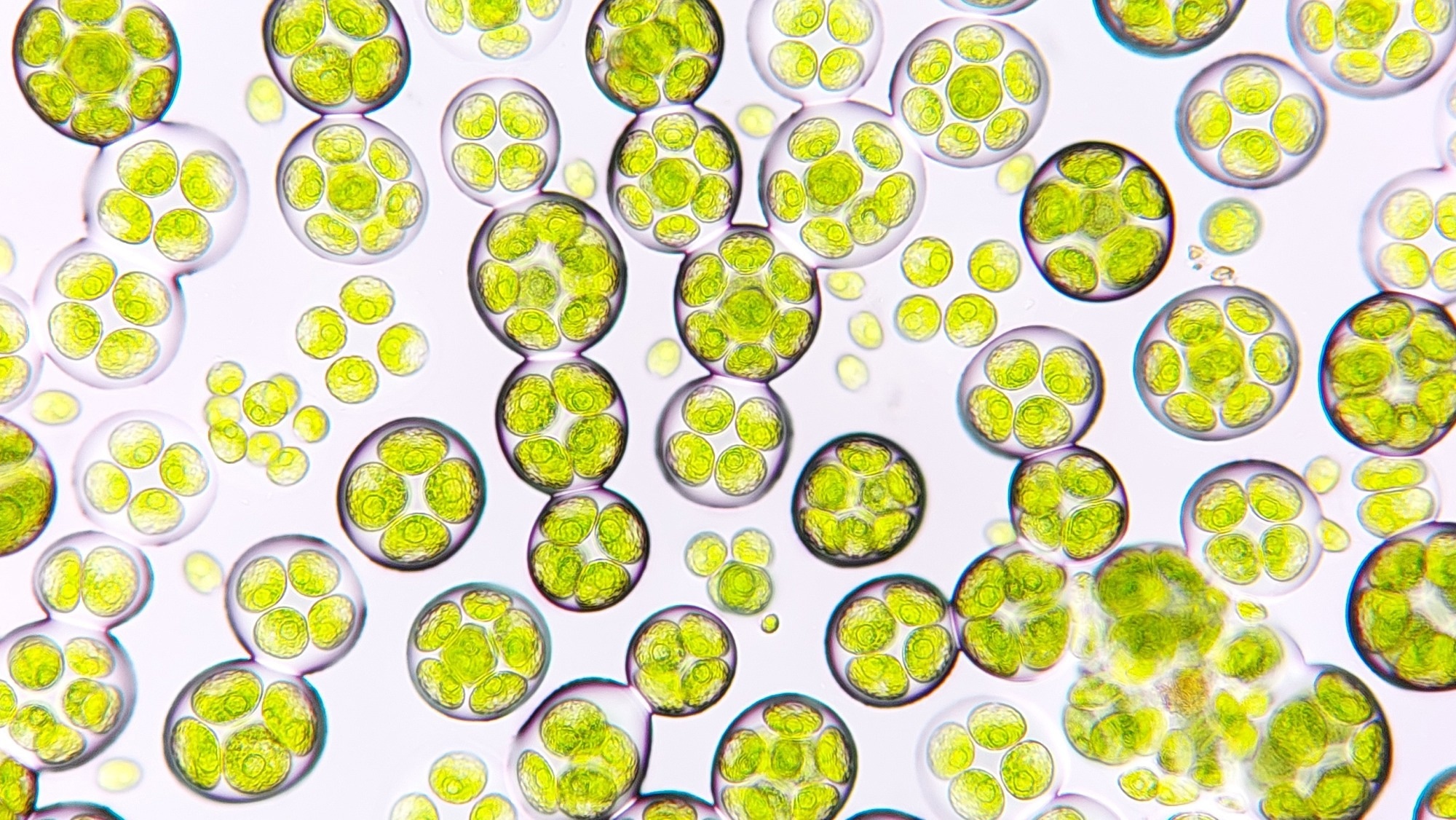 Study: Integrating continuous CO2 sensing with discrete titration for real-time tracking of dissolved inorganic carbon dynamics in microalgal cultures. Image Credit: Ekky Ilham/Shutterstock.com
Importance of Real-Time Tracking
Microalgae are characterized by their high potential for inorganic carbon fixation and rapid growth rates. Thus, these highly efficient photosynthetic organisms can be suitable for carbon capture and developing bioproducts.
In microalgal cultures, precisely tracking inorganic carbon dynamics is crucial for assessing carbon-management methods based on microalgae and comprehending photosynthetic activity.
Existing approaches for evaluating microalgal carbon dynamics, such as indirect proxies and discrete chemical analyses, often fail to track rapid temporal variations in DIC during cultivation. This necessitates the development of integrated, standardized real-time monitoring methods.
High-accuracy instruments based on titration, like the ATT-15 automatic titrator, were effectively used to measure DIC in aquatic systems. However, they have limited ability to track DIC dynamics continuously during active cultivation because of their dependence on discrete sampling limits.
Download a free copy of this page here!
Apart from biological uptake, seawater chemistry also affects the behavior of the carbonate system. Variations in nutrient availability, alkalinity, and pH change the inorganic carbon speciation and biogeochemical processes associated with it.
Real-time, chemically resolved measurements capable of tracking rapid alterations in pH-dependent carbonate equilibria and inorganic carbon during photosynthesis are required to address these limitations.
Although high temporal resolution can be obtained using continuous CO2 sensors, rigorous validation and calibration against chemical reference measurements are necessary when using them in microalgal cultivation to ensure precision under diverse chemical and physiological conditions.
The Proposed Integrated Approach
In this work, researchers combined continuous CO2 sensing with discrete chemical calibration to estimate DIC in real time in batch cultures of C. gracilis under continuous light or a 12-hour light/dark
cycle.
The objective was to develop and validate this integrated system for tracking DIC dynamics throughout cultivation.
The authors selected C. gracilis owing to its high photosynthetic activity, rapid growth, and extensive utilization in aquaculture as a live feed, specifically in shrimp and bivalve hatcheries, due to its nutritional value and culture tractability.
Additionally, recent research has shown that this species produces different health-promoting metabolites depending on light intensity.
The Research Methodology
The integrated system paired a CO2-22 sensor for continuous CO2 monitoring and ATT-15 titration to obtain discrete DIC measurements in the proposed integrated approach. Researchers then applied and assessed a pH-dependent correction to DIC estimates derived from sensors to improve agreement with titration-based measurements.
The corrected continuous DIC time series was then used to resolve temporal patterns in the apparent inorganic-carbon difference relative to a cell-free control under both light/dark cycles and continuous light conditions.
The CO2-22 portable CO2 monitor was used to continuously monitor CO2 concentrations in the gas and liquid phases, barometric pressure, and water temperature. These measurements enabled real-time estimation of CO2 concentrations in the gas phase and dissolved CO2 in the liquid phase.
An ATT-15 automatic titrator was utilized to perform discrete DIC measurements, providing a chemical reference with high accuracy for validating and calibrating DIC values obtained using sensors.
How Effective Is the Approach?
Researchers successfully demonstrated that combining continuous CO2 sensing with discrete chemical calibration yields high-resolution DIC time series in C. gracilis cultures. Diel DIC dynamics were resolved by the corrected time series under continuous light and alternating light/dark cycles.
At elevated pH, uncorrected DIC derived using sensors diverged significantly from discrete measurements, displaying strong negative correlations under 12-hour light/dark cycles (r = −0.94, R2 = 0.88) and continuous light (r = −0.89, R2 = 0.80) conditions.
However, the application of pH-dependent calibration effectively transformed these relations into robust positive correlations under both the light/dark cycles (r = 0.94, R2 = 0.89) and continuous light (r = 0.99, R2 = 0.98), yielding close agreement between discrete and continuous DIC measurements.
This improved agreement was supported by residual analysis, confidence intervals, Bland–Altman analysis, and error metrics, including root mean square error and mean absolute error.
The corrected DIC time series allowed the calculation of an apparent system inorganic-carbon difference relative to the cell-free control, with the apparent system inorganic-carbon difference increasing from 1.3 mg C L-1 under dark conditions to 7.2 mg C L-1 after the following 12-hour light period.
In conclusion, the findings of this study demonstrate that chemically calibrated continuous CO2 sensing resolves high-resolution inorganic-carbon dynamics in microalgal cultures, offering a methodological foundation for monitoring DIC-based apparent carbon-balance dynamics at high resolution.
Journal Reference
Imamura, S., Takebe, H., & Sakurai, A. (2026). Integrating continuous CO2 sensing with discrete titration for real-time tracking of dissolved inorganic carbon dynamics in microalgal cultures. Algal Research, 104893. DOI: 10.1016/j.algal.2026.104893. https://www.sciencedirect.com/science/article/pii/S2211926426003784.
Disclaimer: The views expressed here are those of the author expressed in their private capacity and do not necessarily represent the views of AZoM.com Limited T/A AZoNetwork the owner and operator of this website. This disclaimer forms part of the Terms and conditions of use of this website.