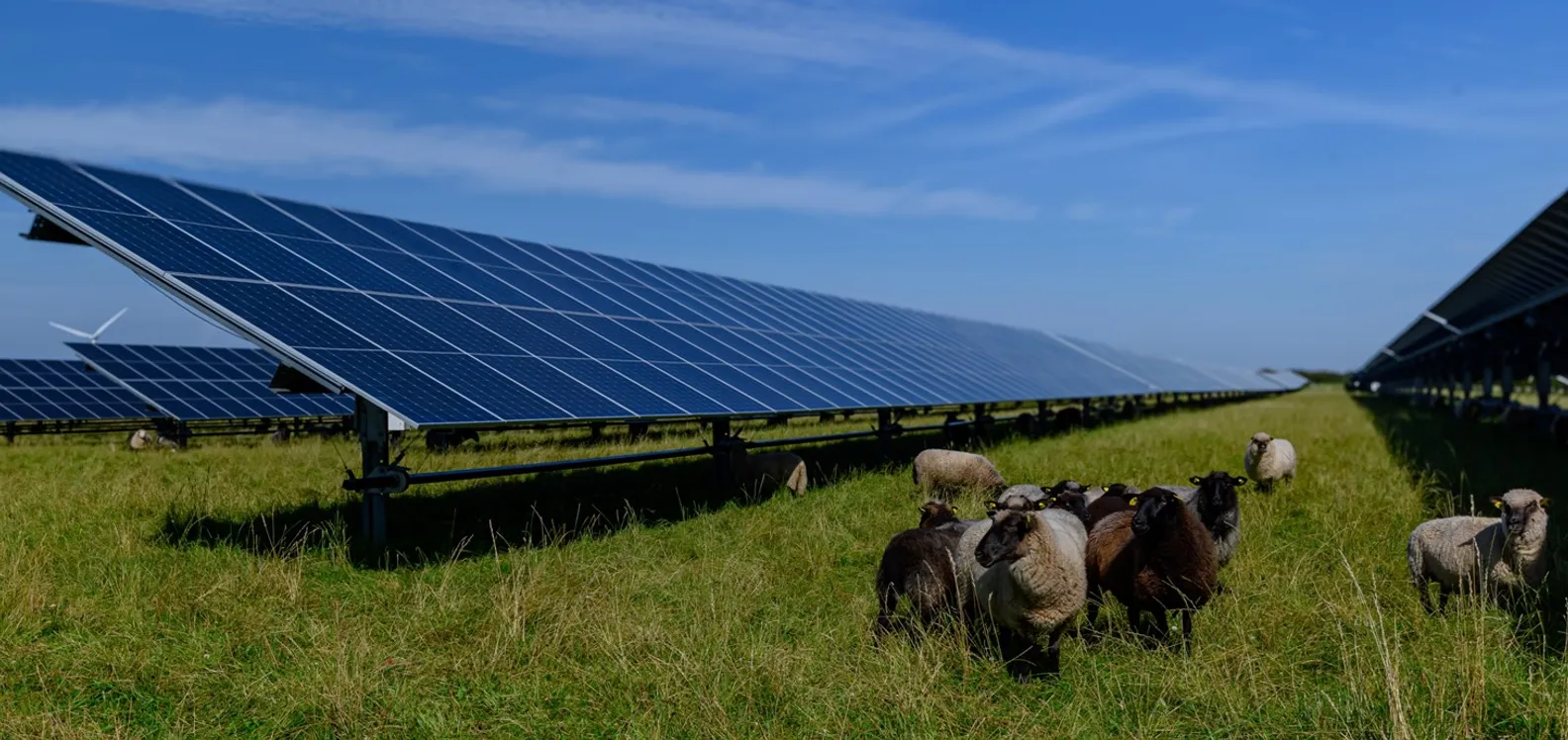
Image Credit: Swansea University
As part of this effort, the team created a novel freeware program that forecasts the light transmission, absorption, and power output of various PV materials almost anywhere on the planet using geographical, physical, and electrical parameters.
A significant component in optimizing agrivoltaics is selecting the optimal PV material, which necessitates an understanding of how the material absorbs different wavelengths (colors) of light as well as its bandgap. A broader bandgap permits the material to absorb higher-energy light with a shorter wavelength (blue), whereas a smaller bandgap allows for the absorption of lower-energy, longer-wavelength light (red).
Researchers can precisely control the “color” of light transmitted through semi-transparent PVs to reach the crops, which primarily absorb red and blue light to photosynthesize, reflecting green light, by carefully choosing PV materials with certain bandgaps and absorption qualities.
By optimizing the combination of solar panels and agriculture, agrivoltaics has the potential to significantly contribute to the decarbonization of the agricultural sector. This approach not only generates clean energy but also enhances food security.
Ardalan Armin, Project lead and Associate Professor, Swansea University
There are several ways to integrate solar panels, or photovoltaics, into agricultural settings to supply locally generated electricity while having little impact on a farm's productivity. They can serve as livestock shelters and be fastened to the roofs of greenhouses or polytunnels.
Livestock can lower the cost of upkeep by consuming the vegetation surrounding the panels. However, it is important to carefully assess the type of livestock because some animals, like goats, can climb onto PVs and inflict irreparable damage.
Journal Reference:
Kay, A. M., et al. (2024) On the Performance Limits of Agrivoltaics From Thermodynamic to Geo‐Meteorological Considerations. Solar RRL. doi.org/10.1002/solr.202400456.