COLUMBUS, Ohio - September 8, 2026 - Power to Hydrogen (P2H2), a developer of anion exchange membrane (AEM) electrolyzer systems, and Repsol, one of Europe’s leading energy companies, today announced the successful completion of a rigorous pilot validating P2H2’s hybrid AEM electrolysis technology for large-scale green hydrogen production.
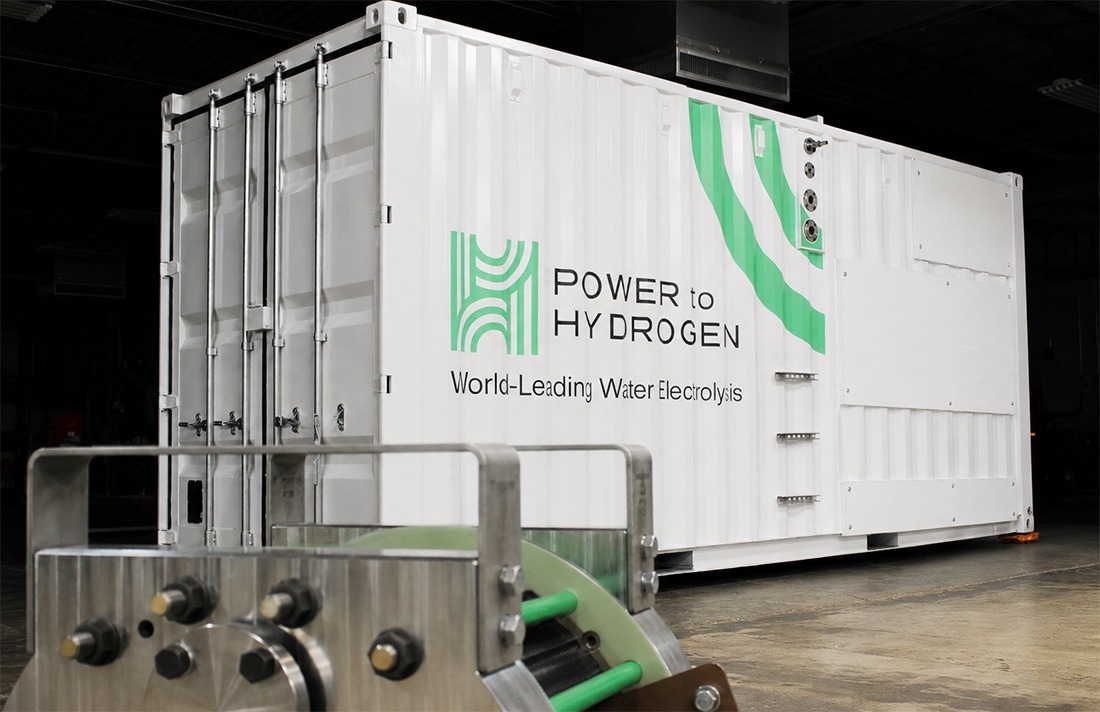
Image Credit: Power to Hydrogen
The pilot, conducted through Repsol’s All4Zero industrial innovation hub, evaluated P2H2’s commercial-scale AEM stack across more than 1,250 hours of parametric and durability testing, including extensive operation under simulated load profiles. The system met or exceeded key performance targets across efficiency, flexibility, and durability, reinforcing AEM electrolysis as a credible, lower-cost pathway to renewable hydrogen at industrial scale.
“This pilot proves what we’ve long believed: that AEM electrolysis can deliver PEM-like performance at a fundamentally lower cost structure,” said Dr. Paul Matter, Founder and CEO of Power to Hydrogen. “With Repsol’s rigorous testing framework and real-world operating conditions, we’ve demonstrated the durability and efficiency that the market has been waiting to see from AEM. This is commercial-scale hardware, stress-tested under the conditions that matter to industrial buyers.”
Using Repsol-specific inputs and the U.S. Department of Energy’s H2A-Lite analysis framework, P2H2 projects a levelized cost of hydrogen of approximately €3.86/kg, a ~16% reduction versus incumbent electrolyzer technologies. Under optimized renewable energy scenarios with hybrid power purchase agreements, the technology has the potential to reach approximately €2.82/kg, approaching commercially decisive thresholds for industrial hydrogen adoption.
A central focus of the pilot was proving P2H2’s ability to operate under the variable conditions that characterize real renewable power: the All4Zero test protocol included variable load profiles based on real operating conditions, repeated cycling between 40% and 100% load, and operation across pressures from 2 to 30 bar. The technology's fast dynamic response, combined with its iridium-free, PFAS-free materials pathway and low capital intensity, positions it as a compelling option for energy companies seeking flexibility in operation while avoiding the critical mineral dependencies and regulatory risks associated with conventional PEM electrolysis.
Operating P2H2’s commercial scale cells in a 5-cell short-stack, the pilot delivered results that outperformed conventional PEM benchmarks on several critical metrics:
- Only ~2 mV/kHr irreversible degradation over 1,250 hours of testing, with average cell voltage virtually unchanged between the beginning and end of the test. These results project system lifetimes exceeding 50,000 hours, surpassing current AEM industry benchmarks by 5-10x.
- Direct from stack hydrogen purity up to 99.9% at 30 bar operating pressure, with consistent performance across the full 2–30 bar pressure range.
- Dynamic load response demonstrating strong compatibility with real operating conditions.
- Full resilience through unplanned shutdowns, including a facility power outage, after which the system resumed testing without consequence.
“Through our All4Zero accelerator, Repsol is committed to identifying and validating the technologies that will be essential to decarbonizing industrial operations at scale,” said Berta Moreno, Senior Scientist at Repsol. “Power to Hydrogen’s results demonstrate meaningful progress toward the performance thresholds required for large-scale renewable hydrogen deployment.”
Building on these results, the companies are exploring pathways to a larger-scale demonstration at the 500 kW to MW level, a critical next step toward supporting Repsol’s target of 600–800 MW of renewable hydrogen capacity by 2030. P2H2 is actively deploying systems at this scale, including ongoing projects at the Port of Antwerp-Bruges and with SINTEF in Norway.